
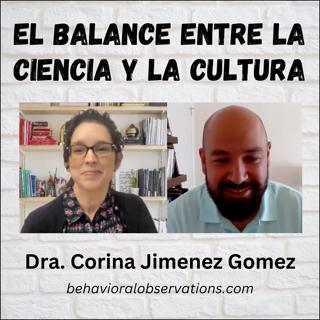
El Balance entre la Ciencia y la Cultura
El Balance entre la Ciencia y la Cultura con la Dra. Corina Jimenez Gomez A la Dra Corina Jimenez Gomez le gusta "echar cuentos". Ella lo atribuye a como fue criada y a su amor a la literatura. En otras palabras, lo atribuye "al reforzamiento diferencial de su conducta verbal". Tengo que admitir que como Venezolano tenía un gran interés de hablar con una paisana con quien comparto algunas nostalgias y experiencias de emigrante pero también un orgullo y admiración por alguien que puede navegar en océanos académicos, experimentales y aplicados. Como tal, sus adaptaciones a varios lenguajes, culturas y conocimientos le han dado una gran sensibilidad en su comunicación y el abordaje a sus distintas audiencias. Si ella puede construir puentes entre el realismo mágico y el lenguaje científico, quién mejor para examinar nuestras culturas y subculturas dentro de nuestra profesión y para observar cómo interactuamos con quienes colaboramos. Espero que disfruten y aprendan de esta conversación tanto como yo. Nota: el uso de lenguaje metafórico en las notas del show es intencional :) ------------------------------------------------------------------------------------ The Balance between Science and Culture with Dr. Corina Jimenez Gomez Dr. Corina Jimenez Gomez likes to "tell stories." She attributes it to how she was raised and her love of literature. In other words, she attributes it "to differential reinforcement of her verbal behavior." I have to admit that as a Venezuelan I was very interested in talking with a compatriot with whom I share some nostalgia and experiences as an emigrant, but also a pride and admiration for someone who can navigate academic, experimental and applied oceans. As such, her adaptations to various languages, cultures, and knowledge have given her great sensitivity in her communication and approach to different audiences. If you can build bridges between magical realism and scientific language, who better to examine our cultures and subcultures within our profession and to observe our interactions with those we collaborate with. I hope you enjoy and learn from this conversation as much as I did. Note: The use of metaphorical language in the show notes is intentional :) *Interview and shownotes by Miguel Avila **previous appearances by Dr. Jimenez-Gomez on the BOP
6 Apr 20231h
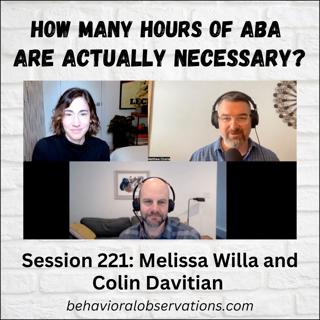
How Many Hours of ABA are Actually Necessary? Session 221 with Melissa Willa and Colin Davitian
In Session 221, I had the opportunity to talk with Melissa Willa and Colin Davitian. These guys are a husband and wife team who founded the ABA provider, Kyo, formerly known as the Gateway Learning Group. Our conversation focused on two hot-button topics when it comes to providing services to individuals with Autism: Treatment Dosage and Value Based Care. With regard to the former, Melissa and Colin, along with their colleagues, conducted a retrospective analysis of treatment outcomes for learners in under their care. In doing so, they looked at the role that treatment dosage had on their overall progress, as measured by standardized assessments. You may already be wondering what they found, so don't worry, we get into that and lots more in this episode. We also try to place their findings in the context of existing studies that examined the relationship between treatment dosage and treatment outcomes. As I mention during the interview, there's lots of discussion of this topic that's happening, particularly in the various ABA social media groups, and as is true with so many other things, it's refreshing to elevate the discourse by looking at empirical analyses as opposed to anecdotal observations and hunches. If you're a clinical director or practice owner who's also interested in this topic, Melissa and Colin suggest strategies for mining the data you probably already have access to via client electronic health records. Towards the end of the podcast, we turned our attention to Value Based Care. Colin and Melissa define what that is, and contrast it with the more traditional fee-for-service approach for health care reimbursement. Not to spoil the punchline here, but these guys seemed pretty bullish on the potential for shifting Autism services to a Value Based Care model. As a sidetone, for a longer discussion on the topic of VBC, check out Session 194 with Amanda Ralston. I have other guests that I've been meaning to bring on to talk about this as well. Lastly, I want to thank Melissa and Colin for patiently responding to all of my "yeah, but…" questions. Even though I don't personally provide services in an insurance funded model, I am old enough to remember the days when accessing ABA services was next to impossible due to the lack of both funding and providers, so I'm fairly reluctant to cede ground as it relates to how many hours individuals can receive authorization for, and my line of questioning most likely revealed this. I've also seen cases where learners have received very intensive early intervention, and made so much progress that they entered kindergarten with little to no supports. As such, I think it's fair to say that I had some level of bias heading into this conversation. Long story short, these are complicated topics, and whether you agree or disagree with the findings we discuss in this episode, I think you'll find the conversation thought provoking. Lastly, if you want to read up on this topic in more detail, I have several of the articles we referenced in this episode's show notes. I also have Melissa and Colin's LinkedIn profiles, so I'd encourage you to connect with them if you have questions or thoughts about these topics. To learn more about Kyo or to connect with Colin and Melissa: www.kyocare.com Melissa Willa - LinkedIn Colin Davitian - LinkedIn Here are some links to studies we directly or indirectly referred to in this episode: Ostrovsky, A., Willa, M., Cho, T. et al. Data-driven, client-centric applied behavior analysis treatment-dose optimization improves functional outcomes. World J Pediatr (2022). Rogers SJ, Yoder P, Estes A, Warren Z, McEachin J, Munson J, et al. A Multisite Randomized Controlled Trial Comparing the Effects of Intervention Intensity and Intervention Style on Outcomes for Young Children With Autism. J Am Acad Child Adolesc Psychiatry. 2021;60(6):710-22. Virués-Ortega, J. (2010). Applied behavior analytic intervention for autism in early childhood: Meta-analysis, meta-regression and dose–response meta-analysis of multiple outcomes. Clinical Psychology Review, 30, 387-399. Cohen, H., Amerine-Dickens, M., & Smith, T. (2006). Early intensive behavioral treatment: Replication of the UCLA model in a community setting. Developmental and Behavioral Pediatrics, 27, S145-S155. Eikeseth, S., Smith, T., Jahr, E., & Eldevik, S. (2002). Intensive behavioral treatment at school for 4- to 7-year-old children with autism: A 1-year comparison controlled study. Behavior Modification, 26, 46-68. Howard, J. S., Sparkman, C. R., Cohen, H. G., Green, G., & Stanislaw, H. (2005). A comparison of intensive behavior analytic and eclectic treatments for young children with autism. Research in Developmental Disabilities, 26, 359-383 This podcast is brought to you by the following sponsors: How to ABA - their goal is to make you feel supported and confident while helping your clients make real progress! In their membership community, you will find all the assessments, programs, data sheets, and materials you need so that your job is just a little easier. To learn more about their thriving and supportive online community, CEU events, support materials, and more, go to howtoaba.com/join, and use code BOP at checkout to get 10% off a yearly subscription. ACE Approved CEUs from .... Behavioral Observations. That's right, get your CEUs while driving, walking your dog, doing the dishes, or whatever else you might have going on, all while learning from your favorite podcast guests! HRIC Recruiting. Barb Voss has been placing BCBAs in permanent positions throughout the US for just about a decade, and has been in the business more generally for 30 years. When you work with HRIC, you work directly with Barb, thereby accessing highly personalized service. So if you're about to graduate, you're looking for a change of pace, or you just want to know if the grass really is greener on the other side, head over to HRIColorado.com to schedule a confidential chat right away.
3 Apr 20231h 29min
Safe Sleeping Practices for Infants: Session 220
Drs. Jason Vladescu, Lauren Schnell, and Jessica Day-Watkins join me in Session 220 to talk about their research in training parents and caregivers on safe sleeping habits for infants. As you'll learn, there are sleeping practices that are recommended by Pediatric groups that reduce the likelihood of Sudden Unexpected Infant Deaths (SUIDs) in general, and Accidental Suffocation and Strangulation in Bed (ASSB) incidents. If those are new terms to you, don't worry, we get into what they mean, how frequently they occur, and lots more. And while this may seem like a depressing or morbid topic, and I've known people who've had children succumb to this, I also see this as a story of hope in that studies like these will lead to a wider adoption of sleeping practices that, over time, should reduce unnecessary infant deaths. Jason is a Professor in the Applied Behavior Analysis Department at Caldwell University, Lauren is an Assistant Professor at Hunter College, and Jessica is an Assistant Professor at the AJ Drexel Autism Institute. Together they worked on several projects in the area of infant safe sleeping, which culminated in some publications in the Journal of Applied Behavior Analysis, which we discuss in this podcast. What I found fascinating about this topic is that it allowed us to discuss a wider range of issues that transcend safe sleeping practices. These include staff training, cultural humility, public health and policy, contingency management, video modeling, dissemination... the list goes on. There's an angle here for everyone. Here are some links to what we discussed: Vladescu et al. (2020). Mery et al. (2022). Mery et al. (2023). Inside JABA 14. Inside JABA 6. American Association of SIDS Prevention Physicians. AAP Safe Sleep Recommendations. This podcast is brought to you by the following sponsors: How to ABA - their goal is to make you feel supported and confident while helping your clients make real progress! In their membership community, you will find all the assessments, programs, data sheets, and materials you need so that your job is just a little easier. As a member, you'll also be invited each month to join a live CEU and a live mentorship session in their private community group. You'll also have access to their extensive CEU library of recorded on-demand CEU's on relevant, practical topics to BCBA's in the field. Go to https://members.howtoaba.com/join. When you join today and use code BOP, you'll receive 10% off a yearly subscription (includes CEU's!). ACE Approved CEUs from .... Behavioral Observations. That's right, get your CEUs while driving, walking your dog, doing the dishes, or whatever else you might have going on, all while learning from your favorite podcast guests! HRIC Recruiting. Barb Voss has been placing BCBAs in permanent positions throughout the US for just about a decade, and has been in the business more generally for 30 years. When you work with HRIC, you work directly with Barb, thereby accessing highly personalized service. So if you're about to graduate, you're looking for a change of pace, or you just want to know if the grass really is greener on the other side, head over to HRIColorado.com to schedule a confidential chat right away.
24 Mars 20231h 35min
Catching up with Greg Hanley
Dr. Greg Hanley returns to Behavioral Observations for another round of fun conversation on the assessment and treatment of severe problem behavior. This show gets into the weeds of the Practical Functional Assessment/Skills-Based Treatment Process right away, so if you have nuanc-ey questions or concerns about PFA/SBT, this is the show for you. In this segment of the show, we discuss the changes his company, FTF, had to roll with over the last few years, what he and his colleagues are up to now. We spend a considerably amount of time discussing what they've learned about functional assessment and treatment, and how their process has evolved over the years, especially in terms of the types of individuals who benefit from these interventions, as well as those who do not. Perhaps my favorite part of the conversation was when we discussed the complex nature of Skills-Based Treatment. To this end, Greg talked about the kind of training one ideally needs to be able to implement an SBT session successfully. Long story short, it's more than teaching someone to say, "My Way." Speaking of training, FTF offers a variety of on-demand virtual trainings, in-person live workshops, and short and long-term consultation engagements. Greg also mentioned numerous papers, most of which you can find here. If there are others not represented on this page, let me know and I'll add those to the show notes. What we didn't get into is the outreach FTF is making with using this process in public school settings. We also didn't get a chance to get into the SBT data collection app that his colleagues at Hi-Rasmus has created, but you can check out here. OK, back to the interview... after a lengthy nuts and bolts discussion of the what makes for successful SBT interventions, we broadened the lens to discuss many of the so-called 'hot topics,' in Behavior Analysis these days. This included: The influence of social media groups. Overly rigid rule adherence, in which we spend a fair bit of time talking about token systems. Greg's perspective on Trauma-informed and Trauma-assumed ABA. Other aspects of "Hyphenated-ABA" that are being discussed. Practical perspectives on assent... and if you're like me, and often think about the limitations of assent-based models of treatment, this will be helpful (and by the way, check out this article by Dr. Paulie Gavoni and Steve Ward), and, The use of extinction. Greg also opened up a bit about how he almost left the field of ABA. You read that correctly. You'll have to listen to the show to hear about this in his own words. Greg was extremely generous with his time, and even stuck around to answer questions that I solicited from Patreon members. As you might imagine, there were a lot of great questions, and the answers were punctuated with a few really funny stories that you won't want to miss. All of this to say that I enjoyed this conversation immensely, and I hope you do too :-) This podcast is brought to you by How to ABA - their goal is to make you feel supported and confident while helping your clients make real progress! In their membership community, you will find all the assessments, programs, data sheets, and materials you need so that your job is just a little easier. As a member, you'll also be invited each month to join a live CEU and a live mentorship session in their private community group. You'll also have access to their extensive CEU library of recorded on-demand CEU's on relevant, practical topics to BCBA's in the field. Go to howtoaba.com/join. When you join today and use code BOP, you'll receive 10% off a yearly subscription (includes CEU's!). ACE Approved CEUs from .... Behavioral Observations. That's right, get your CEUs while driving, walking your dog, doing the dishes, or whatever else you might have going on, all while learning from your favorite podcast guests! The aforementioned Verbal Behavior Conference. This is conference is as equally fun as it is informative, and BehaviorLive makes it available virtually as well, so I hope to see you there! Behavior University. Their mission is to provide university quality professional development for the busy Behavior Analyst. Learn about their CEU offerings, including their brand new 8-hour Supervision Course, as well as their RBT offerings over at behavioruniversity.com/observations.
11 Mars 20232h 15min
Teaching Skills that Improve Quality of Life with Troy Fry
In Session 218 of Behavioral Observations, Troy Fry joins me to talk about his long career in Behavior Analysis helping individuals with disabilities improve their quality of life by learning meaningful skills. In particular, we discussed: How he found his way to Behavior Analysis at a time when it wasn't nearly as seemingly ubiquitous as it is today. What it was like to be mentored by Ray Miltenberger, Don Baer, Barbara Etzel, Montrose Wolf, and more. How Troy became colleagues with Pat McGreevy. A brief history of the treatment of adults with severe developmental challenges in the United States. Troy's extensive international work in France and Italy, and what it's like to provide services in large, congregate-care facilities. We also spend a bit of time talking about his talk at the upcoming Verbal Behavior Conference. As he describes in our conversation, EFL is rolling out the Performance Analysis Tool, and his talk at the Verbal Behavior Conference will elaborate on that in more detail. If you're interested in what Troy has to say, consider attending the Verbal Behavior Conference on March 30th and 31st. The on-site event will be held in Austin, TX, but if you can't make it there, the virtual event is a fantastic option. The cool thing about the VBC, especially in-person, is that attendees really have lots of opportunities to interact with the speakers. In fact, at the end of the first day, I have the honor of moderating a panel with all the speakers. A panel, in this case, is really just an opportunity for you to ask the speakers questions directly. And audience Q and A is open to both virtual and in-person attendees. In fact, in last year's conference, we had more questions from our virtual audience! This podcast is brought to you by • How to ABA - their goal is to make you feel supported and confident while helping your clients make real progress! In their membership community, you will find all the assessments, programs, data sheets, and materials you need so that your job is just a little easier. As a member, you'll also be invited each month to join a live CEU and a live mentorship session in their private community group. You'll also have access to their extensive CEU library of recorded on-demand CEU's on relevant, practical topics to BCBA's in the field. Go to howtoaba.com/join. When you join today and use code BOP, you'll receive 10% off a yearly subscription (includes CEU's!). • The University of Cincinnati Online. UC Online designed a Master of Education in Behavior Analysis program that is 100% online and asynchronous, meaning you log on when it works for you. Want to learn more? Go to online.uc.edu and click the "request info" button. • ACE Approved CEUs from .... Behavioral Observations. That's right, get your CEUs while driving, walking your dog, doing the dishes, or whatever else you might have going on, all while learning from your favorite podcast guests! • The aforementioned Verbal Behavior Conference. This is conference is as equally fun as it is informative, and BehaviorLive makes it available virtually as well, so I hope to see you there!
28 Feb 20231h 12min
Psicoterapia Analítico-Funcional, ACT y Telemedicina con el Dr. Luis Morales Knight
En esta segunda sesión de la serie de Behavioral Observations para Hispanohablantes, el Dr. Luis Morales Knight vuelve a compartir su experiencia como Psicólogo Clínico. Esta vez centra su historia de origen en resaltar sus experiencias en el análisis de comportamiento tradicional que lo llevaron a su práctica utilizando ACT y Psicoterapia Analítico-Funcional. El Dr. Knight enfatiza la importancia de una base teórica sólida para mejorar la práctica. Comparte su transición a la telemedicina impulsada por la pandemia y los desafíos comunes de sus clientes después de la pandemia, incluida la "adultez", los efectos del consumo de las redes sociales y la medicalización de la experiencia humana. También comenta acerca de las diversas dinámicas de las sesiones terapéuticas con niños, adolescentes y adultos. Por último, nos deja con una gran nota sobre alejarnos de la perspectiva de la culpa y pasar a una visión a las circunstancias que nos lleva a tener más compasión (¿te suena familiar?). ------------------------------------------------------- Si te sientes estancado con algunos de tus aprendices que tienen grandes desafios en el desarrollo, y aunque inviertas horas y horas en enseñarle, no estás mejorando su vida significativamente. Si estás confundida y no sabes por dónde empezar o sabes que las herramientas que has utilizado no son adecuadas para ellos Queremos decirte algo, ¡puedes mejorar su calidad de vida significativamente si re piensas qué estás enseñando y cómo lo estás enseñando! El jueves 2 de marzo realizaremos un evento en línea y gratuito llamado Re-Pensando el Rumbo, donde enseñaremos a profesionales como tú a utilizar el currículum Essential for Living (Esenciales para la Vida) para identificar qué habilidades son imprescindibles enseñar a niños y adultos con grandes desafíos en el desarrollo para mejorar su calidad de vida. Para Participar, haz click en este enlace www.diversitad.com/re-pensando-el-rumbo e inscríbete. ¡Aun No es tarde para repensar el rumbo! ------------------------------------------------------- Functional Analytic Psychotherapy, ACT and Telemedicine with Dr. Luis Morales Knight In this second session of the series Behavioral Observations for Spanish Speakers, Dr. Luis Morales Knight comes back to share his experience as a Clinical Psychologist. This time he focuses his origin story on highlighting his experiences in traditional behavior analysis leading to his practice using ACT and Functional Analytic Psychotherapy. Dr. Knight emphasizes the importance of strong theoretical foundations to enhance better practice. He shares his transition to telemedicine prompted by the pandemic and the common struggles of his clients post pandemic including "adulting", effects of social media consumption, and the medicalization of the human experience. He also discusses the various dynamics of the therapeutic sessions with children, adolescents and adults. Lastly, he leaves us with a great note about moving away from the blame perspective and into a circumstantial view that leads us to have more compassion (sound familiar?)
24 Feb 202349min
Detecting Your Personal Biases: Session 217 with Lina Slim
Dr. Lina Slim joins me in Session 217 for a wide-ranging conversation that is almost impossible to describe in a list of bullet points. But I will try... In this show we discussed: Her pivot from studying animal behavior and language to teaching children with Autism. Her unease with seeing lackluster applications of ABA. Starting her own school while earning her Ph.D., while raising two children. Providing services all over the world. Detecting your own biases when providing services (please check this part out if you listen to nothing else in this podcast!!!). Developing trust through asking questions. What it's like to practice ABA in three different languages. What she plans on talking about at this year's Verbal Behavior Conference (and please consider attending, it's a great time!). Great advice for the newly-minted BCBA. I hope you enjoy this conversation as much as I did! This podcast is brought to you by: · Rose Griffin's FREE masterclass, The Power of Joint Attention. This 30-minute course will show you how to use books in therapy so your students are running over to listen to you read. The course also covers how to use songs in therapy so that your students are eager to participate and play and are ready to engage with you every session. Rose shares actionable tips that you can use in your next therapy session and provides BONUS pintables that you can practice right away. To learn more, go to abaspeech.org, and click the Free Masterclass tab at the top! · Being a behavior professional is hard. At How to ABA their goal is to make you feel supported and confident while helping your clients make real progress! In their membership community, you will find all the assessments, programs, data sheets, and materials you need so that your job is just a little easier. As a member, you'll also be invited each month to join a live CEU and a live mentorship in our private community group. You'll also have access to their extensive CEU library of recorded on-demand CEU's on relevant, practical topics to BCBA's in the field. It's more than enough for recertification! With a Bx Resource membership, you'll save time, feel confident, and master what you love! Go to howtoaba.com/join. When you join today and use code BOP, you'll receive 10% off a yearly subscription (includes CEU's!). · The aforementioned Verbal Behavior Conference. This is conference is as equally fun as it is informative, and BehaviorLive makes it available virtually as well, so I hope to see you there!
21 Feb 202352min
How to Optimize Learning with Guided Notes, SAFMEDs, and Instructional Design: Session 216 with Sal Ruiz
Dr. Sal Ruiz and I recorded a long overdue podcast where we went over all things SAFMEDS, Instructional Design, best practices for online learning, and much more. In this podcast we covered a lot of ground, but I think one of the most interesting things I took from the conversation are the procedural variations that have been explored. It turns out that there are some ways to do SAFMEDS that lead to better results depending on what outcomes you're looking for. We also explore instructional design, and in that, we talk about starting with the end in mind, tailoring lessons for in-person, synchronous, and asynchronous modalities, how guided notes fit into all of this, and much more. Long story short, whether you're a student, a university instructor, or even if you're responsible for training people outside of the university context, there are many lessons to be learned from this podcast. Lastly, Sal's parting advice to BCBAs is really good. The advice involves choosing continuing education topics. I'm not going to spoil the details of this advice here, so definitely listen all the way through and check out what he has to say on the topic! Here are the links to the resources we discussed: Ruiz ABA on Facebook Quigley 2014 dissertation, Evaluations of Various SAFMEDS Procedures Ward-Horner and Sturmey 2013, Component Analysis of Single Subject Experimental Designs: A Review Ruiz et al. 2021, Impact of Guided Notes on Graduate Student Retention of Facts Riden et al., 2020, The Nature and Extent of Component Analyses for Improving or Mitigating Behavior: A Systematic Review Since you're going to ask, you can find Jen Farris here and here, and ask her about the SSC for Practical Functional Assessment (and find training opportunities here) Wu 2015, Online learning in postsecondary education: a review of the empirical literature (2013-2014) Hunter College ABA Program Sal's Mock exams (very reasonably priced IMHO!!!) Sal's social media: Twitter, Facebook, Instagram This session of the BOP was brought to you by: The University of Cincinnati Online. UC Online designed a Master of Education in Behavior Analysis program that is 100% online and asynchronous, meaning you log on when it works for you. Want to learn more? Go to online.uc.edu and click the "request info" button. HRIC Recruiting. Barb Voss has been placing BCBAs in permanent positions throughout the US for just about a decade, and has been in the business more generally for 30 years. When you work with HRIC, you work directly with Barb, thereby accessing highly personalized service. So if you're about to graduate, you're looking for a change of pace, or you just want to know if the grass really is greener on the other side, head over to HRIColorado.com to schedule a confidential chat right away. ACE Approved CEUs from .... Behavioral Observations. That's right, get your CEUs while driving, walking your dog, doing the dishes, or whatever else you might have going on, all while learning from your favorite podcast guests! Behavior University. Their mission is to provide university quality professional development for the busy Behavior Analyst. Learn about their CEU offerings, including their brand new 8-hour Supervision Course, as well as their RBT offerings over at behavioruniversity.com/observations.
13 Feb 20231h 10min