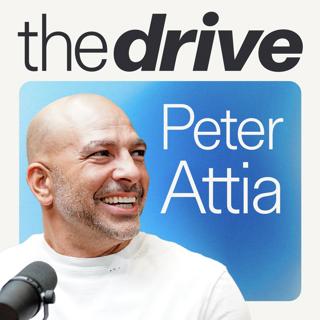
#363 ‒ A new frontier in neurosurgery: restoring brain function with brain-computer interfaces, advancing glioblastoma care, and new hope for devastating brain diseases | Edward Chang, M.D.

#363 ‒ A new frontier in neurosurgery: restoring brain function with brain-computer interfaces, advancing glioblastoma care, and new hope for devastating brain diseases | Edward Chang, M.D.

View the Show Notes Page for This Episode

Become a Member to Receive Exclusive Content

Sign Up to Receive Peter's Weekly Newsletter

Edward Chang is a neurosurgeon, scientist, and a pioneering leader in functional neurosurgery and brain-computer interface technology, whose work spans the operating room, the research lab, and the engineering bench to restore speech and movement for patients who have lost these capabilities. In this episode, Edward explains the evolution of modern neurosurgery and its dramatic reduction in collateral damage, the experience of awake brain surgery, real-time mapping to protect critical functions, and the split-second decisions surgeons make. He also discusses breakthroughs in brain-computer interfaces and functional electrical stimulation systems, strategies for improving outcomes in glioblastoma, and his vision for slimmer, safer implants that could turn devastating conditions like ALS, spinal cord injury, and aggressive brain tumors into more manageable chronic illnesses.

We discuss:

  • The evolution of neurosurgery and the shift toward minimally invasive techniques [2:30];
  • Glioblastomas: biology, current treatments, and emerging strategies to overcome its challenges [10:45];
  • How brain mapping has advanced from preserving function during surgery to revealing how neurons encode language and cognition [16:30];
  • How awake brain surgery is performed [22:00];
  • How brain redundancy and plasticity allow some regions to be safely resected, the role of the corpus callosum in epilepsy surgery, and the clinical and philosophical implications of disconnecting the hemispheres [26:15];
  • How neural engineering may restore lost functions in neurodegenerative disease, how thought mapping varies across individuals, and how sensory decline contributes to cognitive aging [39:15];
  • Brain–computer interfaces explained: EEG vs. ECoG vs. single-cell electrodes and their trade-offs [48:30];
  • Edward's clinical trial using ECoG to restore speech to a stroke patient [1:01:00];
  • How a stroke patient regained speech through brain–computer interfaces: training, AI decoding, and the path to scalable technology [1:10:45];
  • Using brain-computer interfaces to restore breathing, movement, and broader function in ALS patients [1:28:15];
  • The 2030 outlook for brain–computer interfaces [1:34:00];
  • The potential of stem cell and cell-based therapies for regenerating lost brain function [1:38:00];
  • Edward's vision for how neurosurgery and treatments for glioblastoma, Parkinson's disease, and Alzheimer's disease may evolve by 2040 [1:42:15];
  • The rare but dangerous risk of vertebral artery dissections from chiropractic neck adjustments and high-velocity movements [1:44:45];
  • How Harvey Cushing might view modern neurosurgery, and how the field has shifted from damage avoidance to unlocking the brain's functions [1:46:15]; and
  • More.

Connect With Peter on Twitter, Instagram, Facebook and YouTube

Det här avsnittet är hämtat från ett öppet RSS-flöde och publiceras inte av Podme. Det kan innehålla reklam.

Avsnitt(444)

#397 ‒ Endometriosis and adenomyosis: diagnosis, fertility, reproductive aging, and emerging treatments | Renato Tomioka, M.D., Ph.D.

#397 ‒ Endometriosis and adenomyosis: diagnosis, fertility, reproductive aging, and emerging treatments | Renato Tomioka, M.D., Ph.D.

View the Show Notes Page for This Episode Become a Member to Receive Exclusive Content Sign Up to Receive Peter's Weekly Newsletter View our full terms of use Renato Tomioka is a leading expert in ...

22 Juni 1h 58min

#396 ‒ Breast cancer screening: understanding risk, deciding when to start and how often to screen, and choosing the right imaging strategy

#396 ‒ Breast cancer screening: understanding risk, deciding when to start and how often to screen, and choosing the right imaging strategy

View the Show Notes Page for This Episode Become a Member to Receive Exclusive Content Sign Up to Receive Peter's Weekly Newsletter In this episode, Peter explores the critical topic of breast cance...

15 Juni 50min

#395 - Brain lipidology: understanding APOE, cholesterol homeostasis, Alzheimer's disease risk, and the effects of lipid-lowering therapies on brain health | Tom Dayspring, M.D.

#395 - Brain lipidology: understanding APOE, cholesterol homeostasis, Alzheimer's disease risk, and the effects of lipid-lowering therapies on brain health | Tom Dayspring, M.D.

View the Show Notes Page for This Episode Become a Member to Receive Exclusive Content Sign Up to Receive Peter's Weekly Newsletter Tom Dayspring is a world-renowned lipidologist and one of the most...

8 Juni 1h 40min

#394 ‒ Sleep pharmacology: the role of medications in healthy sleep, the promise of emerging therapies, and the evidence for common sleep supplements

#394 ‒ Sleep pharmacology: the role of medications in healthy sleep, the promise of emerging therapies, and the evidence for common sleep supplements

View the Show Notes Page for This Episode Become a Member to Receive Exclusive Content Sign Up to Receive Peter's Weekly Newsletter In this episode, Peter dives into the pharmacology of sleep, explo...

1 Juni 54min

#393 ‒ AMA #85: A guide to medications and supplements: determining what to take, what to skip, and how to know if they're working for you

#393 ‒ AMA #85: A guide to medications and supplements: determining what to take, what to skip, and how to know if they're working for you

View the Show Notes Page for This Episode Become a Member to Receive Exclusive Content Sign Up to Receive Peter's Weekly Newsletter In this "Ask Me Anything" (AMA) episode, Peter explores how to thi...

25 Maj 13min

#392 - Genetic testing: when it's valuable, how to choose the right test, and what to do with the results

#392 - Genetic testing: when it's valuable, how to choose the right test, and what to do with the results

View the Show Notes Page for This Episode Become a Member to Receive Exclusive Content Sign Up to Receive Peter's Weekly Newsletter In this episode, Peter explores the complex and often misunderstoo...

18 Maj 1h 2min

#391 ‒ Colorectal cancer screening: importance of early screening, colonoscopy as a screening and preventive tool, and how to build a personalized strategy

#391 ‒ Colorectal cancer screening: importance of early screening, colonoscopy as a screening and preventive tool, and how to build a personalized strategy

View the Show Notes Page for This Episode Become a Member to Receive Exclusive Content Sign Up to Receive Peter's Weekly Newsletter In this episode, Peter takes a deep dive into colorectal cancer (C...

11 Maj 7min

#390 ‒ AMA #84: Family health history, preventing heart disease, metabolic health, strength training efficiency, dementia risk reduction, NAD supplements, and hydration

#390 ‒ AMA #84: Family health history, preventing heart disease, metabolic health, strength training efficiency, dementia risk reduction, NAD supplements, and hydration

View the Show Notes Page for This Episode Become a Member to Receive Exclusive Content Sign Up to Receive Peter's Weekly Newsletter In this "Ask Me Anything" (AMA) episode, Peter answers listener qu...

4 Maj 8min

Populärt inom Hälsa

somna-med-henrik
rss-bara-en-till-om-missbruk-medberoende-2
inga-beiga-morsor
rss-vuxna-pa-latsas
sexnoveller-deluxe
not-fanny-anymore
rss-viktmedicinpodden
sova-med-dan-horning
johannes-hansen-podcast
angestpodden
rss-pappahjartat
tyngre-radio
medicinvetarna
brottarbroder
rss-basta-livet
sex-pa-riktigt-med-marika-smith
smartare-fitness-podden
sa-in-i-sjalen
rss-traningsklubben
rss-hos-psykologen