#223 – Neel Nanda on leading a Google DeepMind team at 26 – and advice if you want to work at an AI company (part 2)

#223 – Neel Nanda on leading a Google DeepMind team at 26 – and advice if you want to work at an AI company (part 2)

At 26, Neel Nanda leads an AI safety team at Google DeepMind, has published dozens of influential papers, and mentored 50 junior researchers — seven of whom now work at major AI companies. His secret? “It’s mostly luck,” he says, but “another part is what I think of as maximising my luck surface area.”

Video, full transcript, and links to learn more: https://80k.info/nn2

This means creating as many opportunities as possible for surprisingly good things to happen:

  • Write publicly.
  • Reach out to researchers whose work you admire.
  • Say yes to unusual projects that seem a little scary.

Nanda’s own path illustrates this perfectly. He started a challenge to write one blog post per day for a month to overcome perfectionist paralysis. Those posts helped seed the field of mechanistic interpretability and, incidentally, led to meeting his partner of four years.

His YouTube channel features unedited three-hour videos of him reading through famous papers and sharing thoughts. One has 30,000 views. “People were into it,” he shrugs.

Most remarkably, he ended up running DeepMind’s mechanistic interpretability team. He’d joined expecting to be an individual contributor, but when the team lead stepped down, he stepped up despite having no management experience. “I did not know if I was going to be good at this. I think it’s gone reasonably well.”

His core lesson: “You can just do things.” This sounds trite but is a useful reminder all the same. Doing things is a skill that improves with practice. Most people overestimate the risks and underestimate their ability to recover from failures. And as Neel explains, junior researchers today have a superpower previous generations lacked: large language models that can dramatically accelerate learning and research.

In this extended conversation, Neel and host Rob Wiblin discuss all that and some other hot takes from Neel's four years at Google DeepMind. (And be sure to check out part one of Rob and Neel’s conversation!)


What did you think of the episode? https://forms.gle/6binZivKmjjiHU6dA

Chapters:

  • Cold open (00:00:00)
  • Who’s Neel Nanda? (00:01:12)
  • Luck surface area and making the right opportunities (00:01:46)
  • Writing cold emails that aren't insta-deleted (00:03:50)
  • How Neel uses LLMs to get much more done (00:09:08)
  • “If your safety work doesn't advance capabilities, it's probably bad safety work” (00:23:22)
  • Why Neel refuses to share his p(doom) (00:27:22)
  • How Neel went from the couch to an alignment rocketship (00:31:24)
  • Navigating towards impact at a frontier AI company (00:39:24)
  • How does impact differ inside and outside frontier companies? (00:49:56)
  • Is a special skill set needed to guide large companies? (00:56:06)
  • The benefit of risk frameworks: early preparation (01:00:05)
  • Should people work at the safest or most reckless company? (01:05:21)
  • Advice for getting hired by a frontier AI company (01:08:40)
  • What makes for a good ML researcher? (01:12:57)
  • Three stages of the research process (01:19:40)
  • How do supervisors actually add value? (01:31:53)
  • An AI PhD – with these timelines?! (01:34:11)
  • Is career advice generalisable, or does everyone get the advice they don't need? (01:40:52)
  • Remember: You can just do things (01:43:51)

This episode was recorded on July 21.

Video editing: Simon Monsour and Luke Monsour
Audio engineering: Ben Cordell, Milo McGuire, Simon Monsour, and Dominic Armstrong
Music: Ben Cordell
Camera operator: Jeremy Chevillotte
Coordination, transcriptions, and web: Katy Moore

Avsnitt(332)

Will MacAskill – how we survive the 'intelligence explosion', AI character, and the case for Viatopia

Will MacAskill – how we survive the 'intelligence explosion', AI character, and the case for Viatopia

Hundreds of millions already turn to AI on the most personal of topics — therapy, political opinions, and how to treat others. And as AI takes over more of the economy, the character of these systems ...

22 Apr 3h 9min
Risks from power-seeking AI systems (article narration by Zershaaneh Qureshi)

Risks from power-seeking AI systems (article narration by Zershaaneh Qureshi)

Hundreds of prominent AI scientists and other notable figures signed a statement in 2023 saying that mitigating the risk of extinction from AI should be a global priority. At 80,000 Hours, we’ve consi...

16 Apr 1h 29min

How scary is Claude Mythos? 303 pages in 21 minutes

How scary is Claude Mythos? 303 pages in 21 minutes

With Claude Mythos we have an AI that knows when it's being tested, can obscure its reasoning when it wants, and is better at breaking into (and out of) computers than any human alive. Rob Wiblin work...

10 Apr 21min
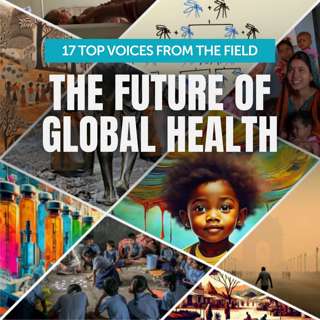
Village gossip, pesticide bans, and gene drives: 17 experts on the future of global health

Village gossip, pesticide bans, and gene drives: 17 experts on the future of global health

What does it really take to lift millions out of poverty and prevent needless deaths?In this special compilation episode, 17 past guests — including economists, nonprofit founders, and policy advisors...

7 Apr 4h 6min

What everyone is missing about Anthropic vs the Pentagon. And: The Meta leaks are worse than you think.

What everyone is missing about Anthropic vs the Pentagon. And: The Meta leaks are worse than you think.

When the Pentagon tried to strong-arm Anthropic into dropping its ban on AI-only kill decisions and mass domestic surveillance, the company refused. Its critics went on the attack: Anthropic and its s...

3 Apr 20min

#241 – Richard Moulange on how now AI codes viable genomes from scratch and outperforms virologists at lab work — what could go wrong?

#241 – Richard Moulange on how now AI codes viable genomes from scratch and outperforms virologists at lab work — what could go wrong?

Last September, scientists used an AI model to design genomes for entirely new bacteriophages (viruses that infect bacteria). They then built them in a lab. Many were viable. And despite being entirel...

31 Mars 3h 7min

#240 – Samuel Charap on how a Ukraine ceasefire could accidentally set Europe up for a bigger war

#240 – Samuel Charap on how a Ukraine ceasefire could accidentally set Europe up for a bigger war

Many people believe a ceasefire in Ukraine will leave Europe safer. But today's guest lays out how a deal could potentially generate insidious new risks — leaving us in a situation that's equally dang...

24 Mars 1h 12min
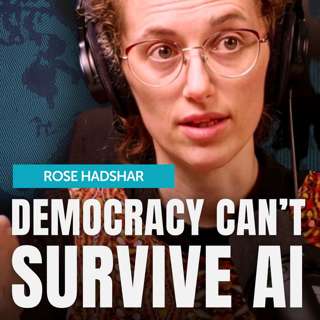
#239 – Rose Hadshar on why automating all human labour will break our political system

#239 – Rose Hadshar on why automating all human labour will break our political system

The most important political question in the age of advanced AI might not be who wins elections. It might be whether elections continue to matter at all.That’s the view of Rose Hadshar, researcher at ...

17 Mars 2h 14min

Populärt inom Utbildning

rss-bara-en-till-om-missbruk-medberoende-2
historiepodden-se
det-skaver
harrisons-dramatiska-historia
nu-blir-det-historia
allt-du-velat-veta
johannes-hansen-podcast
not-fanny-anymore
rss-viktmedicinpodden
roda-vita-rosen
rss-foraldramotet-bring-lagercrantz
sektledare
i-vantan-pa-katastrofen
sa-in-i-sjalen
rss-max-tant-med-max-villman
rss-sjalsligt-avkladd
alska-oss
rss-basta-livet
rss-om-vi-ska-vara-arliga
rikatillsammans-om-privatekonomi-rikedom-i-livet