Clever crows and cheeky keas
Many Minds2 Sep 2020

Clever crows and cheeky keas

Welcome back everyone! Hope you all had a great August. And hope you're all—like me—jazzed about the start of Season 2 of Many Minds.

There's a viral video clip from 2014—maybe you've seen it. It features a subject in a pretty remarkable psychology experiment. He's put in room full of different apparatuses, one of which contains reward. After sizing up the room, the subject gets started. The first thing he does is tug on a string until he can reach a short stick that's tied to the end of it. He then uses that stick to retrieve a stone that was just out of his reach, behind some bars; then he retrieves another stone in the same way; then a third. One at a time, he picks up the stones, takes them across the way, and plunks them down a tube. Nothing happens at first but, after the third stone, the combined weight lowers a trap door, releasing a long stick. The subject then uses that long stick to carefully pry out his reward from a deep hole.

It's an impressive display of problem solving. But what's most remarkable is that the subject in question is not a Psych 101 student but a bird—a New Caledonian crow, to be exact—and his name is 007.

My guest on today's show is Alex Taylor, an Associate Professor of Psychology at the University of Auckland. He's the one who devised this challenge for 007—it brings together a number of tasks he's used with New Caledonian crows over the years to try to understand their striking capacities for tool use, for planning, and for reasoning of different kinds.

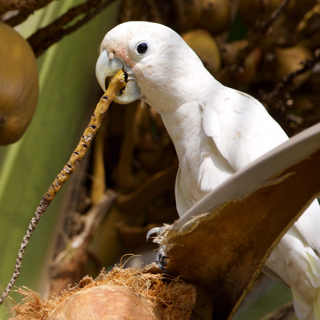
We talk about how Alex got interested in crows and how he studies them; we talk about what seems to be going on in their minds when they solve multi-step puzzles; we talk about the kinds of tools that crows make and use in the wild and the emerging evidence that using those tools puts them in a good mood. We then zoom out to discuss some of the leading ideas about what drives the evolution of intelligence behavior, whether in crows or chimps or children. We also touch on some of Alex's new work with another species—the kea, an alpine parrot native to the south Island of New Zealand. We talk about how the kea are in some ways a foil to the New Caledonian crow—a bit more curious, a bit more fun-loving—but also super sharp in their own ways.

This conversation was a real treat. Like many folks, it seems, during the lockdown this spring I found myself with a newfound interest in birds. So I was especially excited to get to tour the world of avian cognition with Alex—a leading researcher in the area and an affable guide at that.

I think you'll get a kick out of this one folks—and I'm happy to bet it'll have you looking at your neighborhood corvids in a whole new light. Without further preamble, here's my conversation with Dr. Alex Taylor. Enjoy.

A transcript of this interview is available here.

Notes and links

4:00 ­– A popular article about the famed feats of Betty, a New Caledonian crow. An early publication establishing these crows' impressive tool-making abilities.

8:00 – The corvid family is large and diverse. Accessible introductions to corvids and corvid cognition can be found here and here.

13:30 – Dr. Taylor's first study with crows dealt with meta-tool use—the use of one tool on another. An image depicting the set-up of the study can be found here.

17:30 – An article about how New Caledonian crows craft and use tools in the wild.

19:34 – A study suggesting that the pandanus tools made by New Caledonian crows may exhibit cumulative cultural evolution. (We discussed the importance of cumulative culture in humans in an earlier episode.)

22:20 – A 2019 study by Dr. Taylor and colleagues investigating the types of mental representations crows seem to be using during multi-stage problem solving tasks.

24:10 – A 2019 study by Dr. Taylor and colleagues suggesting crows might enjoy using tools. The procedure involved a cognitive bias task first developed in this 2004 study.

30:50 – A classic study in psychology analyzing individual differences in how much people like thinking—that is, their "need for cognition."

35:00 – Aesop's fable about the crow and the pitcher. The fable was first adapted into an experimental task in this study. Dr. Taylor and colleagues have since used variations of the task to probe crows' causal understanding. Here is one overview of this work.

41:20 – A study by Dr. Taylor and colleagues examining how human children do on the Aesop's fable task.

42:35 – Dr. Taylor's "signature testing" proposal is discussed here.

53:50 – A 2017 study showing that monkeys can be trained to pass the mirror test by using laser pointers. (We discussed the mirror test in a previous episode.)

56:34 – A paper by Dr. Taylor and a colleague discussing the equivocal evidence for the "technical intelligence hypothesis"—the idea that selection for tool use leads to selection for general intelligence.

58:17– An article about "encephalization" as a proxy for animal intelligence.

1:02: 35 – A paper by the philosopher Kim Sterelny about the origins of human intelligence.

1:04:33 – Read about the charismatic kea here.

1:09:45 – A 2017 study showing that a distinctive vocalization produced by kea may be involved in positive emotional contagion, much like human laughter. In a new project, in collaboration with Ximena Nelson and other colleagues, Dr. Taylor is trying to further understand this behavior.

1:10:48 – A recent study by Dr. Taylor and colleagues about the kea's ability to integrate different kinds of information. Watch a video about this study here.

Alex Taylor's end-of-show recommendations:

The Genius of Birds by Jennifer Ackerman

The Bird Way by Jennifer Ackerman

Bird Brain by Nathan Emery

The best way to keep up with Dr. Taylor's work is to follow his lab on Twitter (@AnimalMindsUoA) or Facebook (https://www.facebook.com/AnimalMindsUoA/). You can also check out his lab website: http://www.animalmindslab.com.

Many Minds is a project of the Diverse Intelligences Summer Institute (DISI) (https://www.diverseintelligencessummer.com/), which is made possible by a generous grant from the Templeton World Charity Foundation to UCLA. It is hosted by Kensy Cooperrider, with creative support from DISI Directors Erica Cartmill and Jacob Foster, and Associate Director Hilda Loury. Our artwork is by Ben Oldroyd (https://www.mayhilldesigns.co.uk/). Our transcripts are created by Sarah Dopierala (https://sarahdopierala.wordpress.com/).

You can subscribe to Many Minds on Apple, Stitcher, Spotify, Pocket Casts, Google Play, or wherever you like to listen to podcasts.

We welcome your comments, questions, and suggestions. Feel free to email us at: manymindspodcast@gmail.com.

For updates about the show, follow us on Twitter: @ManyMindsPod.

Det här avsnittet är hämtat från ett öppet RSS-flöde och publiceras inte av Podme. Det kan innehålla reklam.

Avsnitt(167)

From the archive: Varieties of childhood

From the archive: Varieties of childhood

Hi friends! We're taking a bit of a summer pause. We'll be back soon—in the meanwhile, enjoy this listener favorite from our archives! ----- [originally aired July 10, 2025] Childhood is a special tim...

31 Juli 1h 28min
From the archive: Philosophers on psychedelics

From the archive: Philosophers on psychedelics

Hi friends! We're taking a bit of a summer pause. We will be back soon—in the meanwhile, enjoy this listener favorite from our archives! ----- [originally aired May 14, 2025] Some call it the "psyched...

17 Juli 1h 40min
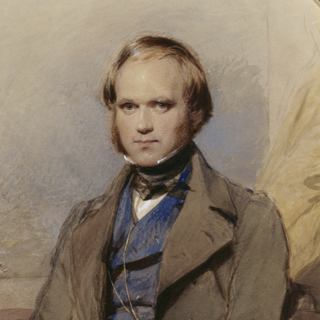
The origins of Darwin's ideas

The origins of Darwin's ideas

No discipline, no sphere of intellectual life, has been untouched by the work of Charles Darwin. He died in 1882 but his ideas are very much alive; they're now central to how we understand the natural...

3 Juli 1h 19min

The sparkling deep

The sparkling deep

It's tempting to see bioluminescence as an oddity, one of those rare eccentricities of life on earth. And, on land, maybe that's true. But our planet is mostly water, and out in the open ocean biolumi...

20 Juni 1h 20min

Is Man the Hunter just a myth?

Is Man the Hunter just a myth?

There's a story about of our past that you know well. It goes like this: At some point earlier in human evolution, we started to hunt. Men in particular—perhaps channeling some deep-seated aggressive ...

5 Juni 1h 32min

Babies, dogs, and the riddles of word learning

Babies, dogs, and the riddles of word learning

It's kind of astonishing, really, that kids ever learn words. Each one poses a little riddle. Does this sound string refer to a person? A category of things? Or maybe some other feature of the bloomin...

22 Maj 1h 18min

The inner life of the hand

The inner life of the hand

Newton saw in the human hand proof of the divine; Darwin saw a key to our species' success. Many others, too, have described the hand in hyperbolic terms, as a paragon of design, a cornerstone of huma...

7 Maj 1h 10min

From the archive: The cuttlefish and its coat of many colors

From the archive: The cuttlefish and its coat of many colors

Hi friends! We're skipping a beat to take care of some spring housekeeping tasks. We will be back in May! In the meanwhile, enjoy this listener favorite from our archives! ----- [originally aired Apri...

22 Apr 1h 33min

Populärt inom Utbildning

det-skaver
rss-bara-en-till-om-missbruk-medberoende-2
historiepodden-se
nu-blir-det-historia
allt-du-velat-veta
harrisons-dramatiska-historia
johannes-hansen-podcast
not-fanny-anymore
roda-vita-rosen
rss-viktmedicinpodden
i-vantan-pa-katastrofen
rikatillsammans-om-privatekonomi-rikedom-i-livet
sa-in-i-sjalen
sektledare
rss-max-tant-med-max-villman
rss-autismandan
rss-basta-livet
rss-traningsklubben
rss-i-skenet-av-blaljus
vi-gar-till-historien