From the archive: A smorgasbord of senses
Many Minds13 Dec 2023

From the archive: A smorgasbord of senses

Hi friends, we're on hiatus for the fall. To tide you over, we're putting up some favorite episodes from our archives. Enjoy!

----

[originally aired July 20, 2022]

The world is bigger than you think. I don't mean geographically, though maybe that too. I mean in terms of its textures and sounds and smells; I mean in terms of its hues and vibrations. There are depths and layers to the world that we don't usually experience, that we might actually never be able to experience. Our senses just aren't wired to take it all in. We're simply not tuned to all the dimensions of reality's rich splendor. But there is a way we can appreciate these hidden dimensions: with a flex of the imagination, we can step into the worlds of other creatures; we can try out different eyes and noses; we can voyage into different perceptual universes. Or at least we can try.

My guest today is Ed Yong, author of the new book An Immense World: How Animal Senses Reveal the Hidden Realms Arounds Us. Ed is a science writer for The Atlantic and the author of an exceptional earlier book on the microbiome called I Contain Multitudes. This new book tours the wide diversity of animal senses. It asks what it's like to be a bat, sure, but also what it's like to be a star-nosed mole, a manatee, or a mantis shrimp. Informed by some truly extraordinary science, the book considers how it might feel to electrolocate around the ocean, to hear through the threads of a web, or to be tugged by the earth's magnetic field.

There's a lot of praise I could lavish on this book, but I'll just say this: it really makes you feel more alive. Reading it makes everything, in fact, seem more alive. It makes the world seem richer, more vivid, somehow more technicolor and finely textured. It makes you realize that every organism, all the creatures we share this planet with, possesses a kind of vibrant genius all their own.

After this episode we will be on a short holiday, and then we'll be gearing up for Season 4. If you have guests or topics you want us to cover, please send us a note. And, of course: if you've enjoyed the show so far, we would be most grateful if you would leave us a rating or a review. I know I say this all the time, and it's probably a bit annoying: but it really, truly helps, and I would personally, very much appreciate it!

Alright friends, now to my conversation with Ed Yong. Enjoy!

A transcript of this episode is available here.

Notes and links

3:30 – One of our earlier audio essays—'Me, my umwelt, and I'—profiled von Uexküll and his concept of an Umwelt.

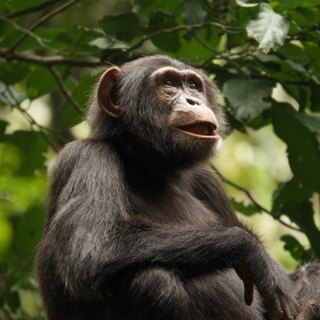
6:00 – The classic Nagel article 'What is it like to be a bat?'; Mike Tomasello's recent variant, 'What is it like to be a chimpanzee?', which we discussed just last episode.

10:00 – One of many articles by Ed about COVID-19. He was awarded a Pulitzer prize for his coverage of the pandemic.

14:30 – A popular article on proprioception.

19:00 – A research article on the evolution of opsin proteins.

20:00 – A primer on echolocation.

25:00 – A brief article on heat-sensitive pits in snakes.

26:30 – An academic article about the "star" of the star-nosed mole. A video showing the star-nosed mole in action.

31:00 – A popular article about the eyes of starfish.

32:00 – A collection of research articles about the Ampullae of Lorenzini.

35:00 – A very recent article about spider webs as "outsourced" hearing.

38:00 – A research article about aspects of bird song that humans can't hear.

40:00 – A study by Lucy Bates and colleagues about how elephants operate with a spatial model of where their kin are.

You can read more about Ed's work at his website, catch up on his stories in The Atlantic, or follow him on Twitter.

Many Minds is a project of the Diverse Intelligences Summer Institute, which is made possible by a generous grant from the Templeton World Charity Foundation to UCLA. It is hosted and produced by Kensy Cooperrider, with help from Assistant Producer Urte Laukaityte and with creative support from DISI Directors Erica Cartmill and Jacob Foster. Our artwork is by Ben Oldroyd. Our transcripts are created by Sarah Dopierala.

Subscribe to Many Minds on Apple, Stitcher, Spotify, Pocket Casts, Google Play, or wherever you listen to podcasts. You can also now subscribe to the Many Minds newsletter here!

We welcome your comments, questions, and suggestions. Feel free to email us at: manymindspodcast@gmail.com.

For updates about the show, visit our website or follow us on Twitter: @ManyMindsPod.

Det här avsnittet är hämtat från ett öppet RSS-flöde och publiceras inte av Podme. Det kan innehålla reklam.

Avsnitt(162)

Babies, dogs, and the riddles of word learning

Babies, dogs, and the riddles of word learning

It's kind of astonishing, really, that kids ever learn words. Each one poses a little riddle. Does this sound string refer to a person? A category of things? Or maybe some other feature of the bloomin...

22 Maj 1h 18min

The inner life of the hand

The inner life of the hand

Newton saw in the human hand proof of the divine; Darwin saw a key to our species' success. Many others, too, have described the hand in hyperbolic terms, as a paragon of design, a cornerstone of huma...

7 Maj 1h 10min

From the archive: The cuttlefish and its coat of many colors

From the archive: The cuttlefish and its coat of many colors

Hi friends! We're skipping a beat to take care of some spring housekeeping tasks. We will be back in May! In the meanwhile, enjoy this listener favorite from our archives! ----- [originally aired Apri...

22 Apr 1h 33min

Illuminating cave art

Illuminating cave art

Deep in our past, in the dark depths of caves, our ancestors did something strange and beautiful. Working by firelight, some doodled little designs. Others made hand stencils. Some saw a bulge of rock...

9 Apr 1h 25min

What can AI teach us about the mind?

What can AI teach us about the mind?

Everyone is talking about AI these days. Often these conversations are about how AI might upend education, or work, or social life, or maybe civilization itself. But among cognitive scientists and psy...

26 Mars 1h 21min

Mutualisms all the way down

Mutualisms all the way down

No one is an island. We all depend on each other in critical, often tangled ways. And when I say "we" and "each other" I don't just mean humans. Yes, we humans rely on other humans. But we also rely o...

11 Mars 1h 8min

Seven metaphors for AI

Seven metaphors for AI

If you wanted a petri dish for understanding metaphors—how they emerge and evolve and jostle with each other—it would be hard to do better than the world of AI. We talk about AI systems variously as c...

26 Feb 55min

Origins of the kiss

Origins of the kiss

Humans do some pretty weird things. Some of us will sit in searingly hot rooms or jump into icy ponds. Others risk their lives trying to climb to new heights or dive to new depths. And every once in a...

12 Feb 1h 1min

Populärt inom Utbildning

historiepodden-se
det-skaver
rss-bara-en-till-om-missbruk-medberoende-2
harrisons-dramatiska-historia
nu-blir-det-historia
johannes-hansen-podcast
roda-vita-rosen
allt-du-velat-veta
rss-viktmedicinpodden
not-fanny-anymore
sa-in-i-sjalen
i-vantan-pa-katastrofen
sektledare
rss-foraldramotet-bring-lagercrantz
kan-jag-sa-kan-du-podden
rss-om-vi-ska-vara-arliga
rss-sjalsligt-avkladd
rss-max-tant-med-max-villman
rikatillsammans-om-privatekonomi-rikedom-i-livet
rss-traningsklubben