
20VC: Klarna Founder Sebastian Siemiatkowski on Scaling Europe's Most Valuable Private Tech Company, How To Motivate and Challenge Your Team Most Effectively & The Biggest Lessons From Working with Mike Moritz

20VC: Klarna Founder Sebastian Siemiatkowski on Scaling Europe's Most Valuable Private Tech Company, How To Motivate and Challenge Your Team Most Effectively & The Biggest Lessons From Working with Mike Moritz

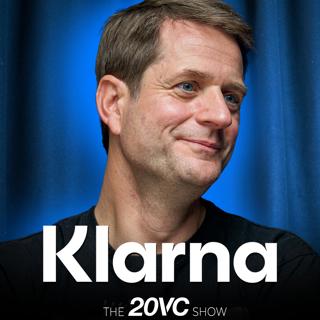
Sebastian Siemiatkowski is the Founder and CEO @ Klarna, the company that makes online shopping simple, allowing you to buy what you need today and pay later. To date, Sebastian has raised over $2.1Bn for the company from the likes of Sequoia, Silver Lake, Blackrock, DST, Northzone, Creandum and even Snoop Dog to name a few. Klarna has been an incredible 16-year journey for Sebastian with it now being the most valuable private technology company in Europe with over 3,500 employees.

In Today's Episode You Will Learn:

I. The Importance Of Learning To Learn Fast

What is the best way to learn fast?

"People talk about it like there's this learning curve, and the best spot is at the place where you're challenged to the precise point where you're almost giving up, but not entirely. That's exactly it.

"And I have this amazing swim teacher for my children, her name is Petra, and she's just fantastic. I just love watching her because she has this ability of taking my children in the pool and pushing them to that exact point where they are almost, almost giving up, and they're learning at such a pace. And if I can recreate such an environment in Klarna, if I can create an environment, if I can be part of creating an environment where we put people in that position where they just are exactly at that curve where they are challenged, supported, and kind of at the edge and being given the ability to learn really fast and really discover what it means to have an impact."

Does Sebastian compare his work to other companies'?

"I don't think that much about what other people or other companies or other things out there could have done different. And there's pros and cons to that. But the benefits of that is that it speeds up my learning. Because a lot of people – and I've realized that as I manage other people – is that because they're so obsessed with trying to think about what other people could have done differently, and why situations arose, and why it wasn't their responsibility and so forth, they spend a lot of time on that, because we've unfortunately been brought up in some kind of guilt that it's bad to do wrong, and it's bad if it's our fault, and you want to avoid that.

"And these psychological constraints, unfortunately, hinder people from developing much faster, because if you go into every situation and say, the only thing that's relevant here is what I could have done differently, what I could have learned from this – if that's the only thing, it's just like, whatever, I accept my responsibilities. What could I have done differently? If you only focus on that, you just learn much faster."

How does Sebastian transform his self-doubt into a positive?

"I think self-doubt is not nothing. It's not a bad thing, right? It's a very healthy thing, if it represents you continuously trying to understand, am I doing the right thing? Is this something that I want to do? Am I making the right decisions? So I think it's extremely healthy to do that. I'm not saying it's not painful or tough when you have it. But I think it's a very positive thing.

"I'm much more worried when people tell me they have no self-doubt. And then I'm like, uh-oh, because that means that you're not really reflecting on your actions, and you're not learning from them. So I wish I could give you something more comforting than that, but I would actually say enjoy it. Be happy that you have it, and it's gonna make you a better person."

II. Sebastian's Management Philosophy

What does Sebastian believe companies can learn from soccer?

"I love the fact that Michael Moritz wrote this book that I still haven't read, so it's kind of funny that I'm referring to it, but he wrote this book about Ferguson, that manager of Manchester United. And I think it's very relevant, because today, the saying is that for people to be motivated at work, they need to have a higher purpose, the company needs to do something good, and so forth. And I am not disputing that, that is very true that it contributes to people's sense of purpose, and so forth.

But before you even get to that level, we have to ask ourselves, what is it really that makes people motivated and enjoy themselves? And I think when I think about that, I often look at sports, because why do people love soccer? What's the higher purpose of winning Champions League? People say, oh, there's a massive higher purpose, but not entirely, you're not really making the planet better by winning. Still, people are massively engaged in these things. Why?

"Because it's a team effort, there are clear roles, you know exactly what you're supposed to do – I'm supposed to put the ball in that score. And then it's very clear how you win, there is a referee that stops people from cheating. And so there's a lot of things in that environment that makes it motivating, that makes people engaged, and those things are usually lacking in companies."

How do you know when someone is at that crucial point of the learning curve?

"The problem with a company is that it's a much more complex environment with a lot of other things going on in parallel in people's lives. And so I have definitely occasionally missed to see that people are beyond that point."

"In Sweden, there's this course called Situation Adopted Management, which basically means that there is no single management technique. You look into the situation, you try to understand it from multiple angles. And then depending on where that individual is, and how you perceive the mental status, and the mood of that individual, and so forth, you try to adapt. Either you coach or you challenge or you instruct or you do different things. There's not a single methodology that will allow you to deal with those situations. But a lot of it is empathy. It's the ability to look at people and read them, and try to understand, and ask them questions, and understand where they are."

III. How Sebastian Manages Complexity At Scale

What are Sebastian's biggest lessons learned from Klarna growing to 3000+ people spread across multiple offices across the world?

  1. It's the manager's job to deal with the complexity in a company
  2. It's not for everyone

What role does Sebastian believe a manager should play in a company as it scales?

"I think a lot of times as a company grows, what ends up happening is the thing just becomes so complex. So management tries to organize the company in a way that makes sense to them and that is easy to understand for them. But the consequence of that often, unfortunately, is it makes no sense for the person who's actually doing the job. So they lose the purpose. Why am I coming to work? What are we trying to achieve? All of these things get lost.

"So what we said is, we have to do the exact opposite. The critical element is that the people who are actually supposed to do something – not the manager – the people actually supposed to do something, if they program or to do a marketing campaign, or whatever they're doing, they need to come to work every day and feel I know exactly why I'm coming, I know how I'm contributing, I know who I'm contributing for, I know what value I'm creating.

"And if that thing creates tons of complexity for us, as managers, because the whole system becomes much more complex, then that's what we're getting paid for. That's the one. That's why we're getting a good salary. Because we need to manage that complexity."

What does Sebastian look for in talent?

"Keep very close on the recruitment … Especially in a country like Sweden, a country where a typical saying is, alla ska komma med, which means, everyone should come, everyone should join. And it's very nice. And I appreciate that with Swedish culture, I'm not trying to really call it. I think it's fantastic and it's a fantastic society. But as a consequence, it took us some time to conclude something which maybe in the US or maybe even in the UK as it would have been much more obvious, which is that it's not a company for everyone. It is a company for the people that want to have that challenge, that want to be in that environment, that think that's interesting, that want to learn a lot fast, and want to get a lot of things done. And that's not everyone, and that's okay.

"Like when you play soccer – some people play soccer for fun, other people play to win the Champions League. People do it for different reasons. And they have different ambitions with it and different objectives with it. And the same applies to us.

"So it took us some time to realize that we need to tell people, look, just so you know, this is not going to be your standard company, you're going to be expected to do a hell of a lot of things, you're going to be expected to be challenged, you're going to expect it to do your utmost. And we're going to try to support you and help you and grow. So just know what you're getting into, before you get into it."

IV. Retail Banking 10 Years From Now

What does Sebastian see as the future of everyday banking services?

"One thing I would say, it's going to be a much smaller industry. And that's because it is ridiculous that moving money back and forth is a trillion-dollar industry. That is ridiculous. There is no good reason for that whatsoever. This is going to be a much more cost-efficient, much smaller revenue business than it is today. But even though it would be much smaller than it is today, it's still massive, and Klarna has the opportunity to be one big player in that industry, similar to what Tesla is doing in cars or whatever, that's what I want to do. And I feel we have all the prerequisites to accomplish that."

"There's going to be this push that's going to transform this industry and the people are going to lose on it are the suits in the marble offices in the city centers. That's where the pain is going to be felt, but the winner is going to be the consumer."

What do the next five years look like for Klarna?

"It's a little bit like self-driving cars – we all know it's going to happen, the question is when. And based on what I've seen in the last 15 years, and I've seen how retail has gone from retail to ecommerce and all these trends, this decade is going to be the disruption of retail banking.

"At the end of this decade, there will be a couple of new total players that will be very dominating in this space, and the rest will either cease to exist, will merge and try to acquire some of the new ones, or maybe a few of them will manage to reinvent themselves. But this is going to be an extremely interesting time."

Sebastian's Favourite Book: The Neverending Story

As always you can follow Harry and The Twenty Minute VC on Twitter here!

Likewise, you can follow Harry on Instagram here for mojito madness and all things 20VC.

Avsnitt(1391)

20Sales: Scaling Snowflake from $0-$3BN in ARR | Snowflake vs Databricks: My Biggest Lessons | Why Customer Success is BS and What Replaces It with Chris Chris Degnan

20Sales: Scaling Snowflake from $0-$3BN in ARR | Snowflake vs Databricks: My Biggest Lessons | Why Customer Success is BS and What Replaces It with Chris Chris Degnan

Chris Degnan is the former Chief Revenue Officer at Snowflake, where he was instrumental in scaling the company from less than $1M in ARR to over $3B in annual revenue. He joined as the first sales hires and built Snowflake's go-to-market engine from scratch, growing the team from to more than 6,000 globally. Under his leadership, Snowflake became one of the fastest-growing enterprise software companies in history, achieving a record-breaking IPO in 2020. AGENDA: 04:34 How to Build a Sales Team from Scratch 07:49 How to Hire and Evaluate Sales Leaders 15:23 Four Big Lessons Scaling Snowflake to $3BN ARR 31:30 Comparing Snowflake and Databricks: What Databricks Did Better? 35:26 How to Manage Sales Team Morale in Competitive Markets 43:53 Why Customer Success is BS and What To Do With It 48:31 How Every Sales Leader Needs to Change in An AI World 49:37 Biggest Reflections on Sales Leadership 54:38 Quick Fire Questions and Final Thoughts 20Sales: Scaling Snowflake from $0-$3BN in ARR | Snowflake vs Databricks: My Biggest Lessons | Why Customer Success is BS and What Replaces It with Chris Chris Degnan

10 Okt 1h 2min

20VC: OpenAI's Multi $BN Deal with AMD | Polymarket, Vercel and Supabase Raise Mega Rounds | Does King Making Really Work in Venture Capital: Harvey vs Legora | Chamath is Back: The SPAC is Back

20VC: OpenAI's Multi $BN Deal with AMD | Polymarket, Vercel and Supabase Raise Mega Rounds | Does King Making Really Work in Venture Capital: Harvey vs Legora | Chamath is Back: The SPAC is Back

AGENDA: 03:29 OpenAI and AMD's Major Partnership 07:35 Microsoft Have F***** Up the OpenAI Partnership 17:08 OpenAI's Developer Day Announcements 20:45 Why VC is the Most Forgiving Asset Class on Price and Valuation 29:10 What Does it Take to IPO in 2025: Why Snyk Will Not IPO 42:30 Four Strategies Companies Need to Take to Own Their Own Destiny 49:31 Vercel Raises $300M at $9BN: Suicide Round or Strategic 55:39 Does King Making Really Work in Venture Capital: Legora vs Harvey 01:08:11 Chamath Raises Latest SPAC: SPACs are Back 01:10:56 Polymarket Raises $2BN at a $9BN Valuation 01:14:53 Quick Fire Questions and Wrap-Up

9 Okt 1h 24min

20VC: Cerebras CEO on Why Raise $1BN and Delay the IPO | NVIDIA Showing Signs They Are Worried About Growth | Concentration of Value in Mag7: Will the AI Train Come to a Halt | Can the US Supply the Energy for AI with Andrew Feldman

20VC: Cerebras CEO on Why Raise $1BN and Delay the IPO | NVIDIA Showing Signs They Are Worried About Growth | Concentration of Value in Mag7: Will the AI Train Come to a Halt | Can the US Supply the Energy for AI with Andrew Feldman

Andrew Feldman is Co-Founder & CEO of Cerebras, building the world's fastest AI inference and training. Cerebras recently closed a $1.1BN Series G round at an $8.1 billion valuation, backed by top names including Fidelity, Atreides, Tiger Global, Valor Equity and 1789 Capital. Under his leadership, they've leapfrogged GPU limits in inference, operate at trillions of tokens per month, and are filing to go public soon. AGENDA: 02:43 Why We Did Not IPO and Raised $1BN From Fidelity 05:03 Analysis of Chip and Compute Landscape Today 07:14 NVIDIA Showing Signs They Are Running Out of Ideas 13:57 The Real Questions to Ask on Chip Depreciation 24:54 Energy Requirements for AI: Is it Feasible? 29:25 Mag7 Value Concentration: Feature or a Bug 31:57 Talent is the Bottleneck and Trump Makes it Worse 32:55 The War for Talent: Secrets No One Sees 34:22 Evaluating the Data Centre Economy: Many Will Lose Money 38:01 Three Changes the US Could Make to Beat China in AI 42:30 Why 80% of our Revenues are in the UAE 47:26 Quick Fire Questions 58:59 Why Work Life Balance is Total BS

6 Okt 1h 4min

20Growth: How to Use Influencers to Scale Growth Insanely Fast | How to Optimise User Onboaring for Growth | How the Best Growth Teams Create Organic Growth and Community | Why LTV/CAC Models are BS with Ketty Slonimsky

20Growth: How to Use Influencers to Scale Growth Insanely Fast | How to Optimise User Onboaring for Growth | How the Best Growth Teams Create Organic Growth and Community | Why LTV/CAC Models are BS with Ketty Slonimsky

Ketty Slonimsky is Chief Growth Officer at Palta, the platform behind apps like Flo (the #1 female health app with 77M+ MAU), Simple, and Zing AI, where she leads a centralized growth function across the portfolio. She was previously first VP Product & Growth at HeliosX (£900M+ ARR, bootstrapped D2C healthtech), has advised companies like SonderMind, Runna, Guardio, Cheddar, P&G Digital Ventures, and is a board advisor at HeliosX. AGENDA: 02:33 What is Growth and When to Hire For It 06:04 Three Profiles of Successful Growth Leaders 10:07 Challenges and Learnings from Failed Ventures 21:17 How to Optimise User Onboarding for Growth 26:14 Biggest Lessons on Retention 30:25 How to Artificially Create Organic Growth and Community Building 32:10 Why LTV Models are BS 37:35 How to Use Influencers to Grow Insanely Fast 47:07 The Metrics that Matter in Growth 49:48 Push Notifications and Engagement: What To Do vs What Not to Do? 51:57 Quick Fire Round

3 Okt 1h

20VC: Are Burn Multiples BS in an AI World | Sam Altman Needs $1TRN of Energy | Klarna, Figma, Stubhub, all Down: Are Public Markets Turning? | FiveTran and DBT: Is the Wave of Consolidation About to Begin?

20VC: Are Burn Multiples BS in an AI World | Sam Altman Needs $1TRN of Energy | Klarna, Figma, Stubhub, all Down: Are Public Markets Turning? | FiveTran and DBT: Is the Wave of Consolidation About to Begin?

AGENDA: 03:58 Understanding Burn Multiples and Capital Efficiency in an AI World 11:54 What Metrics Founders Need to Focus on in a World of AI 19:31 The Role of Kingmakers in Venture Capital: Harvey, Abridge, Profound 33:42 Klarna, Figma, Stubhub, all Down: Are Public Markets Turning? 36:35 OpenAI Needs the Same Energy as Japan… WTF! 41:09 How Can We Fund the $1TRN Sam Altman Needs for Energy 52:39 FiveTran and DBT: Is the Wave of Consolidation About to Begin? 59:44 Does Private Equity Need to Change in a World of AI 01:06:23 Political Expression and Corporate Responsibility

2 Okt 1h 16min

20VC: OpenAI and Anthropic Will Build Their Own Chips | NVIDIA Will Be Worth $10TRN | How to Solve the Energy Required for AI... Nuclear | Why China is Behind the US in the Race for AGI with Jonathan Ross, Groq Founder

20VC: OpenAI and Anthropic Will Build Their Own Chips | NVIDIA Will Be Worth $10TRN | How to Solve the Energy Required for AI... Nuclear | Why China is Behind the US in the Race for AGI with Jonathan Ross, Groq Founder

Jonathan Ross is the Founder & CEO of Groq, the AI chip company redefining inference at scale. Under his leadership, Groq has raised over $3B from top investors. The company has reached a valuation of nearly $7B, positioning itself as one of NVIDIA's most formidable challengers. Previously at Google, Jonathan led the team that built the first Tensor Processing Unit (TPU), making him one of the leading architects of modern AI hardware. AGENDA: 00:00 The Future of AI and Compute 05:07 Why the Hyperscalers Have to Keep Spending Recklessly on AI 12:49 Why OpenAI and Anthropic Will Have to Build Their Own Chips 19:47 OpenAI and Anthropic Will be $5BN Companies: The Bull Case 29:50 Why China is Behind the US in AI and Deepseek is More Expensive to Run 33:55 How Europe Could Compete in AI and Why the US is More Risk Averse Than Europe 42:51 Why AI Will Lead to Too Many Not Too Few Jobs 43:19 Deflationary Pressures and New Job Markets 45:51 The Future of Vibe Coding 47:14 Why AI Companies Should Strive to Have Low Margins 49:31 Why We Have to Have Nuclear Energy and How to Bring it Back 56:55 How Permits are Ruining the Potential of AI 01:03:58 Why OpenAI and Anthropic are so Undervalued 01:16:53 Quickfire: Biggest Fear, Nvidia: $10TRN, Zuck Buying AI: Work or Not

29 Sep 1h 21min

20Product: Revolut Business $1BN Revenue: Five of the Biggest Product Lessons | How Revolut Structures Product and Design Teams | How Revolut Experiments and Invests in New Product Bets | How Revolut Ships Product So Fast with James Gibson

20Product: Revolut Business $1BN Revenue: Five of the Biggest Product Lessons | How Revolut Structures Product and Design Teams | How Revolut Experiments and Invests in New Product Bets | How Revolut Ships Product So Fast with James Gibson

James Gibson is Head of Revolut Business. Under his leadership, Revolut Business now processes over $33 billion in monthly transaction volume and generates more than $1BN in annualised revenue. AGENDA: 04:10 Is Consulting the Worst Background for Aspiring PMs 07:09 How Revolut Hires for it's Product Team 17:21 How Revolut Sets Goals: What Works, What Does Not 19:37 How Revolut Structures Their Product Teams 22:13 How Revolut Structures Product Review Sessions 27:23 New Bets Process at Revolut 29:11 How Revolut Balances Super Users and General Customers 36:55 How Revolut Drives Product Velocity and Efficiency 39:26 Future of Product with AI 44:56 Quick Fire Questions and Reflections

26 Sep 54min

20VC: NVIDIA Invests $100BN Into OpenAI | Is Triple, Triple, Double, Double Dead | Navan Files to go Public & Notion Hits $500M ARR | The Impact of H1B Visas on Startups in the US

20VC: NVIDIA Invests $100BN Into OpenAI | Is Triple, Triple, Double, Double Dead | Navan Files to go Public & Notion Hits $500M ARR | The Impact of H1B Visas on Startups in the US

AGENDA: 00:00 Why I am 100% Equities and 0% Cash 04:35 Nvidia's Massive $100BN Investment in OpenAI 08:39 Is Anthropic Negatively Positioned by OpenAI Gaining NVIDIA Investment 27:30 Is Triple, Triple, Double, Double Dead 44:00 Navan Files to Go Public at $8BN 49:31 Lockup Periods and Liquidity 50:35 Impact of H-1B Visa Changes on Startups 01:02:42: Notion Hits $500M ARR Re-Accelerating 01:09:42 Why Founder Friendly is Total BS Today

25 Sep 1h 19min

Populärt inom Business & ekonomi

badfluence
framgangspodden
varvet
rss-jossan-nina
rss-borsens-finest
rss-svart-marknad
uppgang-och-fall
affarsvarlden
lastbilspodden
24fragor
fill-or-kill
rss-kort-lang-analyspodden-fran-di
avanzapodden
kapitalet-en-podd-om-ekonomi
borsmorgon
rss-dagen-med-di
bathina-en-podcast
tabberaset
rss-en-rik-historia
rss-inga-dumma-fragor-om-pengar