
20VC: The Memo: How to Raise a Venture Capital Fund (Part I) | The Core Lessons from Raising $400M Over The Last Four Years| The Biggest Mistakes VCs Make When Fundraising | How To Find and Build Relationships with New LPs

20VC: The Memo: How to Raise a Venture Capital Fund (Part I) | The Core Lessons from Raising $400M Over The Last Four Years| The Biggest Mistakes VCs Make When Fundraising | How To Find and Build Relationships with New LPs

How To Raise a Venture Capital Fund

Over the last 4 years, I have raised around $400M across different vehicles from many different types of investors. Today I am going to break down the early stages of how to raise a venture capital fund and then stay tuned for a follow-up to this where we will break down a fundraising deck for a fund, what to do, what not to do etc. But to the first element.

Your Fund Size is Your Strategy:

The most important decision you will make is the size of fund you raise. So much of your strategy and approach will change according to your fund size target (LP type, messaging, documentation, structure etc). Remember, your fund size is your strategy. If you are raising a $10M Fund, you are likely writing collaborative checks alongside a follower, if you are raising a $75M fund, you will likely be leading early-stage seed rounds. These are very different strategies and ways of investing.

MISTAKE: The single biggest mistake I see fund managers make is they go out to fundraise with too high a target fundraise. One of the most important elements in raising for a fund is creating the feeling of momentum in your raise. The more of the fund you have raised and the speed with which you have raised those funds dictate that momentum. So the smaller the fund, the easier it is to create that heat and momentum in your raise.

LESSON: Figure out your minimum viable fund size (MVFS). Do this by examining your portfolio construction. In other words, how many investments you want to make in the fund (the level of diversification) and then alongside that, the average check size you would like to invest in each company. Many people forget to discount the fees when doing this math and so the traditional fund will charge 2% fees per year and so across the life of the fund (usually 10 years), that is 20% of the fund allocated to fees.

Example:

We are raising a $10M Fund.

20% is allocated to fees for the manager and so we are left with $8M of investable capital.

A good level of diversification for an early-stage fund is 30 companies and so with this fund size, I would recommend 32 investments with an average of $250K per company. That is the $8M in invested capital. Big tip, I often see managers raising a seed fund and are only planning to make 15 investments, this is simply not enough. You have to have enough diversification in the portfolio if you are at the seed stage. No one is that good a picker. Likewise, I sometimes see 100 or even 200 investments per fund, this is the spray-and-pray approach, and although works for some, your upside is inherently capped when you run the maths on fund sizes with this many investments.

A big element to point out in this example is we have left no allocation for reserves. For those that do not know, reserves are the dollars you set aside to re-invest in existing portfolio companies. Different funds reserve different amounts, on the low end there is 0% reserves and on the high end some even have 70% of the fund reserved for follow-on rounds.

In this example, given the size of the fund being $10M with a seed focus, I would recommend we have a no-reserves policy. Any breakout companies you can take to LPs and create SPVs to concentrate further capital into the company. This is also better for you as the manager as you then have deal by deal carry on the SPVs that are not tied to the performance of the entire fund.

So now we know we know $10M is our MVFS as we want to make at least 30 investments and we want to invest at least $250K per company. Great, next step.

Set a target that is on the lower end, you can always have a hard cap that is significantly higher but you do not want the target to be too far away that LPs question whether you will be able to raise the fund at all. This is one of the biggest reasons why many do not invest in a first time fund, they are unsure whether the fund will be raised at all.

The Team:

Alongside the size of the fund, the team composition is everything, simply put, LPs like managers who have invested in the stage you are wanting to invest in moving forward. They like to see track record.

IMPORTANT: I see so many angels write checks into breakout Series B companies and then go out and try and raise a seed fund with this as their track record. Do not do this, this does not prove you are a good seed investor but merely shows you have access at the Series B. These are very different things.

With regards to track record, in the past, TVPI or paper mark-ups were enough, now there is a much greater focus on DPI (returned capital to investors). LPs want to see that you have invested before at that stage and they also want to see that the team has worked together before. You want to remove the barriers to no. If you have not worked with the partners you are raising with before, LPs will have this as a red flag, and as team risk, it is that simple.

Navigating the World of LPs (Limited Partners)

The size of the fund you are raising will massively dictate the type of LPs that will invest in your fund.

MISTAKE: You have to change your messaging and product marketing with each type of LP you are selling to. A large endowment fund will want a very different product to a Fund of Funds.

Example: If you are a large endowment, you will invest in early funds but you want the manager to show you a pathway to them, in the future, being able to take not a $10M check but a $50M check from the endowment. Whereas the Fund of Funds will likely want you to stay small with each fund. So when discussing fund plans, it is crucial to keep these different desires in mind.

If you are raising a $10M fund, you will be too small for institutional LPs and will raise from individuals and family offices. An LP will never want to be more than 20% of the LP dollars in a fund and so the size at which an institutional LP (really the smallest fund of funds) would be interested is when you raise $25M+ and they can invest $5M. Generalisation but a good rule of thumb to have.

LP Composition of Your Fund:

Speaking of one LP being 20% of the fund dollars, it is helpful to consider the LP composition you would like to have for your fund. The most important element; you want to have a diversified LP base. A diversified LP base is important in two different forms:

  1. No LP should be more than 20% of the fund at a maximum. That said you do not want to have so many investors in your fund it is unmanageable. LPs need time and attention and so it is important to keep that in mind when considering how many you raise from. Some LPs will want preferred terms or economics for coming into the first close or being one of the first investors, if you can, do not do this. It sets a precedent for what you will and will not accept and then for all subsequent investors, they will want the same terms and rights.
  2. You want to have a diversification of LP type (endowments, fund of funds, founders, GPs at funds etc). Why? In different market cycles, different LPs will be impacted and so if you only raise from one LP type, if a market turns against that LP class, then your next fund is in danger.

Example:

We will see the death of many mico-funds ($10M and below). Why? The majority raised their funds from GPs at larger funds and from public company founders. With the changing market environment, most GPs are no longer writing LP checks and most public market founders have had their net worths cut in half by the value of their company in the public market and so likewise, are no longer writing LP checks. In this case, the next funds for these funds will be in trouble as their core LP base is no longer as active as they used to be. We are seeing this today.

Prediction:

  • 50% of the micro-funds raised in the last 2 years will not raise subsequent funds.

Going back to the question of diversification, my preference and what we have at 20VC, the majority of dollars are concentrated from a small number of investors. Of a $140M fund, we have $100M invested from 5 large institutions. These are a combination of endowments, Family Offices, a High Net Worth Individual and a Fund of Funds. The remaining $40M originates from smaller institutions or individuals, for us we have over 50 making up that final $40M. For me, I really wanted to have a community around 20VC Fund and so we have over 40 unicorn founders invested personally in the fund as LPs.

Bonus Points: The best managers select their LPs to play a certain role or help with a potential weakness the manager has. For example, I was nervous I did not have good coverage of the Australian or LATAM startup market and so I was thrilled to add founders from Atlassian, Linktree, Mercado Libre, Rappi and Nubank as LPs to help in regions where I do not have such an active presence. If you can, structure your LP base to fill gaps you have in your ability.

Status Check In:

Now we know our minimum viable fund size, we know the team composition we are going out to raise with, we know the LP type that we are looking to raise money from and we know how we want our desired fund cap table to look.

Now we are ready to move to the LPs themselves.

Fill Your Restaurant with Friendlies:

As I said, the appearance of your raise having heat and momentum is important.

Mistake: The biggest mistake I see early fund managers make is they go out to large institutional investors that they do not have an existing relationship and spend 3-4 months trying to raise from them. They lose heat, they lose morale and the raise goes nowhere.

Whatever fund size you are raising, do not do this. Fill your restaurant with friendlies first. What does this mean? Go to anyone you know who would be interested in investing in your fund and lock them in to invest. Create the feeling that progress is being made and you have momentum.

BONUS POINTS: The best managers bring their LPs with them for the fundraise journey. With each large or notable investor that invests in your fund, send an email to the LPs that have already committed to let them know about this new notable investor. This will make them feel like you have momentum, they are in a winner and many will then suggest more LP names, wanting to bring in their friends.

MISTAKE: Do not set a minimum check size, some of the most helpful LPs in all of my funds have been the smallest checks. Setting a minimum check size will inhibit many of the friendlies from investing and prevent that early momentum.

The bigger the name the incoming investor has the better. You can use it for social validity when you go out to raise from people you know less well or not at all. Different names carry different weight, one mistake I see many make is they get a big name invested in their fund but it is common knowledge to everyone that this LP has done 200 or 300 fund investments, in which case, it does not carry much weight that they invested in your fund. Be mindful of this as it can show naivety if you place too much weight on a name that has invested in so many funds.

Discovery is Everything:

The world of LPs is very different to the world of venture. 99% of LPs do not tweet, write blogs or go on podcasts. Discovery is everything. When I say discovery I literally mean finding the name of the individual and the name of the organization that is right for you to meet.

This can take the form of several different ways but the most prominent for me are:

  1. The Most Powerful: Create an LP acquisition flywheel. What do I mean by this? When an LP commits to invest in your fund. Say to them, "thank you so much for your faith and support in me, now we are on the same team, what 3 other LPs do you think would be perfect for the fund?" Given they have already invested, they already believe in you and so 90% of them will come back with 3 names and make the intro. Do this with each LP that commits and you will create an LP acquisition flywheel.

Bonus Point: The top 1% of managers raising will already know which LPs are in the network of the LP that has just committed and will ask for those 3 specific intros. They will then send personalized emails to the LP that has just committed. The LP is then able to forward that email to the potential LP you want to meet. You want to minimize the friction on behalf of the introducer and so writing the forwardable email is a great way to do this.

  1. The Most Likely to Commit: LPs are like VCs. When one of their portfolio managers makes an intro and recommendation to a potential fund investment, they will place a lot more weight on it than they would have otherwise. So get your VC friends to introduce you to their LPs, it is that simple. Remember, you have to remove the friction from the introducer. So, make sure to send the email they can forward to the LP. Make this personalized and concise.

Mistake: Many VCs do not like to introduce other managers to their LPs as they view it as competition. This is moronic. If the manager asking for the intro is really good, they will raise their fund with or without your intro. If they are not good, then you can politely say it would not be a fit for your LP and move on. Do not be too protective of your LPs from other managers.

  1. The Cold Outbound: I am not going to lie cold outbound for LPs is really hard. Here is what I would suggest:

  • Pitchbook: It is expensive and many cannot afford it but if you can, it is worth it for LP discovery. They have thousands of LPs of different types on the platform all with their emails and contact details. Those are less useful as a cold email to an LP is unlikely to convert but just finding their names and the names of their organization is what is important. You can then take that to Linkedin to then find the mutual connections you have with that person and ask for a warm intro.
  • Linkedin: Many LPs have the funds that they have invested in on their Linkedin profiles with the title "Limited Partner". If they are invested in a fund that is aligned with the strategy that you are raising for, there is a strong chance they might be a fit. For example, I invest in micro-funds and have invested in Chapter One, Scribble, Rahul from Superhuman and Todd's Fund, and Cocoa Ventures, so you see this and see I like sub $25M funds with a specific angle.
  • Clearbit: Often you will know the name of the institution but not the name or position of the person within the institution that you are looking to raise from. Download a Google Chrome Plugin called Clearbit. With Clearbit you can simply insert the URL for the organization you would like to speak with and then all the people within it will appear and you can select from title and their email will be provided. Again, if you do not want to cold email, you now have their name which you can take to your community, to ask for the intro.

MISTAKE: LPs invest in lines, not dots. Especially for institutional LPs, it is rare that an institution will meet you and invest in you without an existing relationship and without having followed your work before. A mistake many make is they go to large institutions and expect them to write a check for this fund, it will likely be at best for the fund after this one or most likely the third fund. This does not mean you should not go to them with your first fund but you should not prioritize them and you should not expect them to commit. I would instead go in with the mindset of we are not going to get an investment here, so I want to leave the room understanding what they need to see me do with this first fund, to invest in the next fund. The more detailed you can get them to be the more you can hold them to account for when you come back to them for Fund II.

Example: If they say, we want to see you are able to price and lead seed rounds and we are not sure you can right now. Great. Now when you come back to them in 12 months' time, you can prioritize the fact that you have led 80% of the rounds you invested in, and their core concern there has been de-risked.

In terms of how I think about LP relationship building, I always meet 2 new LPs every week. I ensure with every quarter, I have a check-in with them and ensure they have our quarterly update. This allows them to follow your progress, learn how you like to invest, and communicate with your LPs. It also really serves to build trust. Doing this not in a fundraising process also removes the power imbalance that is inherent within a fundraise and allows a much more natural relationship to be created.

Avsnitt(1391)

20VC: NEW FORMAT: Harry Stebbings on Why Seed Pricing is as High as Ever, Why Series A is the Best Place to Invest Today, Why Growth Founders Need to Reshape Expectations, Why M&A Windows Remain Shut and When Will IPO Windows Crack Open

20VC: NEW FORMAT: Harry Stebbings on Why Seed Pricing is as High as Ever, Why Series A is the Best Place to Invest Today, Why Growth Founders Need to Reshape Expectations, Why M&A Windows Remain Shut and When Will IPO Windows Crack Open

Harry Stebbings is the Founder of 20VC, building the next great financial institution at the intersection of media and venture capital. 20VC has reached over 125M downloads in 100+ countries and has featured the likes of Doug Leone, Bill Gurley, Marc Benioff, Daniel Ek and more. On the investing side, Harry has raised over $400M and made investments in the likes of Pachama, Linear, TripleDot, Superhuman, AgentSync, Linktree, Sorare and more. In Today's Episode We Cover: Are LPs Open for Business: How has what LPs look for in new manager investments changed? What type of funds will be able to raise? Which will not be able to raise? What can managers do to significantly increase their chances of raising a new fund? 2. The Seed Investing Landscape: Harder Than Ever Why is seed pricing as high as ever? Why are multi-stage funds more active in seed than ever? How does this impact seed? How will seed change and evolve over the next 6-12 months? 3. Series A + B: The Best Place to be Investing Why is Series A the best risk/reward insertion point when investing today? How has the competition level at Series A and B changed? What do many people not see or know about this stage of the market today? 4. Is Growth Dead: Are Growth Deals Getting Done: What two core elements are needed if you want to raise a growth round today? How have growth round valuations been impacted over the last 12 months? To what extent do founders need to change their expectations on the price of rounds they will be able to get done today? 5. M&A and IPOs: Tough Times Ahead Why will we see continued low levels of activity in M&A markets? What acquisitions are we seeing take place? When will the IPO window crack open? Why were Klaviyo, Instacart and Arm not enough to open the windows?

20 Okt 202327min

20VC: Are LPs Open For Business? What Does it Take to Raise a Fund Today? How Has What LPs Want to See in Fund Investments Changed? Why Do LP Incentive Mechanisms Need to Change? Which Funds Will be Hit Hardest with Beezer Clarkson @ Sapphire Partners

20VC: Are LPs Open For Business? What Does it Take to Raise a Fund Today? How Has What LPs Want to See in Fund Investments Changed? Why Do LP Incentive Mechanisms Need to Change? Which Funds Will be Hit Hardest with Beezer Clarkson @ Sapphire Partners

Beezer Clarkson leads Sapphire Partners' investments in venture funds domestically and internationally. Beezer has invested in some of the best firms of a generation including USV and Point Nine to name a few. Beezer began her career in financial services over 20 years ago at Morgan Stanley in its global infrastructure group. Prior to joining Sapphire in 2012, Beezer managed the day-to-day operations of the Draper Fisher Jurvetson Global Network, which then had $7 billion under management across 16 venture funds worldwide. In Today's Episode with Beezer Clarkson We Discuss: LP Landscape: WTF is Going On: Are LPs really all closed for business? What has changed in what LPs want to see from managers they are looking to invest in? What has changed about the size and pace of new commitments for LPs? Are all LPs moving away from growth? 2. 2020-2022: Years in Review: Are LPs frustrated by managers who reduced deployment timelines to 12-18 months? Are LPs frustrated with managers who did not take liquidity when they could have done? How does Beezer advise managers on when and how to take liquidity in their best positions? Are managers accurately marking their portfolios to their LPs today? Why does Beezer believe the incentive mechanism for LPs is broken today in many ways? 3. How To Build a Top Decile Firm: Why does Beezer believe if you want to have the best returns, you have to have one company that returns the fund? Can you not do it with multiple half-fund returners? Is ownership core to all the best firm's top performance? Is it the size of outcome or the size of ownership that drives the best performance across the board? What does data show on how the best funds take significant risk? What are their loss ratios? What are the core tradeoffs to Beezer between scaling AUM and providing top decile returns? 4. LP Markets: The Times They are a Changing: Does Beezer believe LPs will remain cold on large $1BN+ growth firms? Which segments of the market are hot? Which are cold? What are the most significant changes we will see in the LP markets moving forward? Is today the new normal or are we in a downturn that we will come out of?

18 Okt 202349min

20VC: The Two Biggest Mistakes Every Founder Makes, Why Founders Are Not Ambitious Enough Today, Why Having a Narrow Target Customer is Dangerous & The Three Possible Outcomes in Company Building with Matthew Prince, Co-Founder @ Cloudflare

20VC: The Two Biggest Mistakes Every Founder Makes, Why Founders Are Not Ambitious Enough Today, Why Having a Narrow Target Customer is Dangerous & The Three Possible Outcomes in Company Building with Matthew Prince, Co-Founder @ Cloudflare

Matthew Prince is the co-founder and CEO of Cloudflare, on a mission is to help build a better Internet. Matthew has scaled Cloudflare to over $1BN in revenue, $20BN in market cap, and over 3,200 employees. Today the company runs one of the world's largest networks, which spans more than 200 cities in over 100 countries. Matthew is a World Economic Forum Technology Pioneer, a member of the Council on Foreign Relations, winner of the 2011 Tech Fellow Award, and serves on the Board of Advisors for the Center for Information Technology and Privacy Law. In Today's Episode with Matthew Prince We Discuss: 1. From Selling Fireworks to Public Company CEO: How did Matthew first make money selling fireworks as a kid? Does Mathew believe in the trope "you have to love what you do"? What does Matthew know now that he wishes he had known when he started Cloudflare? 2. Money, Identity and Happiness: Why does Matthew feel many of the most successful founders lose their way when they leave their companies? How does he assess Gates, Bezos and others? Does Matthew tie his own identity to Cloudflare and the success of the company? How does Matthew evaluate his own relationship to money today? How has it changed over time? How does Matthew keep score today on how he is doing? What is success to Matthew? 3. The Three Outcomes for Companies Today: What are the three outcomes available to companies today? What is the worst and why? What are the two biggest mistakes Matthew sees founders make today? Why does Matthew know that diverse teams are more successful? What is the proof? What is Matthew's single biggest advice to founders when it comes to selecting a co-founder? 4. Focus is BS: You Have to Have Mega Ambition: Why does Matthew believe it is BS to have a very specific target customer from the offset? What does Matthew believe are the benefits of not having an ICP in the early days? What are the biggest pieces of VC advice to founders that Matthew knows to be wrong?

16 Okt 202354min

20VC: Israeli Resilience From Tech and Beyond with Michael Eisenberg and Adi Levanon

20VC: Israeli Resilience From Tech and Beyond with Michael Eisenberg and Adi Levanon

Michael Eisenberg spent 15 years as a General Partner @ Benchmark working alongside Bill and the Benchmark partnership. Following Benchmark, Michael co-founded Aleph, one of the leading Israeli venture funds of the last decade with a portfolio including Lemonade, Melio and HoneyBook, just to name a couple of Aleph's unicorns. Adi Levanon is the Founder & Managing Partner @ Selah Ventures, a solo-GP-founded venture fund investing $500k checks into AI-based solutions that enhance financial services, healthcare organizations, fintechs, and SMBs, with a focus on founders in the US and Israelis globally. In Today's Episode on Israeli Resilience We Discuss: Where are we at today? What is it like on the ground, today? Have the international community reacted as expected? What more can be done? What does it mean to be called up for "reserve"? How are companies dealing with 25% of their teams being called into the armed forces? Are VCs investing still? Does work carry on? Whose reactions are exemplary and we should look to follow? Whose have been woeful and should be called out? What are the single biggest misconceptions of the situation? What can people do to help? What can be done?

12 Okt 202344min
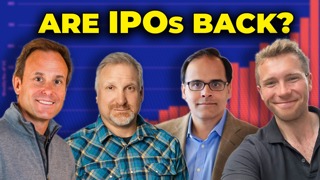
20VC Roundtable: Are IPOs Back? Is Growth Dead? What Does it Take to Raise a Growth Round Today? How Do VCs Solve The Liquidity Challenge? Will We See a Massive Resetting of Valuations? AI Hype Growth Rounds?

20VC Roundtable: Are IPOs Back? Is Growth Dead? What Does it Take to Raise a Growth Round Today? How Do VCs Solve The Liquidity Challenge? Will We See a Massive Resetting of Valuations? AI Hype Growth Rounds?

Deven Parekh is a Managing Director at Insight Partners, one of the leading investing franchises of the last 25 years. Deven has made more than 90 investments since joining in 2000 including in the likes of Twitter, Alibaba, JD.com, Chargebee and Automattic (WordPress) to name a few. Woody Marshall is a General Partner @ TCV, one of the most successful growth funds of the last decade with a portfolio including the likes of Facebook, AirBnB, Spotify, LinkedIn and many more incredible companies. Jason Lemkin is the Founder @ SaaStr one of the best-performing early-stage venture funds focused on SaaS. In the past, Jason has led investments in Algolia, Pipedrive, Salesloft, TalkDesk, and RevenueCat to name a few. In Today's Episode We Discuss: 1. The Growth Landscape Overview: Is growth dead? Are any growth deals getting done? How has the price changed for growth deals that are getting done? Which type of growth companies will vs will not be able to raise? What happens to all of the growth companies with $300-$500M in cash but little revenue? 2. The Great Reset: Valuations Need to Change: Why should companies be actively resetting their valuations? What are the benefits? What will happen between VCs and LPs when there is no incentive for VCs to reset their portfolio valuations when they need to go out and raise from those same LPs? Structure is often part of these valuation resets, is structure to rounds always bad? When is it good? What type of structure is acceptable vs unacceptable? 3. Are the Public Markets Creeping Open: Should we take comfort from ARM, Instacart and Klaviyo and assume the public markets are going to open again? If not, what will cause them to open? How should we analyze the performance of the IPOs above? Many have been negative, are they right to suggest this is not the response we wanted? Why does Woody believe, like Instacart taking a 75% discount to their last round, we should have more and more companies go public at discounts to their last private round? 4. Late Stage Growth is Dead and Revenue Multiples: Why is late-stage growth dead? How long do we think this will last? How should we assess revenue multiples today? New normal? Same as always? How will revenue multiples look in 12 months from now? How should we analyse the large late stage growth rounds for hyped AI companies? What happens there?

11 Okt 202350min
20VC: Atlassian Co-Founder Scott Farquhar on The Biggest Lessons Scaling Atlassian to $50BN Market Cap; The Four Roles of the CEO, The Funding Round That Net Accel $6BN, The Regrets of Omission and Commission & The Honeymoon Cut Short

20VC: Atlassian Co-Founder Scott Farquhar on The Biggest Lessons Scaling Atlassian to $50BN Market Cap; The Four Roles of the CEO, The Funding Round That Net Accel $6BN, The Regrets of Omission and Commission & The Honeymoon Cut Short

Scott Farquhar is the Co-Founder & Co-CEO @ Atlassian. Scott co-founded the company with his university friend, Mike Cannon-Brookes, in 2002 from Australia. Over an incredible 20-year journey they have grown to a market cap of $50BN today, over 11,000 staff globally and serving over 260,000 customers. Scott is also a co-founder of Skip Capital, a private investment fund with a portfolio including Figma, Snyk, Canva and more. In Today's Episode with Scott Farquhar We Discuss: 1. The 20-Year Journey to $50BN Market Cap: How did Scott first make his way into the world of tech and come to co-found Atlassian? What does Scott know now that he wishes he had known at the beginning? From 20 years with Mike, what is Scott's biggest advice on choosing your co-founder? 2. The Fundraising Masterclass with Atlassian: An emergency phone call, a honeymoon cut short; how did the first funding round for Atlassian come to be? Where was the business revenue-wise at the time? Why did Scott not like the traditional fundraising process? What did he do to add game theory and ensure that they got the best deal as a company? Why did Scott choose Accel with their offer? How did Peter Fenton lose a $3BN deal with Atlassian? 3. Lessons Scaling Atlassian to $4BN in Revenue: What does Scott believe are the 4 core roles of the CEO? Is resource allocation the most important? What are the single biggest acts of commission and omission that Scott regrets? What are the biggest lessons Scott has from shutting down Stride, their Slack competitor? 4. Scott: The Father, Husband and Philanthropist: What does great fatherhood mean to Scott today? What is the secret to a truly successful marriage? How does Scott assess his relationship to money today? How has it changed with time? How does Scott think about bringing children up in a world of affluence and abundance? Fun Fact: Every single 20VC episode is recorded with Riverside.FM. It is the one product that I could not live without. Try it today here (https://creators.riverside.fm/20VC) and use the code 20VC for 15% off.

9 Okt 202353min

20VC: Why Great Companies are Defined by How Many Things They Say No To, Why Being First Does Not Matter & Why Market Over Traction or Team is the Most Important Thing with Guillermo Rauch, Founder & CEO @ Vercel

20VC: Why Great Companies are Defined by How Many Things They Say No To, Why Being First Does Not Matter & Why Market Over Traction or Team is the Most Important Thing with Guillermo Rauch, Founder & CEO @ Vercel

Guillermo Rauch is the Founder and CEO @ Vercel, giving developers the frameworks, workflows, and infrastructure to build a faster, more personalized Web. To date, Guillermo has raised $312M from Accel, Bedrock, Greenoaks, GV and more. Prior to founding Vercel, Guillermo co-founded LearnBoost and Cloudup where he served the company as CTO through its acquisition by Automattic in 2013. In Today's Episode with Guillermo Rauch We Discuss: 1. From Argentina to SF: The Boy Making Money Online: How did Guillermo first get into computers and start making money online? Does Guillermo still believe the US and SF offers the same opportunities it did when he came? Did Guillermo feel the weight of responsibility of providing for his family at a young age? 2. Timing, Markets and Narrative Violations: Why does Guillermo believe it does not matter being first but being right? Why does Guillermo believe the most important thing for a company is market selection? Why does Guillermo believe it is crucial that founders and companies have "narrative violations"? 3. The Future of AI: What model will win in the future; open or closed? Where does the value accrue; startups or incumbents? How will the SaaS business model change in a world of AI? 4. Silicon Valley's Most Successful Angel You Did Not Know: What are some of Guillermo's biggest lessons from angel investing? What is his single biggest miss? How has it changed how he thinks? What have been his biggest hits? How did they impact how he thinks about what it takes to win?

6 Okt 202358min
20Sales: Why the Founder Should Not Be the One to Create the Sales Playbook, Why You Should Hire a Sales Leader Before Sales Reps & Why You Should Not Hire Sales Leaders From Big Companies with Matt Rosenberg, CRO @ Grammarly

20Sales: Why the Founder Should Not Be the One to Create the Sales Playbook, Why You Should Hire a Sales Leader Before Sales Reps & Why You Should Not Hire Sales Leaders From Big Companies with Matt Rosenberg, CRO @ Grammarly

Matt Rosenberg is Grammarly's Chief Revenue Officer and Head of Grammarly Business. He leads all B2B revenue, operations, and growth for Grammarly Business, Grammarly for Education, and Grammarly for Developers. Previously, as CRO of Compass, he took the company into the Fortune 500 and contributed to a more than eightfold increase in business growth. Prior to Compass, Matt served as Eventbrite's CRO leading them to become the largest event platform in the world by event count. In Today's Episode with Matt Rosenberg We Discuss: 1. From Miserable Lawyer to World Beating Sales Leader: How did Matt make the transition from lawyer to sales leader? What does Matt know now that he wishes he had known when he started in sales? What are Matt's biggest pieces of advice for anyone who wants to make a career change and is lacking confidence? 2. The Playbook and Hiring The Team: How does Matt define the "sales playbook"? Should the founder be the one to create and execute V1 of the playbook? Should the first sales hire be a rep or a sales leader? When is the right time to make that all-important first sales hire? 3. Discounting, Champions and Urgency: What can sales team do to create urgency in deal cycles? What works? What does not? How does Matt approach discounting? When to do it vs when not to? What level is acceptable? What are the biggest secrets to creating champions within prospects? Why does Matt believe that deals are won and lost in prospecting? 4. Developing Great Sales Talent: How does Matt use sales call recordings to train teams? What is his 3x3 matrix for coaching calls? What is a good reason to lose a deal vs a bad reason? How does Matt do deal reviews? What are the single biggest elements sales leaders can do to nurture sales talent? What are the biggest mistakes sales leaders make when developing talent internally?

4 Okt 202350min

Populärt inom Business & ekonomi

badfluence
framgangspodden
varvet
rss-jossan-nina
rss-borsens-finest
rss-svart-marknad
uppgang-och-fall
affarsvarlden
lastbilspodden
24fragor
fill-or-kill
rss-kort-lang-analyspodden-fran-di
avanzapodden
kapitalet-en-podd-om-ekonomi
borsmorgon
rss-dagen-med-di
bathina-en-podcast
tabberaset
rss-en-rik-historia
rss-inga-dumma-fragor-om-pengar



















