

20Growth: How to Master PR and Comms, How to Get Your Startup Written About; Press Releases, Fundraising Announcements, Embargos etc & Lessons Scaling Duolingo from 3-200M Users with Gina Gotthilf, Co-Founder @ Latitud
Gina Gotthilf is a Co-Founder and COO at Latitud, an a16z-backed platform supporting the next generation of iconic tech startups in Latin America through digital products, a community and fund. Previously, Gina led growth and marketing at Duolingo from 3 to 200 million users via organic strategies and was part of the executive team. She also worked on the Mike Bloomberg presidential campaign, helping oversee the creation of digital ad campaigns at a historical budget, and led growth and community for Tumblr in Latin America. In Today's Discussion with Gina Gotthilf We Discuss: Entry into the World of Growth: How Gina went from working on a farm to leading growth for Tumblr in LATAM? What are 1-2 of Gina's biggest takeaways from her time leading growth for Duolingo? What does Gina know now that she wishes she had known when she entered the world of growth? 15 Top Tips and Secrets to Being Featured in the Best Publications: What is the best way to get in touch with journalists? What mistakes do founders have when they reach out to journalists? Should founders get in touch with more than one journalist at a publication? Should founders be explicit about the embargos they have on a story? Should they stick to them? Should founders be more wary of being published in a publication with a paywall? What materials should they send to journalists to get their attention? Should founders send press releases in early messages to journalists? How can founders control in some way what the journalist will ultimately publish? How long before the company wants the piece to come out, should they reach out to journalists? How can founders create FOMO when trying to get journalists to write their story? How can founders create social validity with journalists, when they are a small company? Once published, what should the distribution strategy look like? How can you get people you know to like and share content you are featured in? What are the top tips and tricks to get people to share content with you in? Should PR and Comms be an ongoing effort or static projects with news stories? What are the single biggest mistakes founders make in getting their company in the press?
21 Juni 202355min
20VC: Why No Models Today Will Be Used in a Year, Why Open Will Always Beat Closed in AI, Why Proprietary Data is Less Important Than Ever And Why EU AI Regulation is a Disaster with Alex Lebrun, Founder & CEO @ Nabla
Alex Lebrun is the Co-Founder and CEO of Nabla, an AI assistant for doctors. Prior to Nabla, he led engineering at Facebook AI Research. Alex founded Wit.ai, an AI platform that makes it easy to build apps that understand natural human language. Wit.ai was acquired by Facebook in 2015. Prior to Wit, Alex was the Founder and CEO of VirtuOz, the world pioneer in customer service chatbots, acquired by Nuance Communications in 2013. In Today's Episode with Alex Lebrun We Discuss: 1. Third Time Lucky and Lessons from Zuckerberg: How did Alex make his way into the world of startups with the founding of his first company? What worked with Alex's prior companies that he has taken with him to Nabla? What did not work that he has left behind? What were the single biggest takeaways for Alex from working with Mark Zuckerberg? How does Mark prepare for meetings? How does Mark negotiate so well? 2. Open vs Closed: Why does Alex believe the winning AI models will always be open? Why are open models not as transparent as people think they are? What are the biggest downsides to both open and closed models? Does Alex agree with Emad @ Stability that we will have "national data sets"? 3. Incumbent vs Startup: Who wins in the AI race; startups or incumbents? How important is access to proprietary data in winning in AI today? How does Alex respond to many VCs who suggest so many AI startups are merely "a thin layer on top of a foundational model"? Is that a fair critique? Which startups are best placed to challenge incumbents? Which incumbents have been most impressive in adopting AI into existing product suites? 4. Models 101: Size, Quality, Switching Costs: Why will the best companies switch the models that they use often? Will any models in action today be used in a year? How important is the size of the model? How will this change with time? In what way is new EU regulation around models going to harm European AI companies? 5. Location Matters: Who Wins: When looking at China, US and Europe, who is best placed to win the AI war? What are the biggest challenges Europe and China face? Why is the US best placed to win the AI race? What does it have to overcome first? If Alex were a politician, what would he do to ensure his country were best positioned?
19 Juni 202356min
20Product: Slack CPO Noah Weiss on How to Master Product-Led-Growth, The Biggest Mistakes Founders Make When Scaling Into Enterprise & What Needs to Change with your Product, Team and Processes when Scaling From PLG to Enterprise
Noah Weiss is the Chief Product Officer of Slack, overseeing the product team's strategy and development. Over his seven years at Slack, Noah has led various parts of the product organization, including the self-service SMB business and product-led growth; the Virtual HQ team that launched huddles and clips; and the search and machine learning teams. Prior to Slack, Noah served as SVP of Product and Analytics at Foursquare. He started his career at Google leading the structured data search team and working on display ads. In Today's Episode with Noah Weiss We Discuss: 1.) Entry into Product and Road to Slack CPO: How did Noah make his first foray into the world of product with Google? What are 1-2 of his single biggest takeaways from his time with Google and Foursquare? What model did Noah learn at Google that he applies to product today? 2.) Product 101: The Foundations: Is product more art or science? If Noah were to put a number on it what would it be? What are product principles? What makes good vs bad product principles? What are the biggest mistakes that founders make when instilling product principles? Does Noah believe with Gustav Soderstrom, "talk is cheap and so we should do more of it"? 3.) How to Master Product-Led-Growth: What are some of Noah's biggest lessons on how to master PLG? What are the biggest mistakes Noah sees early stage founders make today when going for the PLG approach? How does he advise them? When is the right time to move into enterprise? What needs to change? How do you change who you build product for? The buyer or the user? Why does Noah believe product speed will always be the most important thing in product? 4.) The Internals of Slack: How does Slack do post-mortems today? Who comes? Who sets the agenda? How has this changed in a world of remote? What does it take to do them well? How do Slack do product testing pre-launch of new products? Do they know when something is going to be a hit? What did they think would be a massive hit that turned into a flop? What does Noah believe is the biggest near death product experience for Slack? What happened? How did they get through it? Why do Slack buy other companies? How do they think through the decision of buy vs build? When do acquisitions work? When do they not work?
16 Juni 202351min
20VC: UK Prime Minister, Rishi Sunak on Investing More in AI Safety Research Than Any Other Country in the World, How AI Changes the Future of Education, His Top 5 Priorities as Prime Minister Today & How to Make the UK the Centre of AI
Rishi Sunak is the Prime Minister of the United Kingdom. He was previously appointed Chancellor of the Exchequer from 13 February 2020 to 5 July 2022. He was Chief Secretary to the Treasury from 24 July 2019 to 13 February 2020, and Parliamentary Under Secretary of State at the Ministry of Housing, Communities and Local Government from 9 January 2018 to 24 July 2019. Before entering the world of politics, Rishi co-founded an investment firm. In Today's Episode with Rishi Sunak We Discuss: 1. The United Kingdom: Open for AI: Open for Business Why does Rishi believe the UK is best placed to lead the way for innovation in AI? What can the government do to ensure the public and private sectors work together most efficiently? Why has Rishi created an entirely new division just for this? How does this change how decisions for AI and technology are made? 2. $100M Funding: The Largest Government Funding in the World: Why did Rishi decide to allocate the largest pool of capital of any nation toward AI safety? What is the strategy for the $100M? How will it be invested? Who will manage it? What are the challenges and opportunities in setting up this $100M funding program? 3. Education: Attracting the Best in the World: What has Rishi done to ensure the best talent in the world, wants to and can work in the UK? What new initiative has Rishi put in place to ensure the world's brightest students can freely move to and work in the UK? What can be done to ensure the UK continues to foster the same level of homegrown talent that we always have done? What can we do to improve our current education system for AI even further? Why does Rishi believe one of the greatest opportunities for AI lies in education and teaching? 4. Making Regulation Work Effectively: How does Rishi think about creating regulation which is both effective and not prohibitive? What can we do to create a government that moves at the speed of business? What does Rishi believe are the biggest mistakes made in regulatory provisions? What are we doing to avoid them with AI in the UK?
14 Juni 202321min

20VC: Larry Summers on How to Manage Inflation; Should We Increase Rates Even Higher, Why We Need To Change The US Tax System, Why Europe is a Museum, China is a Jail and Bitcoin is an Experiment & How a Trump Win Would Hurt the US Economy
Larry Summers is the Former Treasury Secretary and one of America's leading economists. In addition to serving as 71st Secretary of the Treasury in the Clinton Administration, Dr. Summers served as Director of the White House National Economic Council in the Obama Administration, as President of Harvard University, and as the Chief Economist of the World Bank. Huge thanks to Sarah Cannon for the intro to Larry today. In Today's Episode with Larry Summers We Discuss: 1. The Journey to Being One of the World's Leading Economists: How Larry's mother and father both being economists shaped his early thinking as an economist? How did Larry's parenting teach his children economics at an early age? What does Larry know now that he wishes he had known when he entered the workforce? 2. How to Get the US Out of Debt: What would Larry do to save the US economy today? What can be done to increase revenues for the US economy? Why does Larry believe carried interest should be taxed as income tax? Why does Larry believe we need more billionaires? How would he tax them more efficiently? Why does Larry believe cutting taxes is indefensible? What can be done to reduce inflation without massively hurting the poorest in society? 3. The World Around Us: What does Larry mean when he says, "Europe is a museum, China is a jail and Bitcoin is an experiement"? Why does Larry believe the next 5 years will be difficult for China? Why does Larry believe the next 5 years will be challenging for Europe? Which nation is Larry most confident about when projecting forward for the next 5-10 years? 4. Politics and a Trump Administration: How does Larry reflect on the role of Biden on the US economy and state of inflation? Would a Trump administration be better or worse for the US economy? What are the chances of Trump beating Biden in the next election? What would Larry most like to change about the US political system?
12 Juni 202340min
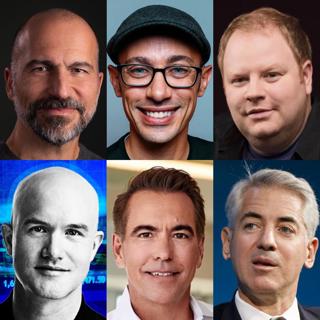
20VC: What are the World's Tech Leaders Running From? Fear? Insecurity? Poverty? What Drives the Best with Orlando Bravo, Bill Ackman, Dara Khosrowshahi, Parker Conrad, Tobi Luttke, Brian Armstrong and more..
Orlando Bravo is a Founder and Managing Partner of Thoma Bravo. He led Thoma Bravo's early entry into software buyouts and built the firm into one of the top private equity firms in the world. Tobi Lütke is the CEO and Co-Founder of Shopify, the powerhouse company allowing anyone to start and grow their e-commerce business. Dara Khosrowshahi is the CEO of Uber, where he has managed the company's business in more than 70 countries around the world since 2017. Parker Conrad is the Founder & CEO @ Rippling, the company that lets you easily manage your employees' payroll, benefits, expenses, devices, apps & more—in one place. Jamie Siminoff is the Founder and Chief Inventor @ Ring, with Ring Jamie, created the world's first Wi-Fi video doorbell while working in his garage in 2011. The company sold to Amazon for $1BN. Martín Escobari is Co-President, Managing Director and Head of General Atlantic's business in Latin America. Martín is Chairman of the firm's Investment Committee and also serves on the Management and Portfolio Committees. Ariel Cohen is the Co-Founder and CEO @ Navan (formerly TripActions), the #1 travel management super-app used by over 8,000 companies. Tarek Mansour is the Founder and CEO @ Kalshi, the first regulated exchange where you can trade directly on the outcome of events. Brian Armstrong is the Co-Founder and CEO @ Coinbase, the easiest place to buy and sell cryptocurrency. Over the last 10 years, Brian has led Coinbase to today, a public company with over 3,500 employees and revenues of over $7.5BN in 2021. Question of the Day: What are the world's tech leaders running from?
9 Juni 202328min

20Sales: PLG and Early Adopter Sales are Gone, How to do Sales Forecasting in 2023, Why You Cannot Do PLG and Enterprise from Day 1 at the Same Time and Which is Easier to Start, How to Onboard, Manage and Scale Reps with Rich Liu, CRO @ Everlaw
Rich Liu is the CRO @ Everlaw and a unicorn GTM exec having scaled five multi-billion dollar tech unicorns across two IPOs, a successful acquisition, and numerous funding rounds. Prior to Everlaw, Rich architected the GTM motions for companies like Navan (TripActions), MuleSoft, and Meta (Facebook). As a result of his incredible success, Rich has been recognized as a 2021 Top 100 Global Sales Leader. In Today's Episode with Rich Liu We Discuss: 1. Entry into the World of Sales: How Rich made his way from biochemistry into the world of sales? What is 1 takeaway from his time at Navan, Meta and Mulesoft that has shaped how he thinks about sales today? What does Rich know now that he wishes he had known when he entered the world of sales? 2. Sales Today: What is Happening? What are the biggest sales leaders saying today about price sensitivity and deal cycles? What has changed in the way companies buy software with the macro downturn? What do companies need to do to get deals over the line today? How do startups need to change the way they message to enterprises in order to sell today? How has the renewals process changed? What does this mean for customer success teams today? 3. PLG vs Enterprise: When and How? Is it possible to do both PLG and enterprise at the same time? Is it easier to start with enterprise and move to PLG or visa versa? How does the type of sales leader you need change dependent on the motion? When is the right time to move from founder-led sales to sales team? How does one know whether to hire a junior jack of all trades or a senior sales leader? 4. How To Hire The Best in Sales: How does Rich structure the hiring process for all new reps today? Does he use case studies to determine their depth and ability? Is the case study of the company they are interviewing at or a fresh company? What questions does Rich ask every candidate for a new role? What are some of the biggest red and green flags in how candidates talk in interviews?
7 Juni 202351min
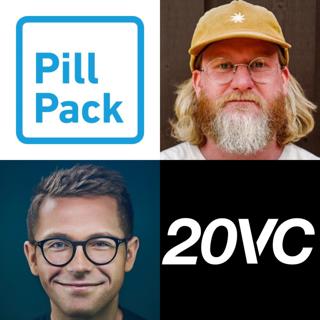
20VC: The Largest Venture Backed D2C Consumer Exit; PillPack: $0-$300M Revenues in 5 Years & The Biggest Lessons Scaling the B2B Business to $300M in 2.5 Years with TJ Parker, Co-Founder @ PillPack
TJ Parker is the co-founder and former CEO of PillPack. TJ Raised over $100M in financing, grew the company to more than 1k employees, and successfully sold the business to Amazon for $1B in 2018. As of last week, TJ was announced as the newest Partner @ Matrix Partners where he will initially focus on health opportunities from concept to series A. In Today's Episode with TJ Parker We Discuss: 1.) From Growing Up in Pharmacies to Selling to Amazon for $1BN: How did TJ seeing the pharmacy industry from his parents lead him to believe there was a $BN company to be built in the space? What does TJ know now that he wishes he had known when he started the company? What does TJ believe he is running from? How does that impact his own style of parenting? 2.) The Truth About Entrepreneurship: Why do the best founders have to get comfortable in an environment of uncertainty? What have been some of TJ's biggest lessons in how to do this? Why does TJ believe the role of the CEO is to set the vision and get out of the way? What roles can only the CEO do? How does TJ approach delegation? What have been some of his core lessons? Does TJ believe being naive is a superpower when starting a company? What do founders need to know vs what do they not need to know when starting a business? 3.) Speed of Execution and Decision-Making: How important does TJ believe speed of execution is for startups today? What can founders do to create a culture of rapid decision-making? What works? What does not? What does TJ believe are 1-2 of the single best and worst decisions he made with PillPack? What are some of the biggest mistakes TJ sees founders make both in speed of execution and then also in decision-making processes? 4.) The Crucible Moments: Lawsuits & Acquisitions: How did an incumbent come days away from shutting down PillPack? How did they save the company? How does TJ deal with those moments of intense stress? How did the Amazon acquisition come to be? Why and how did the prior acquisition fall through? Does TJ regret the sale to Amazon? How was life at Amazon post-acquisition?
5 Juni 202359min





















