
20VC: Why The Future of AI Is Open Not Closed, Why We Are Years Away From AI Being Autonomous, Why AI Founders Do Not Need to Move to the Valley & Why Founders Should Not Meet Investors in Between Rounds with Clem Delangue @ Hugging Face
Clem Delangue is the Co-Founder and CEO @ Hugging Face, the AI community building the future. To date, Clem has raised over $160M from the likes of Sequoia, Coatue, Addition and Lux Capital to name a few. Prior to Hugging Face, Clem was in product and marketing at two different startups both of which were acquired. In Today's Episode with Clem Delangue: 1. From Tamagotchi to Leading the World of AI: How did a Tamagotchi startup turn into one of the hottest AI startups in the world? What does Clem know now that he wishes he had known when he started? What are Clem's biggest pieces of advice to founders on pivoting? 2. AI: Trend or Transformation: To what extent does Clem believe the current hype in AI is justified? What is overblown? What have been some true and groundbreaking developments? How far away does Clem believe AGI is? What is a massive misconception the public has that Clem wishes he could change? 3. Open vs Closed: Which Model Wins: Why does Clem believe the future of AI will be won by open-source? What is his reasoning to suggest closed is fundamentally a weaker model? Does Clem acknowledge that in the short term, enterprises will buy from a closed model with greater ease? How does he plan to tackle this? 4. Regulation: What Happens Now: What regulatory changes need to be made in the world of AI most urgently? Is Elon Musk right to suggest the immediate pausing of developments in AI? What does Clem believe to be the most likely scenario to AI regulation in the next 12 months? 5. Fundraising: Lessons and Reflection on Raising $160M: Do AI startups fundamentally cost more money than normal startups to build? Why does Clem not meet investors in between rounds? What does Clem believe is the most helpful thing an investor can do? What are Clem's spiciest takes on venture as a financing model?
12 Maj 202347min
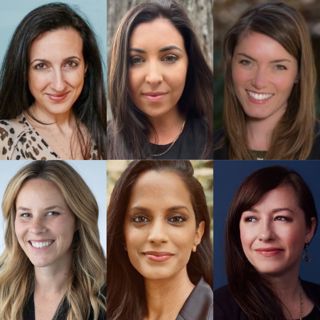
20Sales: How to Scale a Career While Scaling a Family, Strategies and Specific Tools To Help Maintain Work-Life Balance, What Companies Can Do To Empower Parents To Be Their Best Selves & How to Prevent Parental Leave Being an Inhibitor To Your Career
Today's 20Sales is a special Mother's Day edition where we are joined by 6 of the best sales leaders who also happen to be rockstar mothers. The Profiles Maggie Hott is on the GTM Team (Go-To-Market) at OpenAI. Before OpenAI, Maggie was Director of Sales @ Webflow and before Webflow spent an incredible 6 years at Slack. Stevie Case is the CRO @ Vanta. Prior to Vanta, Stevie spent an immensely successful 6 years at Twilio as VP of Mid-Market Sales. Renu Gupta is an advisor and sales consultant to some of the fastest-growing SaaS companies today. Previously she has held sales leadership roles at Slack, Thrive and Dropbox. Lauren Schwartz is the VP Enterprise Sales @ Fivetran. Before Fivetran, Lauren spent 4 years at Segment as Senior Director of Enterprise Sales leading to their acquisition by Twilio. Julie Maresca is the Head of Global Accounts at Atlassian. Prior to Atlassian, Julie spent an immensely successful 6 years at Slack in numerous roles including Head of Enterprise Sales for North America. Jessica Arnold is the VP of Global Sales Development @ Amplitude. Before Amplitude, Jessica was the Senior Director for Inside Sales North America at Dropbox for close to 6 years. In Today's 20Sales Mothers Day Episode We Discuss: 1.) How have you navigated growing in your career at the same time, growing your family? 2.) How do you balance your career and being a mother - when do you lean in and out? 3.) What are some specific strategies or tools that have helped you maintain a work-life balance? 4.) How do you prioritize your mental health and wellbeing while juggling your responsibilities at work and at home? 5.) How do you handle the guilt that many working mothers experience when they have to focus on their career? 6.) What are the unique challenges and advantages of being a mother in a sales leadership role? 7.) How has your experience as a mother influenced your leadership style and decision-making? 8.) How have you navigated going out on maternity leave without it having an impact on your career? 9.) America has one of the worst parental leaves of any country in the world. How can you advocate for parental leave if the existing policy isn't up to par? 10.) What are some ways that companies can create a more inclusive and supportive environment for working mothers in sales leadership roles?
10 Maj 20231h 5min
20VC: Why VC Subsidizes the Wrong Type of Business, Why Capital Gains Tax is Crazy, The Biggest Misalignments Between VCs, Founders and LPs, Why Business Model - Product Fit is as Important as Product-Market-Fit with Chris Paik @ Pace Capital
Chris Paik is a General Partner @ Pace Capital, an early-stage venture firm in NYC. Pace's first fund was $150M and their second was $250M. Before co-founding Pace, Chris was a General Partner at Thrive Capital where he spent an incredible 8 years having joined the firm when they were on their first $10M Fund. In Today's Episode with Chris Paik We Discuss: 1. From Hipster to One of NYC's Best VCs: How Chris made his way from not knowing about venture capital to being one of the most prominent in NYC? What are 1-2 of his biggest takeaways from his 8 years at Thrive? How did they impact how he thinks about building Pace today? What are Chris' biggest lessons from working with Josh Kushner? What did Josh do to spot young talent in a way like no one else did? 2. The Core Pillars of Successful Venture Investing: "Invest in companies that can be described in a single sentence". What does Chris mean by this? How does that impact the type of companies he looks to invest in? "Business Model Fit is as important as PMF". What does Chris mean by this? How does he determine where a company has business model fit? How does Chris analyze his relationship to market sizing? How does Chris think about how willing he is to take a bet on market timing? Why does Chris believe that the more "virtuous" a company is, the less enterprise value it will have? 3. What is Wrong with Venture Capital: The Misalignments: What does Chris believe are the single biggest misalignments between VCs and Founders? What does Chris see as the biggest misalignments between VCs and LPs? Why does Chris believe we should scrap capital gains tax and all be taxed as an income tax? Why do acquisitions allow investors to be screwed over by the acquiring company? 4. The Future of Social and User Generated Content Platforms: How does Chris analyze consumer businesses according to "The Seven Deadly Sins"? Why does he call them, "The Seven Deadly Motivators"? What does Chris believe is the future for Substack? Why does it not have Business Model Fit? What are 1-2 of his biggest lessons from being on the Twitch board? How did that experience impact his mindset and approach to what good is in UGC and social? What does Chris believe is the number one thing to look for in a potential consumer social investment? What do so many miss?
8 Maj 20231h 9min
20VC: Alex Rodriguez (AROD) on Investing Lessons from Warren Buffet, How a Meeting with Magic Johnson Changed His Approach to Business and The Single Best and Worst Investment Decisions he has Made and Why AROD Is Not Buying More Real Estate
Alex Rodriguez is a businessman and the Chairman and Chief Executive Officer of A-Rod Corp, a broad-based investment firm that bets on world-class startups and partners with leading global companies across the real estate, health and wellness, technology, and sports & entertainment industries. While best known as one of the world's greatest athletes (a 14x MLB All-Star and a 2009 World Series Champion with the New York Yankees), for more than 25 years, Alex leads a team of experts building high-growth businesses and is co-owner of the Minnesota Timberwolves. In Today's Episode with Alex Rodriguez 1.) From MLB to Business MVP: How Alex made his transition from one of the world's greatest athletes to the world of business? What does Alex know now that he wishes he had known at the start of his business career? What is Alex running away from? How do his insecurities drive him? 2.) Lessons from Magic Johnson and Warren Buffet: What are some of the single biggest lessons Alex has learned from his time with Warren Buffet? How did Magic Johnson impact Alex's approach to business? What is Magic Johnson's framework? How can others use it as a blueprint for their career? 3.) Alex Rodriguez: The Business Builder and Investor: What has been Alex's single biggest investing hit? What did he learn from it? What has been Alex's single worst investment decision? How did that change his approach? Why is Alex not buying real estate currently? How does he view the future of real estate buying? 4.) Alex Rodriguez: The Father and Son: How did having two daughters impact Alex's approach to business and life? What have been Alex's single biggest lessons from seeing his single mother operate? How does Alex reflect on his own relationship to money? How has it changed?
5 Maj 202336min
20VC: The OpenAI Memo: Why Invest? Is it too Late to Catch OpenAI? Are OpenAI's Models Truly Defensible? Does the Value in AI Accrue to Incumbemts or Startups - Application Layer/Infrastructure? What Happens with Regulation? with Vince Hankes @ Thrive
Vince Hankes is a Partner @ Thrive Capital where he has led the firm's investments in OpenAI, Melio, and Airplane.dev. He currently sits on the board of Airtable, Benchling, Lattice, and Melio. Prior to joining Thrive, Vince was an investor at Tiger Global where he learned the craft of venture from the legend that is Lee Fixel. In Today's Episode with Vince Hankes We Discuss: 1. From Tiger Global to Partner @ Thrive Capital: How Vince made his way into the world of investing with Tiger Global? What are 1-2 of his biggest takeaways from working alongside the legendary Lee Fixel? Why did Vince make the move from Tiger to Thrive? How do the two firms differ? 2. The OpenAI Investment: The Memo: How did the OpenAI deal come to be? What were the round dynamics? Market Evaluation: How did Vince and the team analyze the market top down? Competition: Who did Vince identify as the core competitors to OpenAI? Defensibility: How did Vince think through the long-term defensibility of OpenAI's model? Does Vince believe these models will become commoditised? Price: How did Vince and the team get comfortable with the $29BN price? 3. AI: Hype or Generational Defining Transformation: Trend or Transformation: Why does Vince believe AI will be the defining technology of our generation? Startup vs Incumbent: Does Vince think the value will accrue to the incumbent or the startup? Open or Closed: Does Vince think we will operate in a closed (one model rules them all) environment or an open-source environment with many models? AI Talent: Where does Vince think the majority of the best AI talent will concentrate? Speed: Why would Vince be scared if he were a startup today looking at the incumbents? 4. The Changing Investor: Lessons from Good and Bad: How has Vince changed most significantly as an investor over time? What has been his single biggest investing mistake? How did he learn from it? What has been his biggest investing success? How did that change his mindset? What has Thrive done in their org structure to allow them to make bets very few other firms can do?
3 Maj 202350min
20VC: First Republic; Management Responsibility or Result of Contagion in the System, The Future of Regional Banks, Will Interest Rates Go Higher | Net Zero, Where Are We? The Best and the Worst Actors with Mark Carney, Former Governor of The Bank of Engl
Mark Carney is the Vice Chair and Head of Transition Investing @ Brookfield Asset Management, one of the world's leading asset managers with over $800BN in AUM. Mark is also United Nations Special Envoy on Climate Action and Finance. He has also served as Finance Advisor to the British Prime Minister. In addition to this, Mark is on the board of Stripe, PIMCO and The World Economic Forum. In a previous life, Mark spent over a decade as a Central Banker, most recently as Governor of The Bank of England and before that as Governor of The Bank of Canada. In Today's Episode with Mark Carney We Discuss: 1. Is The Banking Crisis Over? What Happened? Why does Mark not believe we are in a banking crisis? Why does he not believe the banking turmoil is over? Was SVB the fault of regulatory mistakes or management mistakes? Is FRB a damaged asset in it's own right or the result of contagion within the banking ecosystem? 2. The Impact of the Banking Turmoil: What Happens Now? What does Mark believe is the future of regional banks? Why does Mark believe we will see massive consolidation in banks coming soon? Should the Fed be guaranteeing all deposits automatically? 3. What Happens To The Macro Now? How does the banking turmoil impact growth rates? Will we definitely go into a recession now? What is the impact on monetary policy? Can the Fed raise rates even higher? What does this mean for the future of money? Why is it a silver bullet for stablecoins? If Mark could bet on China or the US for the next 10 years, who would it be? Does Mark believe the UK is in a weaker situation than ever? What about Europe? 4. The Future of Climate and Net Zero: Where are we at with Net Zero? Are we ever going to make progress? Is it possible to make progress without the cooperation of China? Why does Mark disagree and suggest China has done more than most to help the climate? Who is talking more than they are acting in the fight to save the climate? On the flip side, who is acting more than they are talking?
1 Maj 202349min
20VC: In AI Who Wins? Startups or Incumbents? What Happens to Wealth Inequality? Why Will $10BN+ Companies Only Have 10 People | Why Defensibility in Startups is BS & Speed is Everything? Why Large Groups Worsen Decision-Making with Sarah Guo
Sarah Guo is the Founding Partner @ Conviction Capital, a $100M first fund purpose-built to serve "Software 3.0" companies. Prior to founding Conviction, Sarah was a General Partner at Greylock where she made investments in the likes of Figma, Coda, Neeva and many more incredible companies. Sarah also hosts her own podcast, No Priors with the wonderful Elad Gil. In Today's Episode with Sarah Guo We Discuss: 1. From Large Multi-Stage Firm to Founding Conviction: Why did Sarah decide to leave Greylock? What are 1-2 of her biggest lessons from her time at Greylock? How did they impact her mindset when building Conviction today? What does Sarah believe are the most surprising or hardest elements of firm building? 2. The Future for AI: The Opportunities and the Challenges: Why does Sarah believe AI is the most foundational technology of our lifetime? Why did Sarah decide to centre the entire fund around AI? Is AI not an enabling technology that will power all sectors in technology? Is Sarah concerned by the further wealth inequality that AI and billion dollar companies created by 10 people, will inevitably bring? How does Sarah think about the potential for malicious AI use? What can be done to prevent this? 3. Startup and VC Principles That Are BS: Why does Sarah believe that defensibility is BS? Why do Sarah and Harry both believe that reserves in venture funds are a suboptimal use of funds? "Great founder, bad market, market wins". Does Sarah agree? How does Sarah prioritize the centrality of founder vs market? 4. Sarah Guo: The Investor How has Sarah changed most significantly as an investor over the last 5 years? What is Sarah's biggest miss? How did it impact her mindset today? What is Sarah's biggest win? How did that alter her risk appetite? How does Sarah see the future of venture? If Sarah could invest in one multi-stage firm and one seed-stage firm, which would it be?
28 Apr 202344min

20Product: Snap's VP Product on How Snap Hires 10x Product People, What Makes Evan Spiegel So Special at Product, Three Ways to Prioritise Product Ideas in Teams, The Future of AR, Why Snap Glasses Will be Huge and Snap Will Be Massive in Japan with Jack
Jack Brody is the VP Product @ Snap. Jack joined Snap in 2014 as a Product Designer, and ultimately helped build out the design organization as the Head of Design before taking on his current role overseeing all of Product for the Snapchat application and Hardware. In his 9 years at Snap, he helped create Memories, the Snap Map, and AR Lenses like Face Swap. In Today's Episode with Jack Brody We Discuss: The Shortest Internship in Tech: How did Jack get an internship with Evan Spiegel and Snap while he was still at college? How did it turn into the shortest internship in tech history? What are the single biggest product lessons Jack has from working with Evan Spiegel? 2. Product 101: Art vs Science: Does Jack believe product is more art or science? If he were to assign numbers to them, what would they be? How does Jack define creativity? What can founders and product leaders do to ensure their teams are as creative as possible? What is the 3 step framework through which product leaders should prioritize product ideas? Does Jack believe that when the CEO is no longer the Head of Product, the company is dead? Does Jack agree with Gustav Soderstrom, "talk is cheap, so we should do more of it"? 3. The SNAP Hiring Process: What Works and What Does Not: What is the hiring process for the product team at SNAP? What questions are most revealing of 10x product people in the interview process? What case studies and tests does Jack use in the interview process? What other roles and functions does Jack bring into the interview process as part of the decision? What are the single biggest mistakes founders make in the hiring process for product? 4. SNAP, The Future, and The World Around Us: What do Jack and SNAP believe will be the future for augmented reality? What country is SNAP not big in today but will be in the next 5 years? Why that one? Why did SNAP tear down its android app and start again? What has been the impact? Were the SNAP glasses a success? What is their future?
26 Apr 202356min