82. Phil Zuckerman — What it Means to be Moral: Why Religion is Not Necessary for Living an Ethical Life

82. Phil Zuckerman — What it Means to be Moral: Why Religion is Not Necessary for Living an Ethical Life

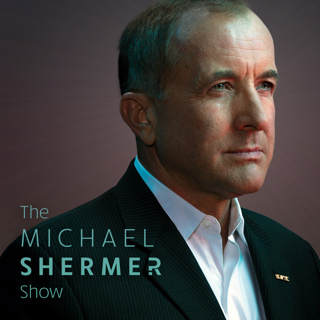
In What It Means to Be Moral: Why Religion Is Not Necessary for Living an Ethical Life, Phil Zuckerman argues that morality does not come from God. Rather, it comes from us: our brains, our evolutionary past, our ongoing cultural development, our social experiences, and our ability to reason, reflect, and be sensitive to the suffering of others. By deconstructing religious arguments for God-based morality and guiding readers through the premises and promises of secular morality, Zuckerman argues that the major challenges facing the world today―from global warming and growing inequality to religious support for unethical political policies to gun violence and terrorism―are best approached from a nonreligious ethical framework. In short, we need to look to our fellow humans and within ourselves for moral progress and ethical action. Shermer and Zuckerman discus:

  • what is morality and what does it mean to be good?
  • the evolutionary origins of morality
  • the "naturalistic fallacy," or the "is-ought fallacy" and why it need not always apply
  • how we've made moral progress over the centuries thanks to secular forces
  • why religion is always behind the wave of moral progress (but takes credit for it later)
  • the origin of good and evil
  • how to solve crime, homelessness, and other social problems through science, reason, and secular forces, and
  • the seven secular virtues.

Dr. Phil Zuckerman is the author of several books, including The Nonreligious, Living the Secular Life, Society without God, and his latest book, What it Means to be Moral. He is a professor of sociology at Pitzer College and the founding chair of the nation's first secular studies program. He lives in Claremont, California, with his wife and three children.

Listen to Science Salon via iTunes, Spotify, Google Play Music, Stitcher, iHeartRadio, TuneIn, and Soundcloud.

You play a vital part in our commitment to promote science and reason. If you enjoy the Science Salon Podcast, please show your support by making a donation, or by becoming a patron.

Det här avsnittet är hämtat från ett öppet RSS-flöde och publiceras inte av Podme. Det kan innehålla reklam.

Avsnitt(630)

America at 250: What Did the Founders Get Right?

America at 250: What Did the Founders Get Right?

Michael Shermer makes the case that the U.S. Founding Fathers were not only steeped in Enlightenment values on which the Declaration of Independence was based, but they were also scientists searching ...

6 Juli 17min

When History Goes on Trial: Demjanjuk, Eichmann, and Justice After Atrocity

When History Goes on Trial: Demjanjuk, Eichmann, and Justice After Atrocity

John Demjanjuk lived for decades as a retired autoworker in suburban Cleveland. Then investigators accused him of being "Ivan the Terrible," one of the most notorious guards at Treblinka. What followe...

27 Juni 1h 32min

Why I Joined the Government UAP Science Advisory Council

Why I Joined the Government UAP Science Advisory Council

Michael Shermer has been appointed to the newly formed UAP Science Advisory Council, formed at the request of the White House and in coordination with the All-domain Anomaly Resolution Office (AARO), ...

23 Juni 29min

Massimo Pigliucci on Doubt, Moral Courage, and Living Without Illusions

Massimo Pigliucci on Doubt, Moral Courage, and Living Without Illusions

What does it mean to live well when certainty is unavailable? Michael Shermer speaks with Massimo Pigliucci about moral character, ancient philosophy, and the difficult art of making decisions without...

20 Juni 1h 33min

Cathy Young: Why Free Societies Need Free Speech

Cathy Young: Why Free Societies Need Free Speech

Cathy Young returns to the show for a wide-ranging conversation about free speech, institutional trust, and the strange incentives shaping public debate today. What happens when universities, media ou...

16 Juni 1h 30min

The Zodiac Killer Wasn't Real

The Zodiac Killer Wasn't Real

The Zodiac Killer has been treated for decades as America's ultimate unsolved true crime mystery: one mysterious killer, taunting letters, cryptic ciphers, a strange costume, and a trail of victims ac...

13 Juni 1h 39min

How Algorithms Use Your Data to Control You

How Algorithms Use Your Data to Control You

Michael Shermer speaks with Oxford philosopher Carissa Véliz about the long human desire to know the future—from ancient oracles and astrology to AI, surveillance capitalism, predictive policing, and ...

9 Juni 1h 34min

Batya Ungar-Sargon: Why the Left Sees Jews Differently Now

Batya Ungar-Sargon: Why the Left Sees Jews Differently Now

Batya Ungar-Sargon joins Michael Shermer for a wide-ranging conversation about the historical relationship between Jews and the American left, and why that relationship has become increasingly straine...

6 Juni 54min

Populärt inom Vetenskap

p3-dystopia
dumma-manniskor
allt-du-velat-veta
rss-ufobortom-rimligt-tvivel
medicinvetarna
det-morka-psyket
bildningspodden
svd-nyhetsartiklar
rss-broccolipodden-en-podcast-som-inte-handlar-om-broccoli
rss-vetenskapsradion-2
barnpsykologerna
rss-spraket
sexet
rss-lara-fran-larda-en-fackbok-och-en-forfattare
paranormalt-med-caroline-giertz
dumforklarat
rss-arkeologi-historia-podden-som-graver-i-vart-kulturlandskap
ufo-sverige
rss-personlighetspodden
kapitalet-en-podd-om-ekonomi