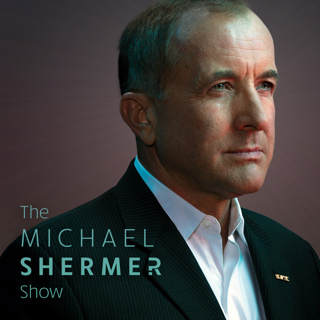
101. Hugo Mercier — Not Born Yesterday: The Science of Who We Trust and What We Believe

101. Hugo Mercier — Not Born Yesterday: The Science of Who We Trust and What We Believe

Not Born Yesterday explains how we decide who we can trust and what we should believe — and argues that we're pretty good at making these decisions. Hugo Mercier demonstrates how virtually all attempts at mass persuasion — whether by religious leaders, politicians, or advertisers — fail miserably. Drawing on recent findings from political science and other fields ranging from history to anthropology, Mercier shows that the narrative of widespread gullibility, in which a credulous public is easily misled by demagogues and charlatans, is simply wrong.

Why is mass persuasion so difficult? Mercier uses the latest findings from experimental psychology to show how each of us is endowed with sophisticated cognitive mechanisms of open vigilance. Computing a variety of cues, these mechanisms enable us to be on guard against harmful beliefs, while being open enough to change our minds when presented with the right evidence. Even failures — when we accept false confessions, spread wild rumors, or fall for quack medicine — are better explained as bugs in otherwise well-functioning cognitive mechanisms than as symptoms of general gullibility. In this lively and provocative conversation Shermer and Mercier discuss:

  • If we're not as gullible as we've been led to believe, then why do so many people apparently believe in ESP, astrology, the paranormal, the supernatural, conspiracy theories, and the like?
  • Epistemic Vigilance and skepticism
  • why most Germans did not believe in Nazi ideology
  • honest signaling, costly signaling, and virtue signaling
  • Malcolm Gladwell's book Talking to Strangers and why the "default to truth" theory is wrong.
  • folk biology and why creationism is intuitive and evolutionary theory counterintuitive
  • conspiracy theories and why we believe them (or not)
  • the real meaning of conformity experiments in which people appear to go along with the group
  • why people join cults … or ISIS.
  • why people belong to religions, and
  • why we are not living in a post-truth era, and why access to accurate information has never been so good.

Hugo Mercier is a cognitive scientist at the Jean Nicod Institute in Paris and the coauthor of The Enigma of Reason. He lives in Nantes, France. Twitter @hugoreasoning

Listen to Science Salon via Apple Podcasts, Spotify, Google Play Music, Stitcher, iHeartRadio, and TuneIn.

Det här avsnittet är hämtat från ett öppet RSS-flöde och publiceras inte av Podme. Det kan innehålla reklam.

Avsnitt(630)

America at 250: What Did the Founders Get Right?

America at 250: What Did the Founders Get Right?

Michael Shermer makes the case that the U.S. Founding Fathers were not only steeped in Enlightenment values on which the Declaration of Independence was based, but they were also scientists searching ...

6 Juli 17min

When History Goes on Trial: Demjanjuk, Eichmann, and Justice After Atrocity

When History Goes on Trial: Demjanjuk, Eichmann, and Justice After Atrocity

John Demjanjuk lived for decades as a retired autoworker in suburban Cleveland. Then investigators accused him of being "Ivan the Terrible," one of the most notorious guards at Treblinka. What followe...

27 Juni 1h 32min

Why I Joined the Government UAP Science Advisory Council

Why I Joined the Government UAP Science Advisory Council

Michael Shermer has been appointed to the newly formed UAP Science Advisory Council, formed at the request of the White House and in coordination with the All-domain Anomaly Resolution Office (AARO), ...

23 Juni 29min

Massimo Pigliucci on Doubt, Moral Courage, and Living Without Illusions

Massimo Pigliucci on Doubt, Moral Courage, and Living Without Illusions

What does it mean to live well when certainty is unavailable? Michael Shermer speaks with Massimo Pigliucci about moral character, ancient philosophy, and the difficult art of making decisions without...

20 Juni 1h 33min

Cathy Young: Why Free Societies Need Free Speech

Cathy Young: Why Free Societies Need Free Speech

Cathy Young returns to the show for a wide-ranging conversation about free speech, institutional trust, and the strange incentives shaping public debate today. What happens when universities, media ou...

16 Juni 1h 30min

The Zodiac Killer Wasn't Real

The Zodiac Killer Wasn't Real

The Zodiac Killer has been treated for decades as America's ultimate unsolved true crime mystery: one mysterious killer, taunting letters, cryptic ciphers, a strange costume, and a trail of victims ac...

13 Juni 1h 39min

How Algorithms Use Your Data to Control You

How Algorithms Use Your Data to Control You

Michael Shermer speaks with Oxford philosopher Carissa Véliz about the long human desire to know the future—from ancient oracles and astrology to AI, surveillance capitalism, predictive policing, and ...

9 Juni 1h 34min

Batya Ungar-Sargon: Why the Left Sees Jews Differently Now

Batya Ungar-Sargon: Why the Left Sees Jews Differently Now

Batya Ungar-Sargon joins Michael Shermer for a wide-ranging conversation about the historical relationship between Jews and the American left, and why that relationship has become increasingly straine...

6 Juni 54min

Populärt inom Vetenskap

p3-dystopia
dumma-manniskor
allt-du-velat-veta
medicinvetarna
bildningspodden
rss-ufobortom-rimligt-tvivel
kapitalet-en-podd-om-ekonomi
det-morka-psyket
svd-nyhetsartiklar
rss-broccolipodden-en-podcast-som-inte-handlar-om-broccoli
rss-vetenskapsradion-2
rss-spraket
dumforklarat
rss-vetenskapsradion
rss-arkeologi-historia-podden-som-graver-i-vart-kulturlandskap
rss-personlighetspodden
rss-lara-fran-larda-en-fackbok-och-en-forfattare
barnpsykologerna
rss-kriminologerna
vetenskapsradion