Nobel Prize Winner Explains Inequality and Capitalism

Nobel Prize Winner Explains Inequality and Capitalism

When economist Angus Deaton immigrated to the United States from Britain in the early 1980s, he was awed by America's strengths and shocked by the extraordinary gaps he witnessed between people. In this conversation based on his new book, Economics in America, the Nobel Prize-winning economist explains in clear terms how the field of economics addresses the most pressing issues of our time—from poverty, retirement, and the minimum wage to the ravages of the nation's uniquely disastrous health care system—and narrates Deaton's account of his experiences as a naturalized U.S. citizen and academic economist.

Deaton is witty and pulls no punches. In his incisive, candid, and funny book, he describes the everyday lives of working economists, recounting the triumphs as well as the disasters, and tells the inside story of the Nobel Prize in economics and the journey that led him to Stockholm to receive one. He discusses the ongoing tensions between economics and politics―and the extent to which economics has any content beyond the political prejudices of economists―and reflects on whether economists bear at least some responsibility for the growing despair and rising populism in America.

Blending rare personal insights with illuminating perspectives on the social challenges that confront us today, Deaton offers a disarmingly frank critique of his own profession while shining a light on his adopted country's policy accomplishments and failures.

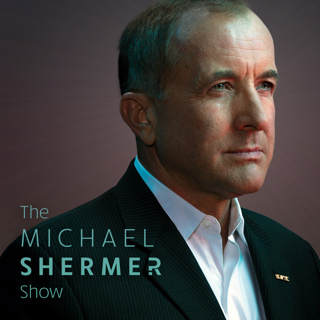
Shermer and Deaton discuss: the science of science is economics • winning a Nobel Prize • what economists do, and how they determine causality • Ludwig von Mises, Friedrich Hayek, Milton Friedman, Ayn Rand • why a college education matters • meritocracy and "Just World" theory • minimum wage • healthcare • poverty • inequality • opioid crisis, alcoholism, suicide • inflation and interest rates • modern monetary theory • think tanks.

Angus Deaton, winner of the 2015 Nobel Prize in economics, is the Dwight D. Eisenhower Professor of Economics and International Affairs Emeritus and Senior Scholar at Princeton University. He is the author (with Anne Case) of the New York Times bestselling book Deaths of Despair and the Future of Capitalism, The Great Escape: Health, Wealth and the Origins of Inequality, and his new book Economics in America: An Immigrant Economist Explores the Land of Inequality, all from Princeton University Press.

Det här avsnittet är hämtat från ett öppet RSS-flöde och publiceras inte av Podme. Det kan innehålla reklam.

Avsnitt(638)

Is the Future Unknowable? Uncertainty, Free Will, and the Limits of Science

Is the Future Unknowable? Uncertainty, Free Will, and the Limits of Science

What if uncertainty isn't a temporary problem science will eventually solve, but a fundamental feature of reality? Neuroscientist Stuart Firestein joins Michael Shermer to make the case that the unive...

1 Sep 1h 23min

Why We Want to Believe in Aliens and Why We Still Haven't Found Them

Why We Want to Believe in Aliens and Why We Still Haven't Found Them

UFOs were once the stuff of tabloids and conspiracy theories. Today they're the subject of congressional hearings, Pentagon investigations, mainstream news coverage, and a new wave of claims about gov...

25 Aug 1h 13min

Is There a Second Arrow of Time? A New Law of Evolution, Information, and Complexity

Is There a Second Arrow of Time? A New Law of Evolution, Information, and Complexity

Why does the universe produce ever more elaborate forms, from atoms and minerals to cells, organisms, brains, technology, and civilization? The familiar laws of physics can explain much of what happen...

18 Aug 1h 18min

Why Good People Disagree About Right and Wrong

Why Good People Disagree About Right and Wrong

Why do reasonable people disagree so strongly about right and wrong? And why are we so quick to assume that people on the other side of a moral or political issue are irrational, selfish, ignorant, or...

11 Aug 1h 57min

Are We Building a God? AI, Superintelligence, and the Coming Singularity

Are We Building a God? AI, Superintelligence, and the Coming Singularity

Robert Wright joins Michael Shermer to discuss his new book, The God Test: Artificial Intelligence and Our Coming Cosmic Reckoning, and why he thinks the AI revolution may be moving much faster than m...

5 Aug 1h 22min

Can You Trust Wikipedia? Co-Founder Larry Sanger on Wikipedia's Bias and Why He Was Banned

Can You Trust Wikipedia? Co-Founder Larry Sanger on Wikipedia's Bias and Why He Was Banned

Michael Shermer speaks with Wikipedia co-founder Larry Sanger shortly after Sanger was permanently banned from editing the site he helped create. Sanger tells the story of Wikipedia's founding, how it...

30 Juli 2h 3min

How to Think Clearly About a World in Crisis: Iran, China, Russia, and the West's Economic Pessimism

How to Think Clearly About a World in Crisis: Iran, China, Russia, and the West's Economic Pessimism

Michael Shermer speaks with political scientist Marlene Laruelle about Russia's turbulent transformation during the 1990s and the rise of Vladimir Putin, why the Kremlin so badly misjudged Ukraine, Ch...

18 Juli 1h 4min

The Truth About Sex Differences (Steve Stewart-Williams)

The Truth About Sex Differences (Steve Stewart-Williams)

How do men and women differ? Where do the differences come from? And how do they shape modern life? Drawing on a century of research and a billion years of evolution, Steve Stewart-Williams explains w...

11 Juli 55min

Populärt inom Vetenskap

p3-dystopia
dumma-manniskor
allt-du-velat-veta
rss-mottagningen
kapitalet-en-podd-om-ekonomi
halsorevolutionen
det-morka-psyket
ufo-sverige
medicinvetarna
sexet
bildningspodden
rss-spraket
rss-vetenskapsradion
rss-vetenskapsradion-2
paranormalt-med-caroline-giertz
vetenskapsradion
ufo-sverige-2
dumforklarat
rss-geopodden-2
barnpsykologerna