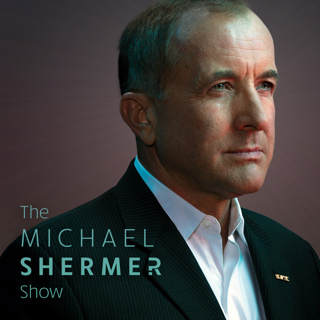
Religion as Make-Believe: A Theory of Belief, Imagination, and Group Identity

Religion as Make-Believe: A Theory of Belief, Imagination, and Group Identity

We often assume that religious beliefs are no different in kind from ordinary factual beliefs—that believing in the existence of God or of supernatural entities that hear our prayers is akin to believing that May comes before June. Neuroscientist and philosopher Neil Van Leeuwen shows that, in fact, these two forms of belief are strikingly different. Our brains do not process religious beliefs like they do beliefs concerning mundane reality; instead, empirical findings show that religious beliefs function like the imaginings that guide make-believe play.

Van Leeuwen argues that religious belief―which he terms religious "credence"―is best understood as a form of imagination that people use to define the identity of their group and express the values they hold sacred. When a person pretends, they navigate the world by consulting two maps: the first represents mundane reality, and the second superimposes the features of the imagined world atop the first. Drawing on psychological, linguistic, and anthropological evidence, Van Leeuwen posits that religious communities operate in much the same way, consulting a factual-belief map that represents ordinary objects and events and a religious-credence map that accords these objects and events imagined sacred and supernatural significance.

It is hardly controversial to suggest that religion has a social function, but Religion as Make-Believe breaks new ground by theorizing the underlying cognitive mechanisms. Once we recognize that our minds process factual and religious beliefs in fundamentally different ways, we can gain deeper understanding of the complex individual and group psychology of religious faith.

Neil Van Leeuwen is Associate Professor of Philosophy and Neuroscience at Georgia State University and a recipient of the European Commission's Marie Curie Fellowship. His research has been featured in The New York Times and The Atlantic and on NPR. His new book is Religion as Make-Believe: A Theory of Belief, Imagination and Group Identity.

Shermer and Van Leeuwen discuss: his own personal religious journey (or lack thereof) • "believe," "make-believe," and "pretend play" • "taking God seriously" • 4 Principles of Factual Belief • Tanya Luhrmann's How God Becomes Real: Kindling the Presence of Invisible Others • willing suspension of disbelief • group identity • sacred values • The Puzzle of Religious Rationality • that voice we all hear in our heads • "hearing the voice of God" • hallucinations and psychoses • sleep paralysis • angels and demons • sensed presences • witches and witchcraft.

Det här avsnittet är hämtat från ett öppet RSS-flöde och publiceras inte av Podme. Det kan innehålla reklam.

Avsnitt(631)

The Truth About Sex Differences (Steve Stewart-Williams)

The Truth About Sex Differences (Steve Stewart-Williams)

How do men and women differ? Where do the differences come from? And how do they shape modern life? Drawing on a century of research and a billion years of evolution, Steve Stewart-Williams explains w...

11 Juli 55min
America at 250: What Did the Founders Get Right?

America at 250: What Did the Founders Get Right?

Michael Shermer makes the case that the U.S. Founding Fathers were not only steeped in Enlightenment values on which the Declaration of Independence was based, but they were also scientists searching ...

6 Juli 17min

When History Goes on Trial: Demjanjuk, Eichmann, and Justice After Atrocity

When History Goes on Trial: Demjanjuk, Eichmann, and Justice After Atrocity

John Demjanjuk lived for decades as a retired autoworker in suburban Cleveland. Then investigators accused him of being "Ivan the Terrible," one of the most notorious guards at Treblinka. What followe...

27 Juni 1h 32min

Why I Joined the Government UAP Science Advisory Council

Why I Joined the Government UAP Science Advisory Council

Michael Shermer has been appointed to the newly formed UAP Science Advisory Council, formed at the request of the White House and in coordination with the All-domain Anomaly Resolution Office (AARO), ...

23 Juni 29min

Massimo Pigliucci on Doubt, Moral Courage, and Living Without Illusions

Massimo Pigliucci on Doubt, Moral Courage, and Living Without Illusions

What does it mean to live well when certainty is unavailable? Michael Shermer speaks with Massimo Pigliucci about moral character, ancient philosophy, and the difficult art of making decisions without...

20 Juni 1h 33min

Cathy Young: Why Free Societies Need Free Speech

Cathy Young: Why Free Societies Need Free Speech

Cathy Young returns to the show for a wide-ranging conversation about free speech, institutional trust, and the strange incentives shaping public debate today. What happens when universities, media ou...

16 Juni 1h 30min

The Zodiac Killer Wasn't Real

The Zodiac Killer Wasn't Real

The Zodiac Killer has been treated for decades as America's ultimate unsolved true crime mystery: one mysterious killer, taunting letters, cryptic ciphers, a strange costume, and a trail of victims ac...

13 Juni 1h 39min

How Algorithms Use Your Data to Control You

How Algorithms Use Your Data to Control You

Michael Shermer speaks with Oxford philosopher Carissa Véliz about the long human desire to know the future—from ancient oracles and astrology to AI, surveillance capitalism, predictive policing, and ...

9 Juni 1h 34min

Populärt inom Vetenskap

p3-dystopia
dumma-manniskor
allt-du-velat-veta
kvalificerat-hemligt-poddradio
det-morka-psyket
bildningspodden
medicinvetarna
sexet
paranormalt-med-caroline-giertz
rss-ufobortom-rimligt-tvivel
rss-vetenskapsradion-2
svd-nyhetsartiklar
rss-kriminologerna
rss-vetenskapsradion
barnpsykologerna
vetenskapsradion
rss-odla
rss-broccolipodden-en-podcast-som-inte-handlar-om-broccoli
dumforklarat
rss-allt-jag-onskade-nagon-sagt-om-kvinnlig-adhd