Native and Non-native Earthworms in the Eastern U.S. with Mac Callaham

Native and Non-native Earthworms in the Eastern U.S. with Mac Callaham

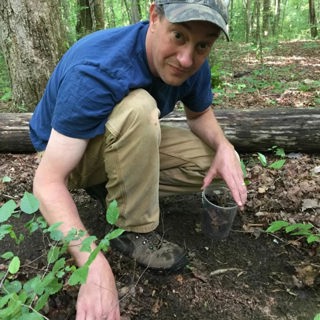
Hi Everyone! Today we are talking with Mac Callaham who is a Research Ecologist with the Southern Research Station of the U.S. Forest Service. Mac's focus is on invasive species, with a specialty in soil animals, especially earthworms.

Like many people, I grew up thinking that earthworms were a good thing and a natural part of our ecosystem. However, that's not completely true. In North America, many of our earthworms were wiped out during the Ice Age either directly from the glaciers or because the ground, even quite a distance out from the glaciers, was frozen.

We still have some native earthworms in the Pacific Northwest and parts of the southeast, but we also have quite a few non-native species of earthworms. Some of these non-native earthworm species have probably been here since the early European colonists arrived and brought their plants with them. Other species are much newer arrivals – some being discovered for the first time within the last few years.

The impacts of these non-native earthworms depends on where they are found. In more northern parts of the continent, the effects of the non-native earthworms can be devastating to the ecosystem. This is because the local ecosystem existed for so long without earthworms in it. However, in areas where there were native earthworms, the impacts are often not quite so drastic, but that doesn't mean there are no impacts.

In many areas of the southeast, non-native earthworms are much more common than native species. Yet, even though the species composition has changed, we aren't always seeing the same sort of dramatic impacts that are being seen further north. Part of that could be because those species have been in the southeast longer and part of it is likely that those species of non-native earthworms are doing some of the same things as the native earthworms in this area. However, some of the more recently discovered species of non-native earthworms can have quite drastic effects, even in the southeast, because their feeding behaviors are very different from the native species.

Throughout this episode, Mac and I talk about the different types of earthworms, their impacts in various parts of the region, how much we don't know, and how there really isn't a simple, black and white answer when it comes to earthworms. Yes, non-native earthworms can have serious, negative impacts on the natural ecosystem, especially in parts of the continent. But in other areas, earthworms, even non-native species, can help soil health, especially in southern regions that have been highly impacted through long-term agricultural use. This is a complicated topic and we talk about some of those complications, including things that we as homeowners can do.

Links:

Photo credit: Yuanyuan Li

Avsnitt(115)

The American Goldfinch: A Comprehensive Guide

The American Goldfinch: A Comprehensive Guide

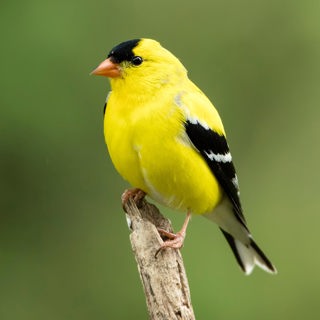
American goldfinches are beautiful and fascinating songbirds that can be found over most of the continent. Their late nesting season and almost exclusively seed-based diet, even as nestlings, make the...

25 Aug 202318min
Exploring Urban Ecology: Understanding and Appreciating Nature Where We Live

Exploring Urban Ecology: Understanding and Appreciating Nature Where We Live

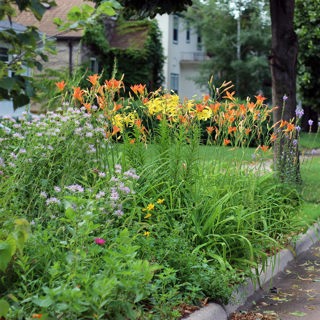
Did you know that urban ecology doesn't just apply to big cities and towns? Even if you live in a fairly rural area, if there is a lot of interaction between where you live and a nearby town or city t...

10 Aug 202355min
What Happens When a Tree Gets Blown Over? Discovering New Habitats Created by Fallen Trees

What Happens When a Tree Gets Blown Over? Discovering New Habitats Created by Fallen Trees

As sad as the loss of a tree can be, there's also an excitement because fallen trees provide many different types of valuable and often overlooked habitats. I talk about some of those habitats in this...

27 Juli 202312min
Moths: Unsung Heroes of Pollination and Beyond

Moths: Unsung Heroes of Pollination and Beyond

Did you know that there are approximately 10 times more moth species worldwide than there are butterfly species? Or that without moths we would have fewer songbirds, less genetic diversity in many of ...

13 Juli 20231h 2min
Sometimes Life Happens

Sometimes Life Happens

I share a story of how Anthony and I had a "life happens" moment on our property over the weekend. My hope is that our story of how "life happened" to us this week can give you a little bit of encoura...

29 Juni 20237min
Learning to See and Identify Plants with Alan Weakley

Learning to See and Identify Plants with Alan Weakley

If you've ever found a plant that you didn't recognize and wanted to know what it was, then this episode is for you. We talk with Dr. Alan Weakley about learning to observe plants, how to identify pla...

15 Juni 202355min
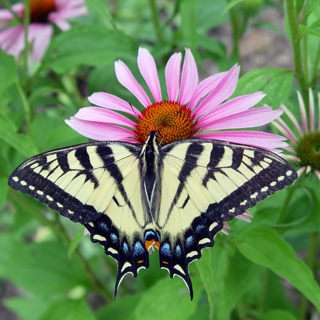
5 Tips for Attracting Butterflies to Your Yard

5 Tips for Attracting Butterflies to Your Yard

I offer five tips to help you attract butterflies to your property. Depending on your property and situation, you may not be able to do all of them. That's ok. If you have a small property, look aroun...

1 Juni 202311min
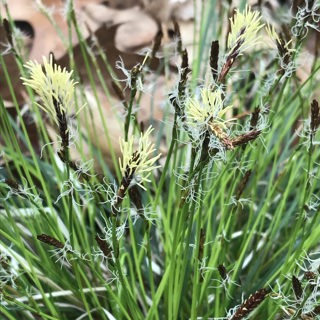
Gardening with Sedges - Mt. Cuba Center Carex Trial

Gardening with Sedges - Mt. Cuba Center Carex Trial

Did you know there is a group of native plants which can be highly adaptable, can serve multiple functions in our gardens, and perhaps even be a backbone component to our home landscapes, but which ha...

18 Maj 202359min

Populärt inom Vetenskap

p3-dystopia
svd-nyhetsartiklar
dumma-manniskor
kapitalet-en-podd-om-ekonomi
allt-du-velat-veta
doden-hjarnan-kemisten
rss-ufo-bortom-rimligt-tvivel-2
rss-vetenskapsradion-2
rss-vetenskapsradion
det-morka-psyket
bildningspodden
sexet
medicinvetarna
paranormalt-med-caroline-giertz
rss-spraket
har-vi-akt-till-mars-an
rss-experimentet
dumforklarat
barnpsykologerna
rss-tidsmaskinen