
Anna Vignoles - Why education inequalities matter and how they can be reduced

Anna Vignoles - Why education inequalities matter and how they can be reduced

Education systems are unequal in most societies around the world in that we see big gaps in achievement levels.

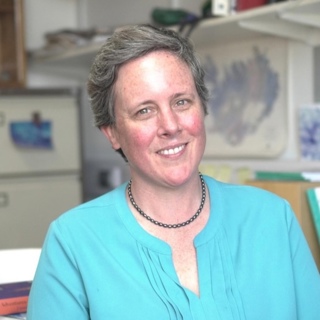
About Anna Vignoles

"Formerly Professor of Education at the University of Cambridge, I am the Director of the Leverhulme Trust and an economist of education.

I’m an economist of education, which means I apply economic principles to the study of education. I do lots of work on trying to understand the effectiveness of different education systems, of understanding the causes of inequality in our education systems, and I try to come up with practical solutions to how we can narrow these inequalities."

Key Points

• There are very few systems in the world that don't have education inequalities. Pupils who experience them are more likely to suffer once they join the labour market. • There are two types of education inequality: the first is the difference in achievement levels that you see in the system. The second is inequality between children within schools. • One solution is targeted spending, where the State deliberately spends more on children who are likely to be otherwise at a disadvantage.

Most education systems are unequal

Education systems are unequal in most societies around the world in that we see big gaps in achievement levels, particularly between children from more advantaged families and children from more impoverished families. The inequalities that we see in educational achievement are ubiquitous. There are very few systems in the world that don't have them – some systems just have more significant inequalities than others.

The reason why education inequality matters so much is that education is an investment. In other words, those who don't get the skills that you get from investing in education, then suffer when they join the labour market. They end up having more inferior quality jobs, and they earn less. You’re more likely to be employed if you have higher levels of education. Conversely, if you haven't invested in education, you’re more likely to be unemployed.

Being unemployed is associated with a whole range of poor outcomes, ranging from poor well-being to poor physical health. It goes beyond just being about education inequalities. Education inequalities map onto many other disparities that last a lifetime, particularly labour market inequality and inequalities related to well-being. As a society, we should be very concerned about education equity. It matters, and although we see inequalities in educational achievement across the board, some systems have done a far better job at abating those inequalities.

Det här avsnittet är hämtat från ett öppet RSS-flöde och publiceras inte av Podme. Det kan innehålla reklam.

Avsnitt(100)

The resurgence of civic duties | Simon Reid-Henry

The resurgence of civic duties | Simon Reid-Henry

Civic duties are essentially the ways in which citizens agree to abide by the rules and to contribute to the life of a national society. About Simon Reid-Henry "I am a research professor at the Peace ...

16 Mars 14min
What is "prejudice" ? | Jessie Munton

What is "prejudice" ? | Jessie Munton

I think prejudice is best conceptualized as a phenomenon that can be supported by a whole range of mental states that will include beliefs, habits, emotions, and also attentional dispositions. About J...

12 Mars 16min

Global Public Investment | Simon Reid-Henry

Global Public Investment | Simon Reid-Henry

The world today is overburdened with challenges that supersede the boundaries of nation states, and therefore of national governments, to address on their own. About Simon Reid-Henry "I am a research ...

9 Mars 18min

On ignorance and forgetting | Jessie Munton

On ignorance and forgetting | Jessie Munton

I'm interested in the beliefs that we're not forming, the evidence that we're not attending to or using, the belief states that perhaps we form. What I think of as negative epistemology is the project...

5 Mars 19min

The empire of democracy | Simon Reid-Henry

The empire of democracy | Simon Reid-Henry

"How do we understand, as it were, our era of democracy, which I argue began really as recently as the 1970s from previous eras, and what is it that is fundamentally at the core of the democracy we li...

2 Mars 19min

The life of the mind | Jessie Munton

The life of the mind | Jessie Munton

On the one hand, we have that sense of really close identification with our minds. On the other hand, we're often surprised at the ways in which they operate. About Jessie Munton "​​I'm an Associate P...

26 Feb 19min

Volcanoes and the origins of life | Tamsin Mather

Volcanoes and the origins of life | Tamsin Mather

We don't really understand how life got going on this planet. There are various candidates for where the first molecules of life might have evolved, and some of those candidates are deeply volcanic. A...

23 Feb 18min
The origin myth of the modern West | Naoíse Mac Sweeney

The origin myth of the modern West | Naoíse Mac Sweeney

We in the modern West still look back to ancient Greece as our imagined origin. We're still obsessed with ancient Greece. About Naoise Mac Sweeney  "I'm Professor of Greek Archaeology at the Universit...

19 Feb 14min

Populärt inom Utbildning

historiepodden-se
det-skaver
rss-bara-en-till-om-beroende-medberoende
nu-blir-det-historia
harrisons-dramatiska-historia
not-fanny-anymore
rss-viktmedicinpodden
roda-vita-rosen
allt-du-velat-veta
johannes-hansen-podcast
sa-in-i-sjalen
i-vantan-pa-katastrofen
rikatillsammans-om-privatekonomi-rikedom-i-livet
rss-foraldramotet-bring-lagercrantz
polisutbildningspodden
rss-max-tant-med-max-villman
rss-basta-livet
rss-traningsklubben
rss-ar-det-rimligt
rss-autismandan