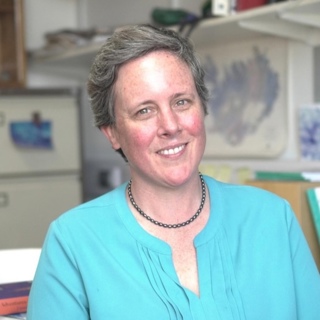

Martin Rees - Science as a calling

Martin Rees - Science as a calling

What has been learnt about the universe in the last 50 years will be one of the real high points, along with discoveries like the double helix and genetics, and Darwin and evolution.

About Martin Rees

"I'm the UK's Astronomer Royal and Emeritus Professor of Cosmology and Astrophysics at the University of Cambridge.

My research is mainly on trying to understand our universe around us. Aside from astronomy and space science, I’ve been very much engaged with science policy, particularly how modern technology can be controlled so that we can harness its benefits but avoid its downsides."

Key Points

• Science involves piecemeal efforts and the international collaboration of many people to understand what’s happening in a particular area of the natural world. • Scientists have a responsibility to realise when their work may have a dangerous downside and guard against its use. • Many decisions made by politicians today have a scientific element, so in order to have democratic debates, it’s important that all citizens have a feel for science and statistics.

Part of a historical debate

I’ve been a scientist specialising in a field that has developed very fast, so although I don’t feel I’ve made any great individual contributions, I’ve been part of a debate which has really deepened and broadened our understanding of the universe we live in. I think when the history of science is written, what has been learnt about the universe in the last 50 years will be one of the real high points, along with discoveries like the double helix and genetics, and Darwin and evolution.

I’ve been privileged to be part of this debate, which, of course, is an international debate, because science is an activity which straddles boundaries of nationality and faith more easily than other activities. I’ve been privileged to be part of this international community trying to understand the world and the universe. I’ve done this in a university, but I’ve had the privilege of working with younger colleagues and colleagues all over the world. In astronomy, like in particle physics, we sometimes depend on very expensive pieces of equipment which have to be shared internationally, so that makes our subject especially international. For me, that’s been a bonus.

research explained, academic insights, expert voices, university knowledge, public scholarship, critical thinking, world events explained, humanities decoded, social issues explored, science for citizens, open access education, informed debates, big ideas, how the world works, deep dives, scholarly storytelling, learn something new, global challenges, trusted knowledge, EXPeditions platform

Det här avsnittet är hämtat från ett öppet RSS-flöde och publiceras inte av Podme. Det kan innehålla reklam.

Avsnitt(100)

The resurgence of civic duties | Simon Reid-Henry

The resurgence of civic duties | Simon Reid-Henry

Civic duties are essentially the ways in which citizens agree to abide by the rules and to contribute to the life of a national society. About Simon Reid-Henry "I am a research professor at the Peace ...

16 Mars 14min

What is "prejudice" ? | Jessie Munton

What is "prejudice" ? | Jessie Munton

I think prejudice is best conceptualized as a phenomenon that can be supported by a whole range of mental states that will include beliefs, habits, emotions, and also attentional dispositions. About J...

12 Mars 16min

Global Public Investment | Simon Reid-Henry

Global Public Investment | Simon Reid-Henry

The world today is overburdened with challenges that supersede the boundaries of nation states, and therefore of national governments, to address on their own. About Simon Reid-Henry "I am a research ...

9 Mars 18min

On ignorance and forgetting | Jessie Munton

On ignorance and forgetting | Jessie Munton

I'm interested in the beliefs that we're not forming, the evidence that we're not attending to or using, the belief states that perhaps we form. What I think of as negative epistemology is the project...

5 Mars 19min

The empire of democracy | Simon Reid-Henry

The empire of democracy | Simon Reid-Henry

"How do we understand, as it were, our era of democracy, which I argue began really as recently as the 1970s from previous eras, and what is it that is fundamentally at the core of the democracy we li...

2 Mars 19min

The life of the mind | Jessie Munton

The life of the mind | Jessie Munton

On the one hand, we have that sense of really close identification with our minds. On the other hand, we're often surprised at the ways in which they operate. About Jessie Munton "​​I'm an Associate P...

26 Feb 19min

Volcanoes and the origins of life | Tamsin Mather

Volcanoes and the origins of life | Tamsin Mather

We don't really understand how life got going on this planet. There are various candidates for where the first molecules of life might have evolved, and some of those candidates are deeply volcanic. A...

23 Feb 18min
The origin myth of the modern West | Naoíse Mac Sweeney

The origin myth of the modern West | Naoíse Mac Sweeney

We in the modern West still look back to ancient Greece as our imagined origin. We're still obsessed with ancient Greece. About Naoise Mac Sweeney  "I'm Professor of Greek Archaeology at the Universit...

19 Feb 14min

Populärt inom Utbildning

historiepodden-se
det-skaver
rss-bara-en-till-om-beroende-medberoende
nu-blir-det-historia
harrisons-dramatiska-historia
not-fanny-anymore
rss-viktmedicinpodden
roda-vita-rosen
allt-du-velat-veta
johannes-hansen-podcast
sa-in-i-sjalen
i-vantan-pa-katastrofen
rikatillsammans-om-privatekonomi-rikedom-i-livet
rss-foraldramotet-bring-lagercrantz
polisutbildningspodden
rss-max-tant-med-max-villman
rss-basta-livet
rss-traningsklubben
rss-ar-det-rimligt
rss-autismandan