Tamsin Edwards - Being a climate scientist

Tamsin Edwards - Being a climate scientist

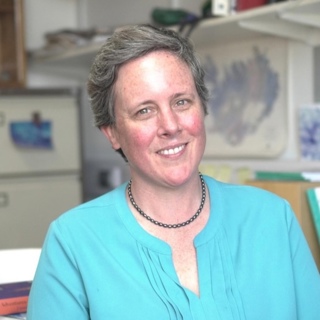
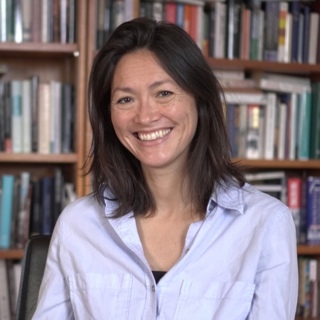
Tamsin Edwards, Reader in Climate Change at King’s College London, explains the risks of polarised thinking in climate change.

About Tamsin Edwards

"I’m a climate scientist and Reader in Climate Change at King’s College London.

My work involves quantifying the uncertainties in climate model predictions, and particularly the changes that we’ll see for the Greenland and Antarctic ice sheets’ contributions to sea level rise."

Key Points

• Science is always going to be uncertain at the cutting edge. You will always get studies and predictions that are different because we are at the tentative boundaries of knowledge. • There isn’t a single objective recipe for how to interpret data. There’s always a human involved. Scientists are searching for patterns. Avoiding polar or polarised thinking is crucial to understanding the complexities of issues such as climate change. • Two scientists proposed the idea that the edge of the ice sheet could crumble rapidly into the ocean. There isn’t really that much direct evidence for marine ice cliff instability. However, I’m not confident enough to completely rule it out. • Time is a key aspect of climate change research, affecting long- and short-term predictions and our understanding of reversible and irreversible change. Some aspects of climate change might be reversible and others not. The dangers of polar thinking

If there was one message I’d give to people, it’s the importance of not succumbing to black and white thinking, or – because I work in polar climate change – what you might call "polar thinking". We live in a world that is increasingly polarised. We have different groups that fight each other politically and culturally. That often spills into the way that we see science, scientific expertise and scientific predictions as being 100% right or wrong, or a particular future as being 100% good or bad. This simplistic way of thinking is very seductive.

It’s understandable that humans do this. It’s quicker than thinking about the nuances and the complexities. It’s something we do when we’re faced with uncertainty or fear. Our natural instinct is to simplify, to put up boundaries and to exclude the people we think don’t agree with us. We say that they’re “other”, that they’re wrong and perhaps evil or morally bad.

But we have to resist that human instinct to simplify and polarise. We have to take the time to look at the detail, to look at the nuance, to understand. It’s time-consuming. It’s hard. You put yourself at risk when you try to judge each event on a case-by-case basis: you might be wrong. And it’s so much easier to retreat into name-calling or certainty and dogma. But now, more than ever, we have to look at the subtleties of every situation. We have to be able to say: For the most part, I don’t agree with this person. But on this thing, they might be right. They’re not simply a "bad" person or a "wrong" person.

research explained, academic insights, expert voices, university knowledge, public scholarship, critical thinking, world events explained, humanities decoded, social issues explored, science for citizens, open access education, informed debates, big ideas, how the world works, deep dives, scholarly storytelling, learn something new, global challenges, trusted knowledge, EXPeditions platform

Det här avsnittet är hämtat från ett öppet RSS-flöde och publiceras inte av Podme. Det kan innehålla reklam.

Avsnitt(100)

The resurgence of civic duties | Simon Reid-Henry

The resurgence of civic duties | Simon Reid-Henry

Civic duties are essentially the ways in which citizens agree to abide by the rules and to contribute to the life of a national society. About Simon Reid-Henry "I am a research professor at the Peace ...

16 Mars 14min
What is "prejudice" ? | Jessie Munton

What is "prejudice" ? | Jessie Munton

I think prejudice is best conceptualized as a phenomenon that can be supported by a whole range of mental states that will include beliefs, habits, emotions, and also attentional dispositions. About J...

12 Mars 16min

Global Public Investment | Simon Reid-Henry

Global Public Investment | Simon Reid-Henry

The world today is overburdened with challenges that supersede the boundaries of nation states, and therefore of national governments, to address on their own. About Simon Reid-Henry "I am a research ...

9 Mars 18min

On ignorance and forgetting | Jessie Munton

On ignorance and forgetting | Jessie Munton

I'm interested in the beliefs that we're not forming, the evidence that we're not attending to or using, the belief states that perhaps we form. What I think of as negative epistemology is the project...

5 Mars 19min

The empire of democracy | Simon Reid-Henry

The empire of democracy | Simon Reid-Henry

"How do we understand, as it were, our era of democracy, which I argue began really as recently as the 1970s from previous eras, and what is it that is fundamentally at the core of the democracy we li...

2 Mars 19min

The life of the mind | Jessie Munton

The life of the mind | Jessie Munton

On the one hand, we have that sense of really close identification with our minds. On the other hand, we're often surprised at the ways in which they operate. About Jessie Munton "​​I'm an Associate P...

26 Feb 19min

Volcanoes and the origins of life | Tamsin Mather

Volcanoes and the origins of life | Tamsin Mather

We don't really understand how life got going on this planet. There are various candidates for where the first molecules of life might have evolved, and some of those candidates are deeply volcanic. A...

23 Feb 18min
The origin myth of the modern West | Naoíse Mac Sweeney

The origin myth of the modern West | Naoíse Mac Sweeney

We in the modern West still look back to ancient Greece as our imagined origin. We're still obsessed with ancient Greece. About Naoise Mac Sweeney  "I'm Professor of Greek Archaeology at the Universit...

19 Feb 14min

Populärt inom Utbildning

historiepodden-se
det-skaver
rss-bara-en-till-om-beroende-medberoende
nu-blir-det-historia
harrisons-dramatiska-historia
not-fanny-anymore
rss-viktmedicinpodden
roda-vita-rosen
allt-du-velat-veta
johannes-hansen-podcast
sa-in-i-sjalen
i-vantan-pa-katastrofen
rikatillsammans-om-privatekonomi-rikedom-i-livet
rss-foraldramotet-bring-lagercrantz
polisutbildningspodden
rss-max-tant-med-max-villman
rss-basta-livet
rss-traningsklubben
rss-ar-det-rimligt
rss-autismandan