Tim Lenton - Revolutions that made the Earth

Tim Lenton - Revolutions that made the Earth

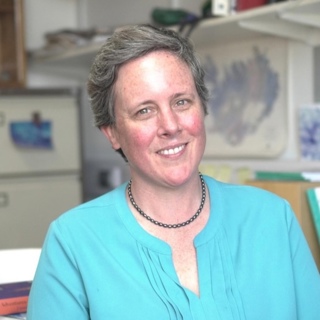
Tim Lenton, Professor of Earth System Science at the University of Exeter, discusses how our remarkable planet came to be the way it is now.

About Tim Lenton "I’m Director of the Global Systems Institute and Professor of Earth System Science at the University of Exeter. My work focusses on the transformation of our planet.

Reading Jim Lovelock’s books on Gaia ignited my passion for studying the Earth as a whole system. I study how our remarkable planet came to be the way it is now. I study how humans are transforming the Earth’s system and how we might create a flourishing future within that system."

Key Points

• There are three remarkable revolutions that made the Earth in which we could evolve as humans. The first is the origin of life. The second is the creation of oxygen in our atmosphere. The third is the makings of complex life forms. • Humans are the first conscious animal species to have a truly global influence on the climate. • The remarkable thing about our planet and what we call the Earth system is how interconnected the living and the non-living things are at the surface of the planet: Life has transformed the environment, and the environment has shaped life. • We recognise that we’re a global force and we’ve created a new geological epoch, which scientists have dubbed “The Anthropocene” that is destined to end badly. But humans could also be the beginning of another revolutionary change of the Earth.

The Earth's first revolution

There are three remarkable revolutions that made the Earth in which we could evolve as humans. The first is the origin of life. The second is the creation of oxygen in our atmosphere. The third is the makings of complex life forms and a second rise in oxygen to levels that can support creatures like us that are intelligent enough to reflect on this remarkable history from which we’ve evolved.

Life got started on this planet over three and a half billion years ago and it was immediately faced with a profound problem of trying to get hold of enough of all the elements it needed to build its bodies, because the supply from inside the Earth – from volcanoes and the like – of the materials that organisms use was pretty meagre. So, the first revolution was really a revolution of recycling, where the young biosphere learned how to recycle all the elements it needed to flourish, and to be productive and global in extent and influence.

Now, after that revolution, at least a billion years passed before one little lineage of bacteria solved an incredible puzzle of how to pull apart water molecules, to get hold of electrons and stick those electrons on molecules of carbon dioxide to reduce the carbon down to sugars, in what we know as photosynthesis. And that process spits out oxygen as a waste product.

Det här avsnittet är hämtat från ett öppet RSS-flöde och publiceras inte av Podme. Det kan innehålla reklam.

Avsnitt(100)

The resurgence of civic duties | Simon Reid-Henry

The resurgence of civic duties | Simon Reid-Henry

Civic duties are essentially the ways in which citizens agree to abide by the rules and to contribute to the life of a national society. About Simon Reid-Henry "I am a research professor at the Peace ...

16 Mars 14min
What is "prejudice" ? | Jessie Munton

What is "prejudice" ? | Jessie Munton

I think prejudice is best conceptualized as a phenomenon that can be supported by a whole range of mental states that will include beliefs, habits, emotions, and also attentional dispositions. About J...

12 Mars 16min

Global Public Investment | Simon Reid-Henry

Global Public Investment | Simon Reid-Henry

The world today is overburdened with challenges that supersede the boundaries of nation states, and therefore of national governments, to address on their own. About Simon Reid-Henry "I am a research ...

9 Mars 18min

On ignorance and forgetting | Jessie Munton

On ignorance and forgetting | Jessie Munton

I'm interested in the beliefs that we're not forming, the evidence that we're not attending to or using, the belief states that perhaps we form. What I think of as negative epistemology is the project...

5 Mars 19min

The empire of democracy | Simon Reid-Henry

The empire of democracy | Simon Reid-Henry

"How do we understand, as it were, our era of democracy, which I argue began really as recently as the 1970s from previous eras, and what is it that is fundamentally at the core of the democracy we li...

2 Mars 19min

The life of the mind | Jessie Munton

The life of the mind | Jessie Munton

On the one hand, we have that sense of really close identification with our minds. On the other hand, we're often surprised at the ways in which they operate. About Jessie Munton "​​I'm an Associate P...

26 Feb 19min

Volcanoes and the origins of life | Tamsin Mather

Volcanoes and the origins of life | Tamsin Mather

We don't really understand how life got going on this planet. There are various candidates for where the first molecules of life might have evolved, and some of those candidates are deeply volcanic. A...

23 Feb 18min
The origin myth of the modern West | Naoíse Mac Sweeney

The origin myth of the modern West | Naoíse Mac Sweeney

We in the modern West still look back to ancient Greece as our imagined origin. We're still obsessed with ancient Greece. About Naoise Mac Sweeney  "I'm Professor of Greek Archaeology at the Universit...

19 Feb 14min

Populärt inom Utbildning

historiepodden-se
det-skaver
rss-bara-en-till-om-beroende-medberoende
nu-blir-det-historia
harrisons-dramatiska-historia
not-fanny-anymore
rss-viktmedicinpodden
roda-vita-rosen
allt-du-velat-veta
johannes-hansen-podcast
sa-in-i-sjalen
i-vantan-pa-katastrofen
rikatillsammans-om-privatekonomi-rikedom-i-livet
rss-foraldramotet-bring-lagercrantz
polisutbildningspodden
rss-max-tant-med-max-villman
rss-basta-livet
rss-traningsklubben
rss-ar-det-rimligt
rss-autismandan