
Jim Secord - The revival of Darwinism

Jim Secord - The revival of Darwinism

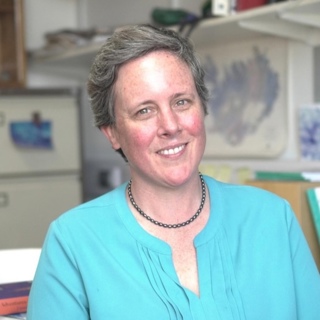
Jim Secord, Director of the Darwin Correspondence Project, University of Cambridge, explains how perception of Darwin has evolved.

About Jim Secord

"I’m the Director of the Darwin Correspondence Project in the University Library at Cambridge University.

My research is on public debates about science in the 18th and 19th centuries. I’ve written particularly about Victorian evolution and debates about the problem of species and where we come from. I’ve also written about the reception of evolutionary works before Darwin published his Origin of Species."

Key Points

• Although Darwin was an eminent scientist in his day, his ideas fell out of favour following his death. Their significance, however, was rediscovered throughout the 1920s and 1930s. • Darwin was not a Christian; however, he did not consider his theory of natural selection as opposed to the concept of God. • Darwin’s writings on religious issues were often thoughtful and nuanced. This ambiguity has led many to misinterpret him, especially concerning the common misconception of his atheism. • Darwin avidly engaged in correspondence with various scientists and thinkers from around the world. His numerous letters are particularly telling of his character.

Darwin was, of course, very famous for the Victorians. Yet, in the decades after his death, and particularly in the early 20th century, his reputation and the number of references to him begin to decline. There’s a big celebration, in fact, here at Christ’s College of the centennial of his birth in 1909. At that time, people talked about being at Darwin’s deathbed or Darwin somehow being irrelevant.

It was only in the late 1920s and 1930s that Darwin’s reputation begins to pick up. There are two reasons for this. One, the Victorians start to be revived and seen as significant figures. The other reason, however, is quite detailed. Darwin’s theory had undergone what many people called an eclipse in the life sciences, particularly in evolutionary biology. People thought that he had introduced a scientific way of thinking about evolution. Yet, they didn’t necessarily accept that natural selection was the right mechanism. Darwin became like Jean-Baptiste Lamarck and many authors of his time. He was simply seen as someone who helped put evolution on the map.

However, in the 1920s and 1930s, new work combined Mendelian genetics with a statistical view of populations of animals and other works in natural history and classification. All of these ideas were combined in a new view, which suggested that natural selection was, in fact, probably even more important than Darwin expected.

Det här avsnittet är hämtat från ett öppet RSS-flöde och publiceras inte av Podme. Det kan innehålla reklam.

Avsnitt(100)

The resurgence of civic duties | Simon Reid-Henry

The resurgence of civic duties | Simon Reid-Henry

Civic duties are essentially the ways in which citizens agree to abide by the rules and to contribute to the life of a national society. About Simon Reid-Henry "I am a research professor at the Peace ...

16 Mars 14min

What is "prejudice" ? | Jessie Munton

What is "prejudice" ? | Jessie Munton

I think prejudice is best conceptualized as a phenomenon that can be supported by a whole range of mental states that will include beliefs, habits, emotions, and also attentional dispositions. About J...

12 Mars 16min

Global Public Investment | Simon Reid-Henry

Global Public Investment | Simon Reid-Henry

The world today is overburdened with challenges that supersede the boundaries of nation states, and therefore of national governments, to address on their own. About Simon Reid-Henry "I am a research ...

9 Mars 18min

On ignorance and forgetting | Jessie Munton

On ignorance and forgetting | Jessie Munton

I'm interested in the beliefs that we're not forming, the evidence that we're not attending to or using, the belief states that perhaps we form. What I think of as negative epistemology is the project...

5 Mars 19min

The empire of democracy | Simon Reid-Henry

The empire of democracy | Simon Reid-Henry

"How do we understand, as it were, our era of democracy, which I argue began really as recently as the 1970s from previous eras, and what is it that is fundamentally at the core of the democracy we li...

2 Mars 19min

The life of the mind | Jessie Munton

The life of the mind | Jessie Munton

On the one hand, we have that sense of really close identification with our minds. On the other hand, we're often surprised at the ways in which they operate. About Jessie Munton "​​I'm an Associate P...

26 Feb 19min

Volcanoes and the origins of life | Tamsin Mather

Volcanoes and the origins of life | Tamsin Mather

We don't really understand how life got going on this planet. There are various candidates for where the first molecules of life might have evolved, and some of those candidates are deeply volcanic. A...

23 Feb 18min

The origin myth of the modern West | Naoíse Mac Sweeney

The origin myth of the modern West | Naoíse Mac Sweeney

We in the modern West still look back to ancient Greece as our imagined origin. We're still obsessed with ancient Greece. About Naoise Mac Sweeney  "I'm Professor of Greek Archaeology at the Universit...

19 Feb 14min
Populärt inom Utbildning

historiepodden-se
det-skaver
rss-bara-en-till-om-beroende-medberoende
nu-blir-det-historia
harrisons-dramatiska-historia
not-fanny-anymore
rss-viktmedicinpodden
roda-vita-rosen
allt-du-velat-veta
johannes-hansen-podcast
sa-in-i-sjalen
i-vantan-pa-katastrofen
rikatillsammans-om-privatekonomi-rikedom-i-livet
rss-foraldramotet-bring-lagercrantz
polisutbildningspodden
rss-max-tant-med-max-villman
rss-basta-livet
rss-traningsklubben
rss-ar-det-rimligt
rss-autismandan