Jonathan Wolff - Loneliness, disability and social justice

Jonathan Wolff - Loneliness, disability and social justice

A society of equals is one where no one looks up to anyone and no one looks down on anyone. No one is exploited, no one is dominated and no one is subjected to violence.

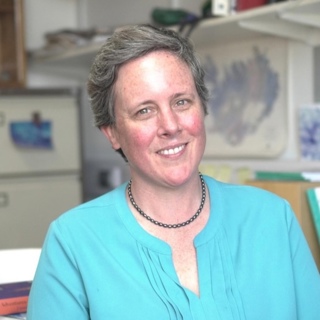
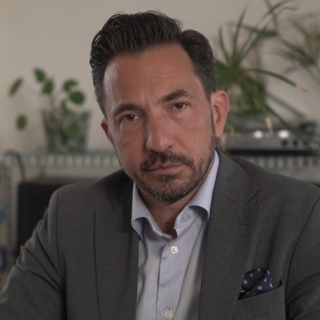
About Jonathan Wolff "I’m the Alfred Landecker Professor of Values and Public Policy at the Blavatnik School of Government in the University of Oxford.

I’m a political philosopher, and my research is largely about making connections between political philosophy on the one hand, and central questions in public and social policy on the other hand."

Key Points

• To judge the justice of our society, we should look at the wealth and income of the worst-off, and see if their wealth can be increased. • A society of equals is not so much about the distribution of resources but the way in which we relate to one another and the many ways in which we regard one another. • The alternative social model of disability says that we should change the world so that more people can fit into it rather than trying to change people to fit our world.

One of the main themes in my work over the years has been thinking about equality and inequality from the point of view of distributive justice. Coming from a well-meaning, middle-class, left-wing family, I always thought that great inequality was unjust, particularly the inequality of wealth. When I got to university as an undergraduate, I was pleased that this was one of the topics that I would be studying, just a few years after John Rawls had published his famous Theory of Justice. He argued that a just society is one where the worst-off are made as well off as possible. To judge the justice of our society, we should look at the wealth and income of the worst-off. We should see if the wealth of the worst-off can be increased without others becoming poorer than the worst-off people were before. In other words, we judge the justice of a society by how it treats those who are worst off.

This is a very appealing view, but it does allow inequalities. It says that if we need inequality to make the worst-off better off, we should accept that. Some people on the left argued that it is not right and that we should aim for greater equality, even if it means that everyone suffers. This debate continues. Should we allow incentives for the rich, and they would bring the poor with them – a rising tide raises all boats – or should we say no: what’s important is income equality, even if that makes everyone a little bit worse off than they might have been otherwise?

Det här avsnittet är hämtat från ett öppet RSS-flöde och publiceras inte av Podme. Det kan innehålla reklam.

Avsnitt(100)

The resurgence of civic duties | Simon Reid-Henry

The resurgence of civic duties | Simon Reid-Henry

Civic duties are essentially the ways in which citizens agree to abide by the rules and to contribute to the life of a national society. About Simon Reid-Henry "I am a research professor at the Peace ...

16 Mars 14min
What is "prejudice" ? | Jessie Munton

What is "prejudice" ? | Jessie Munton

I think prejudice is best conceptualized as a phenomenon that can be supported by a whole range of mental states that will include beliefs, habits, emotions, and also attentional dispositions. About J...

12 Mars 16min

Global Public Investment | Simon Reid-Henry

Global Public Investment | Simon Reid-Henry

The world today is overburdened with challenges that supersede the boundaries of nation states, and therefore of national governments, to address on their own. About Simon Reid-Henry "I am a research ...

9 Mars 18min

On ignorance and forgetting | Jessie Munton

On ignorance and forgetting | Jessie Munton

I'm interested in the beliefs that we're not forming, the evidence that we're not attending to or using, the belief states that perhaps we form. What I think of as negative epistemology is the project...

5 Mars 19min

The empire of democracy | Simon Reid-Henry

The empire of democracy | Simon Reid-Henry

"How do we understand, as it were, our era of democracy, which I argue began really as recently as the 1970s from previous eras, and what is it that is fundamentally at the core of the democracy we li...

2 Mars 19min

The life of the mind | Jessie Munton

The life of the mind | Jessie Munton

On the one hand, we have that sense of really close identification with our minds. On the other hand, we're often surprised at the ways in which they operate. About Jessie Munton "​​I'm an Associate P...

26 Feb 19min

Volcanoes and the origins of life | Tamsin Mather

Volcanoes and the origins of life | Tamsin Mather

We don't really understand how life got going on this planet. There are various candidates for where the first molecules of life might have evolved, and some of those candidates are deeply volcanic. A...

23 Feb 18min
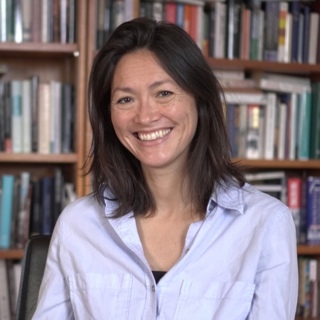
The origin myth of the modern West | Naoíse Mac Sweeney

The origin myth of the modern West | Naoíse Mac Sweeney

We in the modern West still look back to ancient Greece as our imagined origin. We're still obsessed with ancient Greece. About Naoise Mac Sweeney  "I'm Professor of Greek Archaeology at the Universit...

19 Feb 14min
Populärt inom Utbildning

historiepodden-se
det-skaver
rss-bara-en-till-om-beroende-medberoende
nu-blir-det-historia
harrisons-dramatiska-historia
not-fanny-anymore
rss-viktmedicinpodden
roda-vita-rosen
allt-du-velat-veta
johannes-hansen-podcast
sa-in-i-sjalen
i-vantan-pa-katastrofen
rikatillsammans-om-privatekonomi-rikedom-i-livet
rss-foraldramotet-bring-lagercrantz
polisutbildningspodden
rss-max-tant-med-max-villman
rss-basta-livet
rss-traningsklubben
rss-ar-det-rimligt
rss-autismandan