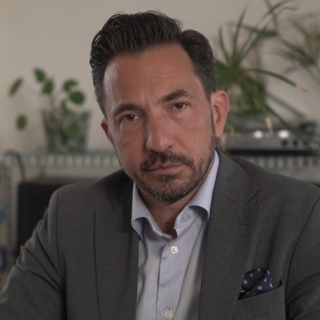
Philippe Sands - Closing the book on colonisation

Philippe Sands - Closing the book on colonisation

Decolonisation, as a process, has more or less run its course, but not entirely. There is a small number of colonies that exist.

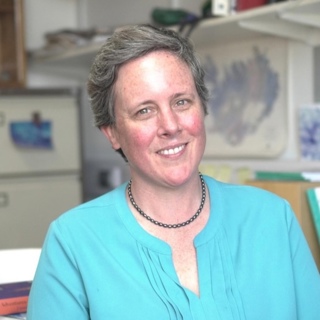
About Philippe Sands "I’m Professor of Law at University College London, Director of the Centre on International Courts and Tribunals in the Faculty, and a key member of staff in the Centre for Law and the Environment. I am a Barrister at Matrix Chambers and a writer.

Everything that I do – teaching, research, writing, litigating cases – revolves around my great passion, which is international law, the settlement of international disputes (including arbitration), and environmental and natural resources law."

Key Points

• In 1945, as the United Nations Charter was being negotiated, the countries of the world decided that it was time to bring colonialism to an end. • There are still a small number of colonies that exist. Britain’s last colony in Africa is called the Chagos Archipelago, where the United Kingdom is an unlawful occupier. • The devastating irony is that the United States and the United Kingdom created the rules that are premised around the United Nations Charter, but they have now upended those rules. A commitment to decolonise

We all know that in the 18th and 19th centuries, European countries went around the world picking up bits of territory and colonising them. It was known as colonialism in Africa, in South America and in Asia. Spain, France, Britain, Germany, Italy, Denmark, Holland and various other countries were rather expert in this practice, which proceeded until the 20th century.

Then, in 1945, as the United Nations Charter was being negotiated, the countries of the world decided that it was time to bring colonialism to an end. They negotiated a Charter, which contained two new rules: one rule articulated the proposition that every human being had minimum rights under international law. It coined the phrase “human rights” in modern parlance. The second new rule was a commitment of every country in the world to decolonise – for the colonial powers to leave their colonies and to allow the inhabitants of those colonies to exercise something that is known as “the right of self-determination”: being in charge of their own futures, deciding for themselves how they wish to be governed, and not being governed by outsiders or by others. That is the principle of decolonisation.

Det här avsnittet är hämtat från ett öppet RSS-flöde och publiceras inte av Podme. Det kan innehålla reklam.

Avsnitt(100)

The resurgence of civic duties | Simon Reid-Henry

The resurgence of civic duties | Simon Reid-Henry

Civic duties are essentially the ways in which citizens agree to abide by the rules and to contribute to the life of a national society. About Simon Reid-Henry "I am a research professor at the Peace ...

16 Mars 14min
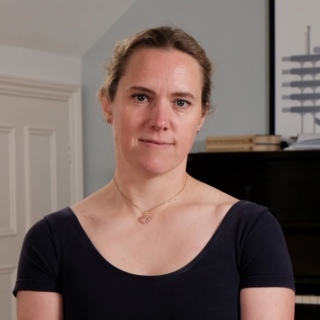
What is "prejudice" ? | Jessie Munton

What is "prejudice" ? | Jessie Munton

I think prejudice is best conceptualized as a phenomenon that can be supported by a whole range of mental states that will include beliefs, habits, emotions, and also attentional dispositions. About J...

12 Mars 16min

Global Public Investment | Simon Reid-Henry

Global Public Investment | Simon Reid-Henry

The world today is overburdened with challenges that supersede the boundaries of nation states, and therefore of national governments, to address on their own. About Simon Reid-Henry "I am a research ...

9 Mars 18min

On ignorance and forgetting | Jessie Munton

On ignorance and forgetting | Jessie Munton

I'm interested in the beliefs that we're not forming, the evidence that we're not attending to or using, the belief states that perhaps we form. What I think of as negative epistemology is the project...

5 Mars 19min

The empire of democracy | Simon Reid-Henry

The empire of democracy | Simon Reid-Henry

"How do we understand, as it were, our era of democracy, which I argue began really as recently as the 1970s from previous eras, and what is it that is fundamentally at the core of the democracy we li...

2 Mars 19min

The life of the mind | Jessie Munton

The life of the mind | Jessie Munton

On the one hand, we have that sense of really close identification with our minds. On the other hand, we're often surprised at the ways in which they operate. About Jessie Munton "​​I'm an Associate P...

26 Feb 19min

Volcanoes and the origins of life | Tamsin Mather

Volcanoes and the origins of life | Tamsin Mather

We don't really understand how life got going on this planet. There are various candidates for where the first molecules of life might have evolved, and some of those candidates are deeply volcanic. A...

23 Feb 18min
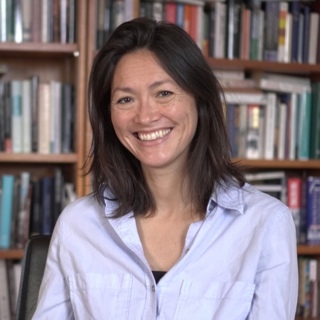
The origin myth of the modern West | Naoíse Mac Sweeney

The origin myth of the modern West | Naoíse Mac Sweeney

We in the modern West still look back to ancient Greece as our imagined origin. We're still obsessed with ancient Greece. About Naoise Mac Sweeney  "I'm Professor of Greek Archaeology at the Universit...

19 Feb 14min
Populärt inom Utbildning

historiepodden-se
det-skaver
rss-bara-en-till-om-beroende-medberoende
nu-blir-det-historia
harrisons-dramatiska-historia
not-fanny-anymore
rss-viktmedicinpodden
roda-vita-rosen
allt-du-velat-veta
johannes-hansen-podcast
sa-in-i-sjalen
i-vantan-pa-katastrofen
rikatillsammans-om-privatekonomi-rikedom-i-livet
rss-foraldramotet-bring-lagercrantz
polisutbildningspodden
rss-max-tant-med-max-villman
rss-basta-livet
rss-traningsklubben
rss-ar-det-rimligt
rss-autismandan