
Episode 59: If coronavirus has you worried, this good doctor reminds you you're not alone
Check It Out!11 Maj 2020

Episode 59: If coronavirus has you worried, this good doctor reminds you you're not alone

If you're anxious about the global coronavirus pandemic and COVID-19, you're not alone.

In this episode of Sno-Isle Libraries Check It Out! podcast, you'll hear how a globe-trotting disaster-relief doctor loses sleep about the deadly virus that has upended our sense of "normal."

Dr. Dan Diamond is a clinical assistant professor at Washington State University's Elson S. Floyd College of Medicine after spending 33 years at the University of Washington School of Medicine in a similar role. In 1994, he and his wife, Debbie, founded CMRT, the nation's first state-affiliated medical disaster response team, and it has sent them around the world.

Former TEDxSeattle and TEDxRainier co-curator Phil Klein shared his interview with Diamond with Sno-Isle Libraries.

"We thought it would be something really timely for the audience to listen to," said Check It Out! podcast host Ken Harvey.

Diamond and his team have been to natural disasters in Haiti, the Philippines and Mexico. They went to New Orleans after Hurricane Katrina struck in 2005. Today, Dr. Diamond is using insights he gained there to cope with the uncertainties of coronavirus.

"These are some weird days we're living in for sure," Diamond said about the aftermath of coronavirus.

"Katrina was crazy," Diamond said. "The medical triage unit at the convention center was the wildest thing I've ever done, but this one's different. This one's overwhelming. When we deploy to disasters around the world, I know I can always come home and it's all good, but now there's nowhere to hide. This is a global pandemic that's affecting everybody on the planet, and it's important to remember that. We are not going through this alone. We're going through it with everybody."

And like almost everybody, Diamond said he feels the tension and worries and uncertainties that coronavirus has raised.

"Let me just tell you a personal story," he said. "Two weeks ago, probably three o'clock in the morning, I found myself sitting on the edge of my bed going, 'What in the world am I going to do?' Then I had this interesting conversation like, 'Am I going to die? This isn't going to be good. This is horrible. This is the worst thing that's ever happened to mankind.' Then I got into this conversation with myself of, 'Diamond, jiminy. You're a disaster, doc. You need to buck up, be tougher.'"

Before he could clear his head and get back to sleep, Diamond had to remind himself that he needed to take care of himself with three steps of self-compassion.

"First is to realize that you're suffering or that you're afraid," he said. "So, I sat there and I thought, 'Wow, man. You are really struggling with this one, aren't you?' I thought, 'Yeah, yeah.'"

The second thing is to show up with kindness.

"So, I'm sitting there saying, 'Well yeah, this is a tough one. I can understand why you'd be afraid,'" Diamond said.

"Then the third thing is to realize that you're not alone, that we're going through this with lots of people. So, I sat there and I thought, 'I wonder how many thousands of people are sitting here on the edge of their bed going, "What in the world am I going to do?"' I thought, 'We're in this together. We're going to get through this. It is scary, but I'm going to be kind to myself and go back to sleep.'"

Taking a break from television news for a few days also helped him sleep better.

"I decided to quit watching the news for three or four days and just focus on taking care of myself and getting my focus back in the right spot and being positive," Diamond said.

Still, as the uncertainty of coronavirus wears on everyone, Diamond said the anxiety weighs on him, too. He tries to remember the lesson he brought back from New Orleans in 2004, when so many people lost all everything. He noticed that some people coped better than others.

"I came back from Katrina asking myself a question that changed my life and it's a great question for us to ponder," he said. "That is, why is it that some of these people don't become victims?"

Diamond said he vacillates between optimism that coronavirus can be tamed and pessimism that he could lose people close to him.

"So, you kind of go back and forth, but realizing that we get to choose which direction we face," he said. "When I came back from Katrina asking this question of why is it that some of these people don't become victims, what I found is that some of these people, even though they lost their homes, they lost their cars, they lost all their clothes and some of them had lost their family members, and they still did not become victims."

The experience gave Diamond the idea to compare personal power and purpose in a quadrant. The vertical line contains powerful people and powerless people. The horizontal line for purpose shows takers and givers.

"This is not four different types of people," he said. "This model is not a tool so you can point at people. This is a model for taking a look inside on where you are."

Diamond admits he'll slide into the powerless victim or bystander mode when he feels under pressure, but he knows he can make the most difference when he's in the upper right quadrant, using his power to give help.

"My goal is I want to live in that upper right quadrant to say, 'I have the power to make a difference. It's not about me and I don't care who gets the credit,'" Diamond said. "That's a fulfilling mindset. I continually ask myself two questions. Am I going to be powerful or powerless? Am I going to be a giver or a taker? How am I going to show up? Then pay attention to the internal conversation that's going on until I learn to recognize these differences that I use."

Coronavirus is making many people confront grief, whether they want to or not. Check It Out! contributor Sarri Gilman suggests "It's OK That You're Not OK" by Megan Devine for her Self-Help Shelf.

"I've read lots of books on grief, but I highly recommend this book if you're only going to read one book on grief," Gilman said.

Devine talks about early grief, something that very few authors do.

"Most authors do not write about that because people find it really hard to read a book in early grief, but she starts with early grief because that's where we all start with our grief and there's so much that you may have felt or may be feeling that goes unacknowledged," Gilman said.

In the midst of COVID-19, all of us have experienced losses, she said.

"Many of you may be experiencing grief," Gilman said. "This book is a great companion through some of our most difficult challenging feelings that we're all experiencing."

Avsnitt(63)

Episode 7: How strong roots grow into local leaders

Episode 7: How strong roots grow into local leaders

It seems like Marti Anamosa and Terry Lippincott grew up together, it just happened to be in separate parts of the country. Marti is a native of Albuquerque, N.M. and now a Whidbey Island resident, wh...

22 Okt 20181h 1min
Episode 6: Finding fulfillment (and coffee) through social enterprise

Episode 6: Finding fulfillment (and coffee) through social enterprise

Jeff Ericson started working at age 12 and found retirement-level success by the time he was 30. What the avowed entrepreneur says that he hadn't discovered, despite his theological education, was ful...

28 Sep 20181h
Episode 5: From roots to rockets with Rob Branigin

Episode 5: From roots to rockets with Rob Branigin

Librarian Rob Branigin's interests range from family roots to outer space. Branigin, along with co-hosts Ken Harvey and Cindy Tingley, delves into genealogy, Star Trek and more. The Indiana native dis...

11 Sep 201856min
Episode 4: Strategically planning the library district

Episode 4: Strategically planning the library district

As Deputy Director of Sno-Isle Libraries, does she get to wear a badge shaped like a star? Kendra Trachta shares the answer to that question and what it's like to oversee the people and operations at ...

31 Aug 201859min
Episode 3: Achieving breakthrough growth with Andrew Ballard

Episode 3: Achieving breakthrough growth with Andrew Ballard

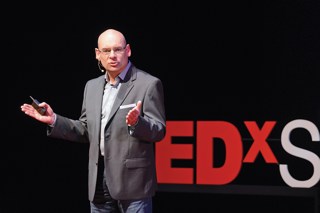
Andrew Ballard knows a thing or two about business success. He does it. He teaches it. He wrote a book about it. He gives talks on it, including one at TEDxSnoIsleLibraries. But it took near-death he...

20 Aug 201859min

Episode 2: Can Amazon really replace public libraries?

Episode 2: Can Amazon really replace public libraries?

Top: The Twitter post from July 21 by Panos Mourdoukoutas announcing his Forbes article. Below: An Amazon kiosk store at Westfield Southcenter Mall, south of Seattle. Early Saturday morning, July 21, ...

8 Aug 201834min

Episode 1: Welcome to Check It Out!

Episode 1: Welcome to Check It Out!

Welcome to Check It Out!, a podcast for lifelong learners with inquiring minds. In this inaugural episode, host Ken Harvey, who doubles as Sno-Isle Libraries communications director, introduces himsel...

31 Juli 201855min

Populärt inom Utbildning

rss-bara-en-till-om-missbruk-medberoende-2
historiepodden-se
det-skaver
harrisons-dramatiska-historia
nu-blir-det-historia
allt-du-velat-veta
johannes-hansen-podcast
not-fanny-anymore
rss-viktmedicinpodden
roda-vita-rosen
rss-foraldramotet-bring-lagercrantz
sektledare
i-vantan-pa-katastrofen
sa-in-i-sjalen
rss-max-tant-med-max-villman
rss-sjalsligt-avkladd
alska-oss
rss-basta-livet
rss-om-vi-ska-vara-arliga
rikatillsammans-om-privatekonomi-rikedom-i-livet