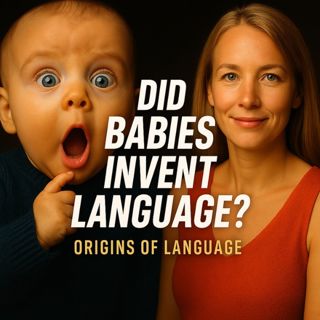

E164: The Real Reason You Can Speak: Explained by Evolutionary Biologist - Dr. Madeleine Beekman
El Podcast29 Okt 2025

E164: The Real Reason You Can Speak: Explained by Evolutionary Biologist - Dr. Madeleine Beekman

How human babies, big brains, and social life likely forced Homo sapiens to invent precise speech ~150–200k years ago—and what that means for learning, tech, and today’s kids.

Guest Bio:
Madeleine Beekman is a professor emerita of evolutionary biology and behavioral ecology at the University of Sydney and author of Origin of Language: How We Learned to Speak and Why. She studies social insects, collective decisions, and the evolution of communication.

Topics Discussed:

  • Why soft tissues don’t fossilize; language origins rely on circumstantial evidence
  • Three clocks for timing (~150–200k years): anatomy; trade/complex tech/art; phoneme “bottleneck”
  • Why Homo sapiens (not Neanderthals) likely had full speech
  • Language as a “virus” tuned to children; pidgin → creole via kids
  • Second-language learning: immersion over translation
  • Bees/ants show precision scales with ecological stakes
  • Evolutionary chain: bipedalism → narrow pelvis + big brains → helpless infants → precise speech
  • Ongoing human evolution (archaic DNA, altitude, Inuit lipid adaptations)
  • Flynn effect reversal, screens, AI reliance, anthropomorphism risks
  • Reading, early interaction, and the Regent honeyeater “lost song” lesson
  • Universities, online classes, and “degree over learning”

Main Points:

  • Multiple evidence lines converge on speech emerging with anatomically modern humans ~150–200k years ago.
  • Anatomical and epigenetic clues suggest only Homo sapiens achieved full vocal speech.
  • Extremely dependent infants created strong selection for precise, teachable communication.
  • Children’s brains shape languages; kids regularize grammar.
  • Communication precision rises when mistakes are costly (bee-dance analogy).
  • Humans continue to evolve; genomes show selected archaic introgression and local adaptations.
  • Tech-driven habits may erode cognition and language skill; reading matters.
  • AI is a tool that imitates human output; humanizing it can mislead and harm, especially for teens.
  • Start early: talk, read, and interact face-to-face from birth.

Top Quotes:

  • “Only Homo sapiens was ever able to speak.”
  • “Language will go extinct if it can’t be transmitted from brain to brain—the best host is a child.”
  • “The precision of communication is shaped by how important it is to be precise.”

🎙 The Pod is hosted by Jesse Wright
💬 For guest suggestions, questions, or media inquiries, reach out at https://elpodcast.media/
📬 Never miss an episode – subscribe and follow wherever you get your podcasts.
⭐️ If you enjoyed this episode, please rate and review the show. It helps others find us.

Thanks for listening!

Det här avsnittet är hämtat från ett öppet RSS-flöde och publiceras inte av Podme. Det kan innehålla reklam.

Avsnitt(214)

The Rise & Fall of the Hot Girl Service Economy (E215)

The Rise & Fall of the Hot Girl Service Economy (E215)

Swedish demographer and political candidate David Lorentzon explains his controversial theory of the “Hot Girl Service Economy”—how social media, global travel, gender-segregated careers and migration...

25 Aug 1h 54min

What Europeans Get Wrong About America (E214)

What Europeans Get Wrong About America (E214)

A German travel YouTuber shares how visiting America challenged nearly every stereotype she had about the United States—from friendliness and safety to healthcare, food, and quality of life—while comp...

18 Aug 1h 18min

What Happened to Australia? A Warning for the Entire West (E213)

What Happened to Australia? A Warning for the Entire West (E213)

Australian law professor Dr. Augusto Zimmermann argues that Western civilization is in rapid decline due to the erosion of free speech, the rule of law, mass migration, and the growing power of politi...

11 Aug 1h 20min

The Biggest Lies About American History (E212)

The Biggest Lies About American History (E212)

Professor Jeff Fynn-Paul argues that many popular narratives about European colonialism are historically inaccurate, tracing their origins to ideological reinterpretations of history rather than the h...

4 Aug 1h 9min
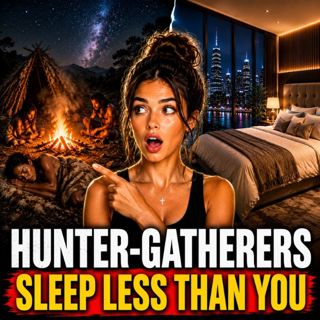
Everything You Know About Sleep Is Wrong (E211)

Everything You Know About Sleep Is Wrong (E211)

Humans aren't suffering from a sleep epidemic—we're suffering from a circadian rhythm epidemic, and understanding the difference could transform how we think about sleep, health, and human evolution. ...

21 Juli 1h 9min

I Asked a Mexico Real Estate Expert About Retiring in Mexico (E210)

I Asked a Mexico Real Estate Expert About Retiring in Mexico (E210)

Guest Bio Greg Gunter is the Founder and Broker/Owner of Berkshire Hathaway HomeServices Mexico. A 17-year resident of San Miguel de Allende, he specializes in helping Americans and Canadians relocate...

15 Juli 1h
Britain's Collapse Is Happening Faster Than You Think (E209)

Britain's Collapse Is Happening Faster Than You Think (E209)

Dr. Ben Jones explains how mass migration, multiculturalism, and declining free speech are reshaping Britain—and why he believes the country's future is at a turning point. Guest Bio Dr. Ben Jones is...

7 Juli 59min

The Education System Is Still Trapped in 1893 (E208)

The Education System Is Still Trapped in 1893 (E208)

Former venture capitalist and education reformer Ted Dintersmith explains why America's 19th-century education system is failing students in the AI era—and how schools can better prepare young people ...

30 Juni 1h 16min

Populärt inom Business & ekonomi

framgangspodden
rss-jossan-nina
varvet
badfluence
rss-borsens-finest
uppgang-och-fall
avanzapodden
tabberaset
fill-or-kill
skaraborgspodden
svd-tech-brief
rss-inga-dumma-fragor-om-pengar
24fragor
rss-kort-lang-analyspodden-fran-di
lastbilspodden
bathina-en-podcast
rss-dagen-med-di
rikatillsammans-om-privatekonomi-rikedom-i-livet
borsmorgon
rss-hos-psykologen