
20VC: Coinbase's Brian Armstrong on Real vs Fake Emergencies, Coinbase's Failed NFT Launch, The Politicisation of Leadership, Why This Crypto Winter is Different From The Past & Brian's Development and Insecurities as a Leader
Brian Armstrong is the Co-Founder and CEO @ Coinbase, the easiest place to buy and sell cryptocurrency. Over the last 10 years, Brian has led Coinbase to today, a public company with over 3,500 employees and revenues of over $7.5BN in 2021. Brian also raised venture funding before going public from some of the best including Fred Wilson @ USV, Micky Malka @ Ribbit, Marc Andreesen @ a16z and Garry and Alexis at Initialized. Prior to founding Coinbase, Brian was a Product Manager @ Airbnb. In Today's Episode with Brian Armstrong We Discuss: 1.) Founding Coinbase: How did Brian make his way from PM @ Airbnb to founding Coinbase? What is Brian running from in his past? What is he running toward in his future? What does Brian know now that he wishes he had known at the start of Coinbase? 2.) Brian Armstrong: The Leader: What does "high performance" mean to Brian in leadership? How does Brian think about stepping off the treadmill for a second and appreciating what has been achieved? How does one celebrate as a team without creating laziness or arrogance? How has Brian most changed as a leader over the last 10 years? On reflection, what does Brian believe are his biggest weaknesses today? 3.) Crucible Moments in the Coinbase Journey: What does Brian mean when he says, "you need to be able to differentiate between a real emergency and a fame emergency?" What is the difference? When Brian made the speech to the Coinbase team on political views in the company, was that a real or fake emergency? What happened? What would he have done differently? Is the failed NFT launch, a real or fake emergency? What big mistakes were made? What are Coinbase doing to correct and improve them? "Bankrupt Coinbase" campaign on social earlier this year, real or fake emergency? What has been Brian's biggest lessons on how to deal with fake news? 4.) Crypto and The Ultimate Mission for Coinbase: What is different about this crypto winter from all other crypto winters? Why did Brian ban discussion on the market cap from employees within Coinbase? How does Brian maintain morale internally when everyone sees the stock at all-time lows? How does the Coinbase mission extend far beyond financial freedom for the world? What does Brian want Coinbase to be in 10 years?
7 Nov 202241min

20VC: Michael Mauboussin on Good vs Bad Investment Decision-Making Processes, How To Improve Your Process, How To Know When it Needs Improving and The Single Biggest Mistakes People Make In Their Decision-Making Process
Michael Mauboussin is Head of Consilient Research at Counterpoint Global. Previously, he was Director of Research at BlueMountain Capital, Head of Global Financial Strategies at Credit Suisse, and Chief Investment Strategist at Legg Mason Capital Management. He is also the author of three incredible books, including More Than You Know: Finding Financial Wisdom in Unconventional Places, named in The 100 Best Business Books of All Time by 800-CEO-Read. Michael has taught at Columbia Business School since 1993 and received the Dean's Award for Teaching Excellence in 2009 and 2016. In Today's Episode with Michael Mauboussin We Discuss: 1.) Entry into Venture and Finance: What does Michael actually do as "Head of Consilient Research"? What does Michael know now that he wishes he had known when he entered finance? How did Michael and Bill Gurley meet in business school? What does Michael believe makes Bill such a special investor today? 2.) Booms and Busts: How This Compares? How does the current macro downturn compare to prior crashes Michael has worked through? What is the same? What is different? How do political and health events impact the macro? Why was 1987 the end of the world at the time? How did the recovery take place? How does Michael analyze the duration of bull markets vs the duration of recovery time? What advice does Michael give to young people today questioning if they are good investors? 3.) The Investment Decision-Making Process: How does Michael advise on the structuring of your decision-making process? What makes a good process vs a bad process? What can be done to remove politics from the decision-making process? What can be done to ensure all people, regardless of hierarchy feel safe in the process and feel they can share their thoughts without repercussions? What are the single biggest mistakes Michael sees people make in their decision-making process? How do you know when is the right time to change your process? 4.) Everything is a DCF: What does Michael mean when he says that "everything is a DCF"? How does Michael advise and apply this thinking to early-stage venture investors? How does Michael think through highly diversified portfolios vs super concentrated portfolios in venture? Items Mentioned in Today's Episode: Michael's Favourite Book: Consilience: The Unity of Knowledge by E.O Wilson
4 Nov 202249min

20VC: The GoPuff Memo: Why 10-15 Minute Delivery is an Unsustainable Model, The Plan to Make GoPuff Profitable by 2024, Mistakes Made in Europe and What the Europe Plan Should Have Been and What Does Quick Commerce Look Like in 5 Years with Rafael Illisha
Raf Illishayev is the Co-Founder and CEO @ GoPuff, one of the market leaders delivering daily essentials in minutes. GoPuff's latest funding round priced the company at a reported $8.9Bn in March 2021 and to date, Rafael has raised over $2.4Bn for the company from the likes of Accel, Softbank, Fidelity, Baillie Gifford, D1 Capital and more. Rafael has scaled the company to over 1/3 of the US with over 12,000 employees nationwide. In Today's Episode with GoPuff's Rafael Ilishayev You Will Learn: 1.) From Student to Global CEO: How Raf came up with the idea for GoPuff and started the company as a student with no funding? What were the early signs of product-market fit that Raf observed in the early days? In hindsight, does Raf wish they had raised external funding sooner than they did? What would raising external funding sooner have changed about the way they run the business? 2.) The Rise and Fall of Quick Commerce: What are the core drivers that have led to capital drying up for players in the quick commerce space? With the changing environment, is it a race to profitability for all providers in the space? Is this the perfect time for GoPuff to acquire? What are the characteristics of businesses in the space that GoPuff would vs would not like to acquire? How does Raf see the quick commerce space looking in 5 years time? 3.) Getting to Profitability: The Levers That Matter: Customer Service: Why does Raf believe that all players pulling back on investing in customer service are making a massive mistake? What can be done instead? Delivery Time: Why does Raf believe the 10-minute delivery model is fundamentally unprofitable? How do GoPuff approach it as a result? Inventory: With a changing macro-environment, why does Raf believe it is prudent to focus more attention on alcohol and convenience goods? What do prior recessions show us about consumer spending patterns changing? Metrics: What are the single most important metrics which dictate the speed of getting to profitability? Why is the amount of orders a driver can deliver per hour the most important metric? 4.) Business Expansion Opportunities: How does Raf analyze the opportunity for GoPuff in Europe? Why does Raf believe they should have pulled out of Spain much sooner? Why are they so focused on the UK now? Why does Raf believe it is the right decision to stop investing in GoPuff pharmacy? Why is Raf so bullish on GoPuff kitchens? How does the unit economics of the kitchens compare to the core business for GoPuff? What are the positive effects of kitchens on GoPuff core product? What was the most recent disagreement the board has had when it comes to determining what to prioritize vs what not to? Mentioned in Today's GoPuff Episode: Raf's Mentor and Advisor: Emil Michael, Former Chief Business Officer @ Uber
2 Nov 202243min

20VC: Founders Fund's Brian Singerman on The Price Mismatch Between Public vs Private, Why Now Is Not The Best Time To Be Investing, Why Brian Never Thinks About Reserves and Believes in Cross-Fund Investing & Writing a $400M Check Into Anduril Across Rou
Brian Singerman is a Partner @ Founders Fund, one of the best-performing funds of the last two decades. Among their portfolio, they have the likes of Airbnb, Facebook, Stripe, Anduril, and many more generational-defining companies. As for Brian, he has led investments in the likes of Affirm, Oscar Health, Wish, Asana, Oculus, and Postmates to name a few. Brian also sits on the board or is an observer to The Long Term Stock Exchange, Solugen, Cloud9, Modern Health, and of course, Anduril. Prior to Founders Fund, Brian spent a very successful 4 years as an engineer and executive at Google. In Today's Episode with Brian Singerman We Discuss: 1.) From Google to Befriending Sean Parker to Founders Fund: How Brian's friendship with Sean Parker led to his joining Founders Fund over 15 years ago? What does Brian believe makes Founders Fund such a unique fund? What does Brian know now that he wishes he had known when he started in venture? 2.) The Landscape Today: Where Are We Now? Why does Brian believe there is a huge price mismatch between private vs public companies? How does this impact the pace with which Founders Fund invest? Why does Brian not feel any pressure to invest in this environment? What are the 10 hypergrowth companies that Brian is looking to invest in today? What advice does Brian give to young investors today who are concerned at their first market correction and questioning if they are actually any good at this? 3.) Brian Singerman: The Investor: How does Brian reflect on his own investing style? What is he world-class at? What is he bad at? Why does Brian think boards are a waste of time? What is better than a board? Why does Brian not ever think about reserves? How does Brian answer LPs concerns when they cite them on the topic of cross-fund investing? What does Brian believe is the secret to venture capital? What elements make those at Founders Fund thrive? What characteristics make those that do not work out, fail? 4.) Founders Fund: The Firm: How does Founders Fund structure and optimize its decision-making process today? How does Founders Fund approach the hiring process for all new team members? What one question do they need to be able to clearly answer with all team members joining? How do Founders Fund approach the reference checking process for all new hires? What questions do they find most revealing of the true talent of the candidate? What are the single biggest hiring mistakes Brian has made? What did he learn from them? Items Mentioned in Today's Episode: Brian's Most Recent Investment: Anduril
31 Okt 202240min
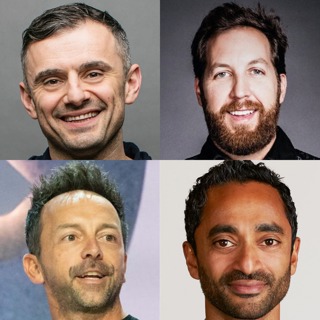
20VC: Chris Sacca, Chamath Palihapitiya, Gary Vee, Brad Gerstner and more on Their Relationship To Money, How It Has Changed with Time and Wealth, How They Bring Up Their Children To Engender the Same Values of Ambition and Hard Work?
Chris Sacca is the Founder and Chairman @ Lowercase Capital, one of the best performing funds in the history of venture capital with a portfolio including Uber, Stripe, Twitter, Instagram, Twilio, Docker and many more. From interviewing some of the world's richest married couples, how did gaining wealth change their relationship and marriage? What does Chris do to actively ensure his children remain hungry and know the value of money? Chamath Palihapitiya is Founder & CEO @ Social Capital. Social's portfolio includes the likes of Slack, Yammer, Front, Intercom and Carta to name a few. What does Chamath mean when he says we need to think through the mindset of "infinite games" not finite games? How does this change how you think about money? How does Chamath think about his relationship to risk today as a result? Brad Gerstner is the Founder and CEO of Altimeter. Brad's notable deals that he has helped lead include Snowflake, Mongo, Bytedance, Gusto, Unity, Okta, dbt, Modern Treasury, EPIC Games, Hotel Tonight and Zillow. What is the most important thing parents can do to ensure that despite wealth, their children remain grounded and ambitious? Why does Brad, despite being a billionaire, still live in a modest house and not spend on the excesses of life? How does Brad embrace essentialism with wealth? Cyan Banister is one of the most successful and renowned early-stage investors in the last decade. Her portfolio includes the likes of SpaceX, Uber, Affirm, Opendoor Postmates, Niantic and Thumbtack to name a few. Why did Cyan used to hate money? Why was she "anti-capitalist"? How does Cyan approach risk management today? Why does she invest every dollar she makes back into the ecosystem? George Zachary is a General Partner @ CRV, one of the nation's oldest and most successful early-stage venture capital firms with a portfolio including the likes of Airtable, DoorDash, Dropbox, Niantic and many more. What did George learn about how the way people view you changes with your increasing wealth? Why does George believe rich people like to hang out with rich people? Biz Stone is best known as the Co-Founder of Twitter and Medium. Biz is also an investor in the likes of Slack, Square, Intercom, Beyond Meat and Blue Bottle Coffee. What does Biz mean when he says, "wealth only serves to amplify the person you are?"
28 Okt 202226min
20Growth: Biggest Growth Lessons from Reddit and Zynga on Scaling to Millions of Users | Why, When and How To Hire Your First Growth Hires | The Biggest Mistakes Founders Make In Hiring, Onboarding and Integration for Growth Teams with Vaibhav Sahgal, VP
Vaibhav Sahgal is VP of Consumer Product @ Reddit where he has been for close to 5 years. Prior to his leading consumer product, Vaibhav spent 3 years as Head of Growth at Reddit. Before Reddit, Vaibhav spent an incredible 8 years at Zynga across different roles including Director of Product and GM for "Words with Friends". In Today's Episode with Vaibhav Sahgal We Discuss: 1.) Entry into Product + Growth: How did Vaibhav come to lead some of the best growth orgs in the world at both Reddit and Zynga? What are 1-2 of Vaibhav's biggest takeaways from working with Mark Pincus @ Zynga? What is the most painful growth lesson that Vaibhav learned that he is also pleased to have learned? 2.) WTF Really is "Growth": How does Vaibhav define growth today? What is it not? How does Vaibhav fundamentally differentiate between value connection and value creation? Is growth an art or a science? What tactics have died a death? What remains stronger than ever? 3.) Hiring Your Growth Team: How does Vaibhav advise founders on when is the right time to hire their first growth professionals? Where should they sit within the org? In product? In marketing? Standalone growth team? What are the biggest mistakes Vaibhav sees founders make when hiring their first growth hires? 4.) The Interview Process: How does Vaibhav structure the interview process for all new growth hires? What are the steps? What are the must-ask questions when hiring for growth? What are good answers? How can founders use case studies and data to determine the quality of a growth candidate? 5.) The Onboarding and Integration: What is the optimal onboarding process for all new growth hires? What are signs in the first 3 days that a growth hire will vs will not work out? What can leaders do to ensure growth hires are integrated with the rest of the teams? What are the biggest mistakes founders make when onboarding growth hires? Items Mentioned in Today's Episode: Vaibhav's Favourite Book: Andrew Chen: The Cold Start Problem
26 Okt 202244min
20VC: Uber's Journey to Becoming the Most Valuable Private Tech Company in History, Raising $3BN From Saudi in Just 60 Days, Uber's $30BN Mistake in Food Delivery, Why Recent Uber M&A Will be the Worst in Tech & Mastering Negotiations and Deal-Making with
Emil Michael is the Former Chief Business Officer at Uber and is commonly referred to as Travis Kalanick's right-hand man. At Uber, Emil was instrumental in raising nearly $15BN from some of the largest investors in the world, making Uber the most valuable private tech company ever. Emil was also core to Uber's China strategy and led deals with Didi and Baidu. Before Uber, Emil spent 9 years at TellMe Networks where he was central to Microsoft raising their acquisition price from $300M to $800M. Emil is also an advisor to some of the greats including Raf @ GoPuff, Zach @ Codeacademy, Jared @ Fundera and many more. In Todays Episode with Emil Michael: 1.) From Politics to Travis's right-hand man at Uber: How did Emil make his way into the world of startups with TellMe networks? Harvard, Stanford, Goldman, Politics, which career shaped Emil the most? When Emil looks at his cohort of Ali and Hadi Partovi, Alfred Lin, and many others, what did they have that Emil believes is core to their success today? 2.) Negotiations 101: A Masterclass: What is Emil's framework for dealmaking? How has it changed over time? What are the single most important elements to remember when making deals? What are the biggest mistakes people make when negotiating? What is the right way to use leverage in negotiations? How can one handle an opponent that is emotional or irrational when negotiating? How did Emil make Steve Ballmer @ Microsoft increase his offer for TellMe from $300M to $800M? What is the single deal that Emil made that he regrets the most? 3.) Uber: The Journey to the Most Valuable Private Company: Why were Emil and Travis removed from Uber? Does Emil think it was fair? Is it true that Travis lost the support of the team? How did his removal take place? How did the Uber China deal go down with Didi? What got DiDi over the line on the deal? How did Emil raise $3BN from Saudi in just 60 days with Travis needing to attend only one meeting? 4.) Uber: The Review: How does Emil assess the management and performance of Uber CEO, Dara Khosrowshahi? If Travis and Emil were still in charge, what would Emil have done differently? Why does Emil think Dara and Uber have made a $30BN mistake in food delivery? Why does Emil think Postmates, Careem, and others have been the worst acquisitions in tech? 5.) The Venture Landscape: Emil entered the world of VC with Coatue, why did he decide that VC was not for him? How does Emil analyze the VC landscape today? Who are risers? Who are fallers? What are the single biggest points of misalignment between founder and VC? What are the core improvements that Emil would like to see made to the VC world? Items Mentioned in Today's Episode: Emil's Favourite Book: Sun Tzu: The Art of War
24 Okt 20221h 2min
20VC: Why 75% of Active Investors Will Disappear in the Next Few Years, The Death of "So So" Venture Firms is Coming, The Rise of Blackstone of Venture Firms and What That Does To Venture Returns, How the World of LPs is Broken and more with Kyle Harrison
Kyle Harrison is a General Partner @ Contrary and one of my favorite writers on the venture space with his blog, Investing 101 2.0. Before joining Contrary, Kyle worked in the ranks of some of the biggest and best names in venture, starting with a spell at TCV before moving to Coatue and making his final stop at Index. Across firms, Kyle has led or participated in investments including Ramp, Pave, Anduril, Gitlab, Databricks and Snowflake to name a few. In Today's Episode with Kyle Harrison: 1.) From Film Lover to Technology Investor: How Kyle went from creating a professional services marketplace around film to joining the ranks of TCV and investing in breakout technology companies? What was Kyle's biggest takeaway from TCV? How did it impact his mindset? What was Kyle's biggest lesson from working with the Laffont's at Coatue? How did it change the way he thinks about price and market sizing? Why was Index such a transformational school of venture for Kyle? How did that experience change how he thinks about what it takes to be a great investor? 2.) The Death of So So Venture Firms: Why does Kyle believe many of the "so so" venture firms will die? What does Kyle believe makes a venture firm "so so"? Who is vulnerable then? How does Kyle think the lifespan and "death" of venture firms will change in the next decade? 3.) The Rise of "The Blackstone of Venture Firms": How does Kyle define "the Blackstone of VCs"? Who are they? With increasing fund sizes will we see VC returns denigrate to PE returns? How is the world of family offices changing the venture environment? Will we see more or less money flood into venture over the coming years? Of the incumbents, who has done "The Blackstone" model well? Why? Who has failed? Why? 4.) The Rise of Community in Venture: What does "community" really mean to Kyle? Why does he believe it will play such a prominent role in the way the best invest in the future? How have existing players failed to build, sustain and productize communities? What are the best opportunities for new entrants to create and utilise communities to invest? Items Mentioned in Today's Episode: Kyle's Favourite Book: Reinventing Knowledge: From Alexandria to the Internet
21 Okt 202248min





















