

20 Sales: How To Interview Sales People; The Red Flags and What to Look For, How Sales Leaders Should Change Goals and Quotas in Harder Markets and What Reps Can Do To Ensure They Hit Their Numbers in These Markets with Eleanor Dorfman, Sales Leader @ Ret
Eleanor Dorfman is a Sales Leader @ Retool, the company that allows you to build internal tools, remarkably fast. Prior to Retool, Eleanor joined Retool when there were only three account executives and has scaled the sales org sales to over 30 AEs, many SEs, and an entire SDR team. Before Retool, Eleanor was at Segment, where she built out the company's customer success operations team before pivoting to creating an expansion sales team, renewals team, and a new business sales team. Finally, before Segment, Eleanor made her way into startups, starting as an unpaid intern at Clever, just four years later, Eleanor was Head of Customer Success and Solutions Engineering. In Today's Episode with Eleanor Dorfman We Discuss: 1.) Entry into Sales from Working with the US Education Department: How did Eleanor get her first role as an unpaid intern at Clever? What are 1-2 of her biggest takeaways from her time at Segment? What are the biggest advantages of sales reps having experience in customer success? 2.) The Sales Playbook: How does Eleanor define, "a sales playbook"? When does it need to be created? Does it need to be the founder who creates it or can it be a Head of Sales? Is it possible to run a PLG and enterprise motion from Day 1? How does this change your sales playbook? How does Eleanor advise founders on when is the right time to layer on an enterprise motion, on top of a PLG motion? 3.) Who, What and When: Building the Sales Team Should founders hire a Head of Sales first or sales reps first? If sales reps, should founders always hire sales reps in two's? How does Eleanor structure the hiring process for all new sales team recruits? What are the clearest signals of 10x sales hires? What are red flags in the interview process? How does Eleanor use demo's and case studies to determine technical ability? 4.) The First 30, 60 and 90 Days: The Onboarding: What is the right structure for all new sales hires to be onboarded? Why does Eleanor believe you will always hire your Head of Sales Enablement too late? What are the signs that now is the right time to hire your Head of Sales Enablement? What tools, materials and resources can founders provide to shorten the ramp time for new AEs? What are the single biggest mistakes founders make in the onboarding of new sales reps?
14 Sep 202237min
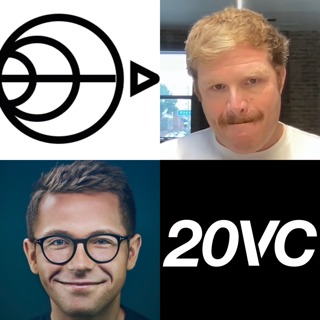
20VC: Why 95% of Venture Capital is Not Really "Venture Capital" | The Five Core Levers Needed To Assess Risk and Price a Startup | The Future of Venture; Who Wins, Who Loses, What Happens to the Crossover Funds with Will Quist, Partner @ Slow Ventures
Will Quist is a Partner @ Slow Ventures. Over the last decade, the team at Slow Ventures have invested in the earliest rounds of over 500 companies including Robinhood, NextDoor, Airtable, Solana and many more. As for Will, prior to Slow he spent over 8 years at Industry Ventures and before industry, cut his teeth in the world of finance at Banc of America. In Todays Episode with Will Quist We Discuss: 1.) Entry into Venture: How Will made his way from 6th generation San Francisco to Partner @ Slow? What are 1-2 of the biggest takeaways from his early 1-1s with Don Valentine? What does Will know now that he wishes he had known when he started in venture with Industry? 2.) WTF Really is Venture Capital? Why does Will believe that 95% of venture capital today is not really venture capital? What is true venture capital in Will's mind? How does Will divide the world of VC into two with; venture classic and new venture? How are they different? How are their return profiles different? 3.) The Questions: Discovering Greatness: Why does Will believe "for the most part, investors across asset classes are just asking the same questions"? What are those questions? What different answers are each looking for? What are the 5 core questions that will needs to understand to determine conviction and accurately price an asset? How does Will think through and analyze the question when meeting founders of; "what needs to come true for this business to become a great business"? 4.) The Future of Venture Capital: How does Will predict the venture capital ecosystem will look in 5 and then 10 years? What are the most concerning traits of the venture ecosystem for Will today? Who will be the winners of the next decade? Who will be the losers? What happens to the crossover funds? What will happen to Tiger?
12 Sep 202245min

20VC News: Anchor Founder, Mike Mignano Joins Lightspeed as Partner: The Future of Social Media | Why Clubhouse Has a Challenging Model | Why TikTok Could be a $2TN Company | Why BeReal is Defensible | What Happens To OpenSea in a New World for NFTs
Mike Mignano is a Partner @ Lightspeed, one of the most successful venture firms of the last decade with a portfolio including the likes of Snap, Affirm, Epic Games, Mulesoft and more. As for Mike, prior to venture, he was Head of Talk for Spotify where he led the podcast, live, and video businesses for the world's leading audio streaming platform. Michael came to Spotify through their acquisition of Anchor, a company he co-founded and is credited for democratizing podcasting globally. Mike has also been a prolific angel investor with a portfolio including Cameo, Pipe, Sandbox VR and Stir. In Today's Episode with Mike Mignano We Discuss: 1.) Exclusive News: What exclusive news does Mike have to share today? What would Mike most like to change about the way founders experience the product of venture capital? How can VCs be better? What is Mike most nervous about in the new role? 2.) The World of Social is Changing Forever: Why does Mike believe there has never been a better time for the next social media giant to be born? Why are the largest social giants leaving behind the social graph? What is recommendation media? Why is it a better business model? How does the shift from social graph to recommendation media change the way large social giants operate and interact today? 3.) Startups: Risers, Fallers and Is There Room For Another Giant? What does Mike believe Clubhouse did well? What was their undoing? Does Mike believe BeReal is defensible? What features make it both sticky and defensible? Will TikTok be a $2 trillion dollar company? Will Meta catch TikTok or have they gone too far ahead? Will OpenSea be able to sustain and make the market for NFTs, despite crypto crashing? Should startups be concerned about large social giants "copying" their features? What does true defensibility look like in consumer social today? 4.) Angel Investing: Hits, Misses and Lessons: From writing over 50 angel checks, what are the single biggest lessons Mike has learned? What has been his biggest hit? How did that change the way he thinks about investing? What has been his biggest miss? In what way did that change how he invests? What advice does Mike give to all angel investors looking to invest today?
7 Sep 202254min
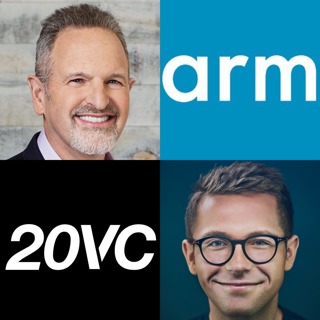
20VC: Arm CEO Rene Haas on How The Best Leaders Make Decisions and The Trade-Off Between Speed and Quality | Leadership Lessons from 7 Years at Nvidia | How Companies Can Retain Speed, Innovation and Agility at Scale
Rene Haas is the CEO @ Arm. The technologies that Arm creates are used in over 230+ Bn devices with everything from sensors to smartphones to servers. In 2016 Softbank made Arm it's largest ever acquisition with a reported price of $32Bn. As for Rene, he was appointed CEO in February 2022 having spent the last 8 years in numerous different roles within the company. Before Arm, Rene was Vice President & General Manager of the Computing Products Business Unit at Nvidia where he enjoyed a very successful 7 years with the team there. In Today's Episode with Rene Haas We Discuss: 1.) Entry into Tech from Eastman Kodak: How did Rene make his way into the world of technology and innovation? What are 1-2 of the biggest takeaways from his 7 years at Nvidia? How did working with Jensen impact his leadership approach and philosophy? 2.) Decision-Making in Leadership: What is the single biggest mistake leaders make when making decisions today? How does Rene balance the trade-off between speed vs quality of decision? At what point does Rene believe leaders have enough data to make a decision? What does Rene know now that he wishes he had known when he started on decisions? 3.) Scaling the Org and Remaining Nimble: Agile: How does one retain the speed and agility of a startup when one is the size that Arm is today? Ambition: How does Rene as a leader inspire the same level of ambition and vision in his team when Arm is as large as it is? Risk: How does Rene encourage his teams to take large risks when they have so much more to lose? Breakage: What are the first things to break in scaling? What can leaders do to get ahead of them? 4.) Leadership 101: What really is strategy? What is it not? What mistakes do all leaders make when it comes to strategy? How does Rene define "high performance" in leadership? How has his style of leadership changed over time? How does Rene approach vulnerability in leadership? What are the pros and cons?
2 Sep 202239min
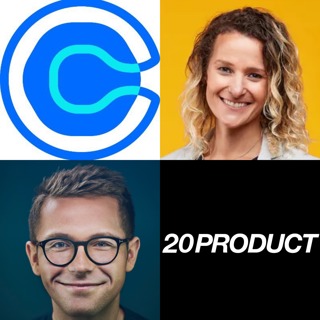
20Product: Calendly CPO Annie Pearl on Why All PLG Companies Eventually Need to Embrace Enterprise, Why it is Easier to Scale into Enterprise than Visa Versa and the Calendly PLG Playbook; What Works and What Does Not?
Annie Pearl is the CPO @ Calendly, the company that makes scheduling meetings simple and painless. The company now has over 10M users around the world and over 50,000 companies loving the product. As for Annie, before Calendly, Annie led Glassdoor's product vision and user experience, managing a 70 person product and design org. Prior to Glassdoor, Annie led enterprise product teams at Box both before and after their 2015 IPO. If this was not enough, Annie is also on the Board of WorkRamp and Well Health. In Today's Episode with Annie Pearl We Discuss: 1.) Entry into Product From Consulting: How did Annie make her way into the world of product and come to lead product teams at Box and GlassDoor? What are 1-2 of her biggest takeaways from her time at Box and GlassDoor? How did they impact her product mindset? What does Annie know now that she wishes she had known when she started in product? 2.) PLG vs Enterprise: What, When, How: Is it possible to do PLG and top-down enterprise strategy together from Day 1? Why does every PLG company eventually have to adopt an enterprise strategy? What are the single biggest challenges companies face when moving to enterprise? How do founders know when is the right time to make this transition? How do founders need to restructure their org to make the transition to enterprise? 3.) Building the Product Bench: Hiring: When is the right time to hire your first product leader? What are the core signals? What are the core character traits needed for a first product leader? How do we specifically structure the interview to test for them? Who do we bring into the interview process from other parts of the org? Do we do case studies with candidates? If so, how long do they have with the data? What is the difference between good vs great with case studies? 4.) Product Strategy, Reviews and Alignment: How does Annie assess how often product strategy should be reviewed? When should it change? How does Annie approach post-mortems? What is the right way to structure them? How does Annie create alignment between sales and product? Why is this so important? What is the single biggest product mistake Annie has made? What did she learn?
31 Aug 202245min

20VC: Is Now Really the Best Time to Be Investing? WTF is Happening at Growth Stage Investing? Why VCs Have Gotten Lazy Over the Last 2 Years? Investing Lessons from Hitting with Braze and Missing with Snowflake with Logan Bartlett, Managing Director @ Re
Logan Bartlett is a Managing Director @ Redpoint, a firm with a portfolio including the likes of Stripe, Nubank, Twilio, Netflix, Snowflake and many more incredible names. As for Logan, at Redpoint he has led investments in the likes of Ramp, Monte Carlo, Cribl, Crossbeam and Acuity MD to name a few. Before joining Redpoint, Logan spent over 5 years with the team at Battery where he made investments in Pendo, Amplitude, Dataiku, Braze and Kustomer. In Today's Episode with Logan Bartlett We Discuss: 1.) Entry into Venture: How Logan made his way into the world of venture joining Battery Ventures? What are 1-2 of Logan's biggest takeaways from his time with Battery? What does Logan know now that he wishes he had known when he started in venture? 2.) The Venture Landscape Today: Is now really the best time to be investing? How does Logan compare today to prior vintages? How does this differ when comparing consumer to B2B? How does Logan analyze the state of the growth market? Is anyone really doing deals today? If so, what is the discount on price vs last year? How do the public markets impact the later stage financings which have disappeared in the last 3 months? How do the later stage financings impact the early stage? Does Logan agree that "venture has never been less collaborative as it is today"? 3.) The Role of the Venture Investor: Why does Logan believe that VCs have gotten lazy over the last 2 years? Does Logan believe we will see even more GPs at the top retire in the downturn? How does Logan analyse his role as a board member today? How has his style changed over time? What is the single best board Logan is on? Why that one? Who is the best board member Logan works with? What makes this board member so good? How does Logan assess the importance of personal brand in venture today? Why does Logan believe no company should hire PR firms from the early days? 4.) Investing Style and Lessons: What has been Logan's single biggest hit as an investor? How did seeing that impact his mindset? What has been Logan's biggest miss? How did not doing the investment change how he thinks about making new investments today? How does Logan assess his own relationship to price? How has it changed over time? As a growth investor today, how important is ownership? How does this change with stage? Items Mentioned in Today's Episode: Logan's Favourite Book: Team of Rivals: The Political Genius of Abraham Lincoln Logan's Most Recent Investment: AcuityMD
29 Aug 202254min

20VC: Bumble's Whitney Wolfe Herd on How The Best Leaders Manage Intense Pressure, How To Think Through Risk vs Reward Frameworks & What it Truly Means to Listen so Your Teams Will Talk
Whitney Wolfe Herd is the Founder and CEO @ Bumble, changing the way people date, find friends, and the perception of meeting online, for the better. Women make the first move. Over an incredible 6 year journey, Whitney has scaled Bumble to a community of over 100 million across six continents. Bumble has facilitated an incredible 1.8 billion first moves as of 2021 and so many more by now. Prior to founding Bumble, Whitney was the Co-Founder and VP of Marketing @ Tinder. In Todays Episode with Whitney Wolfe Herd We Discuss: 1.) Founding Bumble: How Whitney made her way into the world of startups with her co-founding Tinder? What happened when Whitney left Tinder in a very public way? How did that and the scrutiny that came with it, impact her? How did she change? 2.) CEOship 101: What does "High Performance" mean to Whitney? What are the biggest benefits and biggest downside of transparency? What are the few things that as a leader, you cannot be transparent about them? What does it mean to truly listen as a leader? What are the biggest mistakes leaders make when it comes to listening? 3.) Risk and Pressure in Leadership: What is the single moment of highest pressure Whitney has been through in the Bumble journey? How does Whitney deal with pressure as a leader today? How has that changed? How does Whitney approach risk as a leader today? What is too risky? How does Whitney think through her own decision-making framework? 4.) Whitney: The Mother and Wife What does Whitney believe makes a truly successful marriage? How does Whitney not lose an inch of performance as a public markets CEO and also be an amazing mother to two children under the age of 2? What does Whitney know now that she wishes she had known when she started Bumble? As a leader and mother, what gets easier with time, what gets harder? Items Mentioned in Today's Episode with Whitney: Whitney's Favourite Book: Shantaram
26 Aug 202239min

20VC: 10 Lessons on Scaling 20VC to 100M+ Downloads | How To Build an Audience and a Next-Generation Media Company
Over the last 7 years, I have scaled 20VC to 100M+ downloads, and listeners in 117 countries, and all of this with a spend of less than $1,000. Here are 10 of my biggest lessons: Lesson 1: Persistence: This is a game of who can last the longest. Lesson 2: Platform Selection: Choose the platform that best aligns to your skills and passion, not the one that is "hottest" at the time. Lesson 3: Just Start: The biggest reason people fail is because they do not take the first step. The V1 will never be perfect but it will improve. Press publish. Lesson 4: Consistency: You have to create a habit within your audience. You have to let them know when they should expect your content. This will also creating a forcing function for you to stick to. Lesson 5: Be Targeted on your Content Topic: Do not be vague. You have to be very specific in the topic you choose. Start very niche. Find your 100 true fans. Expand from there. Lesson 6: Every Piece of Content is Born Multi-Channel: You do a talk. This is not a single talk. This can be turned into a podcast. Several TikToks. A medium piece. No content is in isolation. Lesson 7: The Right Ratio Between Creation and Distribution: Do not create content and then press publish and think the work ends there. You have to spend the same amount of time distributing the content as you do creating it. Lesson 8: Create Champions: In the early days it is all about finding your 100 true fans. DM people that follow you. Make them feel special. They will retain and tell their friends. Create champions. Lesson 9: Bring People Into the Creation Process: When people feel a part of the creation of content, they will share it actively. Make more people feel part of the creation process. Lesson 10: Each Channel is Different, Optimise for Them: Different channels require different content types, formats, audio, optimise on a per channel basis.
24 Aug 202218min





















