
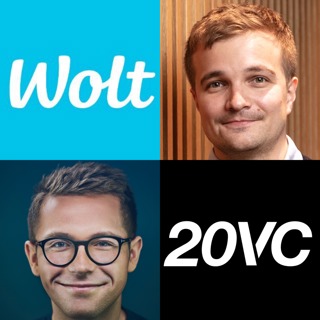
20VC: Wolt CEO, Miki Kuusi on Leadership Lessons Scaling to a Reported $8.1BN Exit to Doordash, Building Teams not Families, The Difference Between Trust and Safety Within Companies, How To Use Compensation to Create Culture & Why You Should Not Be Lookin
Miki Kuusi is the CEO of Wolt and Head of DoorDash International. In 2014 Miki founded Wolt with a mission to turn the smartphone into a remote controller for life, starting with delivering your favorite restaurant food, to you at home. Today Wolt operates in 23 countries, across several different categories, has over 4,000 employees, and last year, Doordash made the move to join forces with Wolt in a deal worth a reported $8.1BN. Previously, Miki was the CEO of Slush, one of the leading tech and investor events in the world attended by more than 25,000 people annually. In Today's Discussion with Miki Kuusi: 1.) Founding Slush and Wolt: An Entry into Startups: How did Miki come to found Wolt? What was that a-ha moment? Did Wolt have product-market-fit from Day 1? What was the turning point when they did? What does Miki know now that he wishes he had known when he started Wolt on Day 1? 2.) The Makings of a Truly Great Leader: How does Miki define "high performance" today in leadership? How does Miki think about what focus means in leadership? What is the hardest decision Miki has had to make when it comes to focusing the company? What did he learn from Ilkka @ Supercell? What does Miki believe is the KPI of success as the CEO? How does it change? What does Miki believe is the difference between good vs great leadership? What does Miki believe is the biggest sacrifice he has made as the CEO? 3.) Hiring a Team to Compete on a Global Stage: How does Miki use compensation to create a culture of ownership and accountability? Does Miki start from a position of trust and it is there to be lost or no trust and it is there to be gained? What is the difference between a team and a family in company building? What is the core difference between trust and safety in company building? Why does Miki always want to have trust but not want to have safety? What are the single biggest hiring mistakes that Miki has made? How has he learned from them? Why does Miki believe you do not want to hire people that have done it before but hire the people who have seen those people do it before? Why does Miki believe most companies are merely glorified recruiting operations? Does Miki believe that companies need to be as big as they have grown into, headcount-wise? 4.) Miki Kuusi: The Personal Journey What single day was the hardest day of the Wolt journey for Miki? How did it change him? Why does Miki believe that for their Series B, all-bar one VC turned them down? How does Miki assess his own relationship to risk and money today? Why is Miki an advocate for founders taking secondaries along the journey? What can Europe do to become a powerhouse in tech moving forward? Why did Miki decide to sell the company to Doordash? What is he most excited to learn from Tony Xu, Doordash Founder and CEO? Items Mentioned in Today's Episode: Miki's Favourite Book: The Hard Thing About Hard Things: Building a Business When There Are No Easy Answers
28 Nov 20221h 4min

20VC: When to Make Your First Growth Hire? Senior or Junior? How To Onboard Them? How To Monitor Their Progress? from Growth Leaders @ Facebook, Instagram, Lyft, Instacart, Miro and more
Casey Winters is the Chief Product Officer at Eventbrite. Prior to Eventbrite, Casey led the growth product team at Pinterest. Before Pinterest, Casey started the marketing team at Grubhub and scaled Grubhub's demand-side acquisition and retention strategies. Elena Verna is the Interim Head of Growth at Amplitude. Former exec @ Miro, Netlify, SurveyMonkey. Growth Advisor to companies including Krisp, MongoDB, Ledgy, Builder.io and SimilarWeb. Kieran Flanagan is SVP Marketing at HubSpot, where he has helped the business grow internationally, move to a product-led business, quadrupled its marketing demand, and built out its media team, including the acquisition of 'The Hustle.' Andy Johns career started in growth at Facebook when the company scaled from 100M-500M active users. Since he has worked in some of the leading growth orgs at companies like Twitter, Quora and more recently at Wealthfront as Head of Growth and President. Bangaly Kaba is the Director of Product Management @ Youtube. Prior to Youtube, Bangaly led the product growth and consumer product orgs at Instacart and before Instacart was Head of Growth @ Instagram, helping grow Instagram from 440M to > 1B monthly actives in 2.5yrs. Ed Baker is a growth advisor to various startups including Lime, Zwift, Whoop, Crimson Education, GoPeer, and Playbook. Ed was the VP of Product and Growth at Uber from 2013-2017. Prior to Uber, Ed was the Head of International Growth at Facebook. Adam Fishman was the Chief Product and Growth Offer @ Imperfect Foods. Before Imperfect, Adam was VP of Product and Growth @ Patreon, Before Patreon, Adam was the Head of Growth @ Lyft, Adam was the first growth and marketing employee hired and grew the team to 18 people. In Today's Discussion on When To Hire a Head of Growth: 1.) When is the right time to hear your first growth hire? 2.) Is this hire a senior growth leader or a more junior growth engineer? 3.) What can early-stage startups do to entice senior growth leaders to their early-stage company? 4.) What data infrastructure should be in place prior to hiring your first growth hire? 5.) What does the optimal onboarding process look like for all growth hires? 6.) What can founders and CEOs do to set their growth hires up for success?
25 Nov 202233min
20VC: Why Operating Experience Becomes Irrelevant Fast and Operators Often Give Bad Advice to Founders, Is Silicon Valley Really Dead? Are Gen Z the Most Entitled Employees? What Will Happen to a Generation of Pre-PMF Companies with $50M in the Bank with
Jeffrey Katzenberg is an entertainment industry executive and entrepreneur, who throughout his career has repeatedly reshaped the media landscape. Jeffrey co-founded DreamWorks SKG, serving as CEO of DreamWorks Animation, which he grew into the world's largest animation studio, known for Shrek, Kung Fu Panda, Madagascar and more. In 2016, DreamWorks Animation was sold to Comcast for $3.8 billion. Before founding DreamWorks, Jeffrey was Chairman of The Walt Disney Studios, where he took the studio from last place to first at the box office with hits like Three Men and a Baby, Pretty Woman, Father of the Bride and Sister Act. Most recently, Jeffrey co-founded WndrCo alongside Sujay Jaswa and has led WndrCo's investments in Airtable, Frame.io, Quibi, Vise, Placer.ai, NexHealth, Deel, and ID.me. Sujay Jaswa is one of Silicon Valley's leading business innovators. At Dropbox, he created and led the company's global business and finance organizations. Sujay and his teams raised over $1 billion, launched and scaled Dropbox's products for businesses, created partnerships responsible for over 100 million users, executed some 20 acquisitions, and scaled the global business team from two to more than 500 employees in seven global offices. During this period, the company significantly scaled overall revenue from $12 million in 2010 to over $500 million run rate, Dropbox for Business revenue from $1 million to over $200mm run rate, and users from 15 million to 300 million. Most recently, Sujay Jaswa and Jeffrey Katzenberg co-founded WndrCo and Sujay has led WndrCo's investments in Figma, 1Password, Databricks, Pango, Pilot, Rally, Zagat / The Infatuation, and other great companies. In Today's Episode with Jeffrey Katzenberg and Sujay Jaswa: 1.) From Dreamworks and Dropbox to Venture with WndrCo: How did Jeffrey and Sujay both make their way into the world of venture from Dropbox and Dreamworks? What was Jeffrey's single biggest lesson from his time leading Dreamworks and being in Hollywood? What was Sujay's biggest takeaway from being at the helm as COO at Dropbox? 2.) Operating Experience is Irrelevant and Can Be Dangerous: Why does Sujay believe that operating experience is irrelevant? What are the single biggest mistakes that operator investors make when it comes to advising their founders? What do both Sujay and Jeffrey do to try and refresh their operating experience in real time? How did Quibi impact their willingness and desire to take large risk both investing and operating? 3.) Building Teams and Hiring People: What are the single biggest hiring mistakes Jeffrey and Sujay have made? What did Jeffrey mean when he said at Disney, "if you do not come in on Saturday, do not bother coming in on Sunday". How do Jeffrey and Sujay feel about remote work? Why did it not work for them? What did Alfred Lin @ Sequoia teach Sujay about the question all managers need to ask themselves on questing whether they should let someone go? 4.) Silicon Valley: Dead and Entitled? Why does Jeffrey strongly disagree with the death of Silicon Valley? What will happen to the generation of companies that raised too much with no product-market fit? How will the mass layoffs in the valley change the valley as it is today? Does Sujay agree that millennials are the worst segment to hire from? Are they entitled?
23 Nov 202239min
20VC: Semil Shah on The Biggest Mistakes VCs and LPs Made Over the Last 24 Months, Why LP Churn is Coming, Core Lessons on Scaling from $1M Haystack Fund I to Today and How To Find, Win and Manage LPs as an Emerging Manager
Semil Shah is the Founder of Haystack, one of the leading pre-seed and seed firms of the last decade. Among Semil's portfolio include the likes of DoorDash ($DASH), Instacart, Hashicorp ($HCP), Opendoor ($OPEN), Figma (acquired by Adobe), Carta and many more exceptional companies. Semil's first fund is marked between a 30 and 40x fund, astonishing. In Today's Episode with Semil Shah We Discuss: 1.) The Makings of Semil Shah: What is Semil running away from? What is he running towards? What does Semil know now that he wishes he had known when entering venture? What is Semil's biggest advice to managers raising their first funds now? 2.) Fund Sizing: Growing vs Staying Disciplined: Question from Hunter Walk: How does Semil determine the right size fund to raise with each fund Question from Satya Patel: Why have you resisted increasing AUM? In the last episode Semil mentioned a three-year deployment cycle for the fund, did he stick to it? What are the benefits and drawbacks? What investing mistakes did Semil make over the last 3 years that he wishes he had not made? 3.) The Secret to Fundraising for a Fund: What is Semil's biggest advice to emerging managers on finding new LPs? What works? What materials do managers need to have in place for a new fundraise? Deck? Dataroom? What are the most common mistakes VCs make when pitching LPs their funds? How does Semil follow-up with potential LPs post-call? What works? What does not? How does Semil suggest creating a sense of urgency for LPs to commit to a fund? How does Semil feel about giving preferential terms to convince LPs to commit to the first close? 4.) The Current Landscape: For VCs: How will the current landscape impact emerging managers' ability to raise? What advice would Semil give to them? Raise smaller? Kyle Harrison said on the show recently, "differentiation will kill 80% of venture firms, especially the so-so ones". Does Semil agree? Who is set to struggle? Who is set to thrive in this environment? For LPs: What does Semil think are the biggest mistakes LPs made over the last 2-3 years? How will they respond in this market cycle? If Semil were handed an endowment fund, how would he allocate today? Does Semil agree, we will see a denigration of venture returns to those of PE like multiples? Why? For Founders: How does Semil advise founders on raising today when everyone says they are investing but very few really are? How does Semil advise founders on how to think about valuation inflection points with respect to raising capital? Items Mentioned in Today's Episode: Semil's Favourite Article: Master of Play Semil's Most Recent Investment: Impart Security
21 Nov 20221h 4min
20VC Rising Star: Why Founders Should Expect More From Their VCs | How To Know Pre-Investment Whether a VC Will Be Valuable and How to Get the Most Value Out of Them | Is There a Misalignment Between Founders and VCs with Oana Olteanu, Partner @ SignalFir
Oana Olteanu is a Partner @ SignalFire where she focuses on enterprise software at Seed, Series A and Series B. Prior to joining SignalFire, Oana was at Scale Venture Partners where she invested in applied ML and developer tooling. Oana sourced Scale's investments in Observe.ai, Flatfile, and Proscia. She was part of the deal teams for Honeycomb and AllyO (acquired by HireVue). She also supported existing portfolio companies such as Dialpad, Matillion, and BigID. Prior to Scale, Oana was an AI seed investor at SAP.io, SAP's $35M seed fund, where she sourced the investments in Plum.io, Oto.ai, and Akorda. In Today's Episode with Oana Olteanu We Discuss: 1.) From Tank Driving in Romania to VC's Rising Star: How Oana made her way from driving tanks in Romania to becoming a VC? How did leaving Romania for Germany and then moving to the West Coast impact her mindset? What does Oana know now that she wishes she had known when she entered VC? 2.) How to Assess a VC: The Founders Guide: Pre-investment, how can founders know whether a VC can add value? What are the signs? What three core questions will reveal how much value a VC can add? Post-investment, what can founders do to extract the most value from their VCs? What should the founders ask their investors for help with? What should they do themselves? 3.) The VC <> Founder Relationship: Oana has the highest founder NPS of any VC I have ever had on 20VC, what does Oana believe makes her founders rate her contribution so highly? What works? What does not? How does Oana give sometimes very hard feedback to founders but retain that relationship of trust and safety at the same time? What mistakes do other VCs make in giving feedback? What does Oana believe are the single biggest misalignment between VCs and founders? 4.) VCs Behaving Badly: 101 What are the single biggest ways Oana sees VCs behaving badly? How does Oana think founders expectations of the product of venture should change? Does Oana believe boards are valuable? What can be done to improve them? Items Mentioned in Today's Episode: Oana's Favourite Book: The Daily Stoic: 366 Meditations on Wisdom, Perseverance, and the Art of Living: Featuring new translations of Seneca, Epictetus, and Marcus Aurelius
18 Nov 202238min
20 Sales: The Ultimate Guide to Sales Onboarding for New Sales Reps and Sales Leaders, The Biggest Red Flags in the First 30 Days & What Can Be Done to Set Them Up for Success with Leaders from Figma, Dropbox, Miro and more.
Oliver Jay (OJ) is one of the most successful sales leaders of the last decade. Most recently, OJ spent 6 years as CRO @ Asana and grew the team from 20 to over 450, becoming a master in sales onboarding in the process. Before Asana, OJ spent 4 years at Dropbox, where OJ was Head of APAC & LATAM. Jordan Van Horn is a Revenue Leader @ Monte Carlo. Prior to this role, Jordan spent 4 years at Segment as VP of Sales, leading a sales team of 50+ Account Executives. Before Segment, Jordan was at Dropbox for 4 years leading enterprise sales for Dropbox Business. Dannie Herzberg is a Partner @ Sequoia Capital and before Sequoia, Dannie spent 4 years at Slack as their Head of Enterprise Sales, growing the business from $100M – $1B in revenue. Before Slack, Dannie spent over 5 years at Hubspot building sales teams. Zhenya Loginov is the CRO @ Miro. At Miro, Zhenya runs the go-to-market team of 700+ people across. Prior to Miro, Zhenya was the COO @ Segment where he built and ran the global go-to-market team of 200+ people. Pre-Segment, Zhenya led a 100-person team at Dropbox across different functional areas. Lauren Schwartz is VP of Enterprise Sales at Fivetran, where she has scaled the team to nearly 100, while more than tripling enterprise revenues. Previously, Lauren spent close to 4 years at Segment where she started as the first female AE and ultimately built and led sales teams in enterprise and growth. Kyle Parrish is VP Sales @ Figma, where he built the sales engine from scratch to today, with over 100 in sales. Before Figma, Kyle spent over 5 years at Dropbox in numerous different roles including Head of Sales, and Global Partnerships lead, responsible for growing Dropbox's partner ecosystem. In Todays Episode on Sales Onboarding We Discuss: 1.) How should the onboarding process for all new sales reps be structured? 2.) How should the onboarding process for a new sales leader be structured? 3.) What specific things can leaders do to set both reps and leaders best up for success? 4.) What are the single biggest red flags in the first 30 days that a rep is not going to work out? 5.) What tools and software can be used to improve this process of ramping new reps?
16 Nov 202230min
20VC: ARK Invest's Cathie Wood on Why ARK Has Not Had More Outflows Despite Performance, How the Global Tech Equities Market Will Go From $7Trn to $210Trn in 8-10 Years, The Future for Facebook and How Elon Musk and Jack Dorsey Could Create the Biggest Di
Cathie Wood is the CEO & CIO @ ARK Invest, focusing solely on disruptive innovation, primarily in the public equity markets. ARK has become renowned for opening up its research and becoming a 'sharing economy' company in the asset management space. Prior to ARK, Cathie spent twelve years at AllianceBernstein as CIO of Global Thematic Strategies where she managed over $5 billion. Cathie joined Alliance Capital from Tupelo Capital Management, a hedge fund she co-founded, which managed $800 million in global thematic strategies. Prior to Tupelo Capital, she worked for 18 years with Jennison Associates LLC as Chief Economist, Portfolio Manager and Director. In Today's Episode with Cathie Wood We Discuss: 1.) Entry into Hedge Funds at 20: How did Cathie get her first role in the world of finance at the tender age of 20? What is Cathie running from? What is Cathie running towards? What are some of Cathie's biggest lessons from seeing the dot com bust at Tupelo? What does Cathie know now that she wishes she had known when she started investing? 2.) Why Benchmarks and Passive Investing are Bad: Why does Cathie believe that benchmarks and indexes have become dangerous for consumers? Why does Cathie not believe what everyone else does regarding inflation? How much of the performance of large-cap tech stocks is tied to the growth of passive investing? Why does Cathie think the Fed is making a huge mistake? 3.) Time to Pick Companies: Why does Cathie believe that Facebook is emerging as an attractive value stock? How does Cathie believe Elon Musk and Jack Dorsey could build the largest universal wallet? If Cathie were to put all her money into one of their companies, what would it be? Why does Cathie believe Zoom is one of the most misunderstood companies? 4.) Why Venture: Why Now: Why did Cathie decide to do a venture fund with ARK now? Why did Cathie decide to do a no-carry structure with a higher management fee? How does that align incentives with investors? In venture, the asset chooses the capital, how does Cathie analyze why the best founders in the world will pick and work with ARK over other amazing VCs? What is the single biggest risk you are underwriting when investing in ARK's venture fund? Items Mentioned in Today's Episode: Cathie's Favourite Book: The Emperor of All Maladies: A Biography of Cancer
14 Nov 202247min
20VC: Why Market Size is Everything | Three Signs of a Bull Market and How To Remain Disciplined | Why Investing is a Young Person's Game | The Secret to Negotiation | Missing a $200M Opportunity in Nubank and more with Martín Escobari, Co-President @ Ge
Martín Escobari is Co-President, Managing Director and Head of General Atlantic's business in Latin America. Martín is Chairman of the firm's Investment Committee and also serves on the Management and Portfolio Committees. Before joining General Atlantic in 2012, Martín was a Managing Director at Advent International. Prior to that, he was Co-Founder and CFO of Submarino.com, a leading Brazilian online retailer that went public and was sold to Lojas Americanas in 2006. Martin started his career as a management consultant at The Boston Consulting Group. Thanks to Seba Kanovich @ dlocal for the introduction today. In Today's Episode with Martín Escobari: 1.) From Bolivia to Harvard to Leading General Atlantic: How did Martin make his way into the world of venture from a small town in Bolivia? How did being an operator going through a bust impact how Martin invests and works with founders? How does Martin advise young members on his team about surviving through a bust? 2.) Market Matters: Founders, Product or Market: Why does Martin believe the single most important element when investing is the market you are entering? How does Martin assess both market size and market growth? What does Martin believe makes a "beautiful business model"? What is the difference between good vs great? Why have we seen a generation of bad business models? How did Martin's analysis of Nubank's market lead him to turn them down? How did Martin change his approach to investing on the back of turning down Nubank? 3.) The Venture Landscape: What made Martin believe there was a downturn last year? What three signs always suggest we are in a bubble? As a result, how did General Atlantic retain their discipline when others did not? Where did they lose their discipline and invest at the top of the market? How does Martin analyse the performance of the crossover funds in the last 24 months? Who did well? Who did not? Do they remain in the market? Is Martin concerned by the exodus of capital out of South America with the bust? 4.) Martin Escobari: The Investor and Board Member: How has Martin's style of investing changed over the last decade? How does Martin reflect on his own price sensitivity? Does Martin engage in outcome scenario planning? What has been Martin's biggest hit? How did it change his mindset? How would Martin analyze his own style of board membership? How does Martin advise young board members gaining their first boards?
11 Nov 202246min