
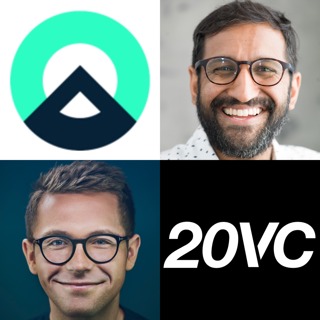
20VC: Fintech OG Sheel Mohnot on Lessons from Investing in Flexport and ChipperCash and Missing Robinhood and Chime, Why Overly Large GP Commits are Dangerous, Biggest Mistakes Managers Make with Fund I and Emerging Markets; Which Survive?
Sheel Mohnot is a Co-Founder and General Partner @ Better Tomorrow Ventures, a $225M fund that leads rounds in pre-seed and seed-stage fintech companies globally. Sheel and Jake (his co-founder) invested for many years together before founding BTV and wrote checks into Mercury, Flexport, Ramp, and Hippo Insurance to name a few. As for Sheel, before BTV he ran 500 Fintech for close to 7 years, and before that was a founder, founding two companies, both of which were acquired. If that was not enough, Sheel is also a master at measuring the width of swimming pools and making cameo appearances in music videos with Justin Bieber. In Todays Episode with Sheel Mohnot We Discuss: 1.) Entry into Venture: How Sheel made his way into the world of venture having founded 2 fintech companies? Why did no LPs give Sheel money in the early 500 Fintech days? What were some of his biggest lessons from investing in 100s of companies with 500 Fintech? How did BTV with Jake come together most recently? What are the biggest differences to Sheel of being a fund manager vs being an investor? 2.) The Power Law: How does Sheel define "the power law" in venture capital? What multiple of return would be power law status? Given the size of outcome available with these power law returns, how does Sheel approach portfolio construction? Would it not be best to invest in 100s of companies? Who does Sheel believe has done the indexing approach best? Why? 3.) Venture Capital has Never Been Less Collaborative: Why does Sheel disagree with Harry that venture capital has never been less collaborative? Why now, for the first time, are large multi-stage funds taking single-digit ownership? Does Sheel agree with Harry it is moronic to have "guaranteed pro-rata"? How does Sheel approach re-investment decision-making? When does he pay up vs not? 4.) The Biggest Wins and Misses: What have been Sheel's biggest wins from a cashback and a multiple perspective? How did Sheel miss the chance to invest in both Robinhood and Chime early on? What did he not see? How would he have thought differently with the benefit of hindsight? How have Sheel's biggest hits and misses impacted how he invests today? 5.) Emerging and Frontier Markets: Does Sheel share Harry's concern for the removal of capital from emerging markets? Why does Sheel believe that India, South East Asia and LATAM will be fine? Why does Sheel believe Pakistan and Africa are most in trouble? What advice does Sheel give to his emerging markets founders today? Items Mentioned in Today's Episode: Sheel's Favourite Book: Enders Game
15 Aug 202243min

20VC: 13 of the Great Investing Minds on When to Pay Up vs When To Remain Disciplined and Walk Because the Price is too High: The Ultimate Guide to Price Sensitivity
Marcelo Claure is an entrepreneur and investor who has founded and led some of the world's most iconic businesses. He is currently the Chairman & CEO of Claure Capital, a newly founded multi-billion-dollar global investment firm. Before this, Marcelo was COO @ Softbank Group, the world's largest technology investment company. Bill Gurley is a General Partner @ Benchmark, one of the most successful funds of the last decade with a portfolio including Uber, Twitter, Dropbox, Modern Treasury, Snapchat, StitchFix, and many more. Michael Eisenberg spent 15 years as a General Partner @ Benchmark working alongside Bill and the Benchmark partnership. Following Benchmark, Michael co-founded Aleph, one of the leading Israeli venture funds of the last decade. David Tisch is the Founder and Managing Partner @ Box Group, one of the leading seed focused firms of the last decade with a portfolio including Airtable, Glossier, PillPack, Plaid and many more. Cyan Banister is one of the most successful and renowned early-stage investors in the last decade. Her portfolio includes the likes of SpaceX, Uber, Affirm, Opendoor Postmates, Niantic and Thumbtack to name a few. Zach Weinberg is a Co-Founder of Operator Partners, operators funding operators, with no outside LPs, just their own capital. Luciana Lixandru is a Partner @ Sequoia, one of the world's most renowned and successful venture firms with Sequoia-backed companies accounting for more than 20% of NASDAQ's total value. Jeff Lieberman is the Managing Director @ Insight Partners, one of the leading investing franchises of the last 25 years with their most recent flagship fund announced earlier this year being a staggering $20BN. Nick Shalek is a General Partner @ Ribbit Capital, specializing in fintech they are one of the most successful venture firms of the last decade with a portfolio including Robinhood, Coinbase, Revolut, Nubank and more. Frank Rotman is a founding partner of QED Investors, one of the leading fintech-focused venture firms investing today with a portfolio including the likes of Klarna, Kavak, Quinto Andar, Credit Karma and more. Geoff Lewis is the Founder and Managing Partner @ Bedrock, now with over $1BN in AUM, Bedrock invests in breakout technology companies that are incongruent with popular narratives. Justin Fishner-Wolfson is founder and the managing partner of 137 Ventures. Their portfolio includes SpaceX, Wish, Anduril, Flexport, and WorkRise (formerly Rigup) to name a few. David Sze is a General Partner @ Greylock where he has led some of the firms most notable investments including Facebook, LinkedIn and Pandora. In Today's Episode We Discuss Price Sensitivity: 1.) How do you assess your relationship to price and price sensitivity? 2.) When is the time to pay up and have less price discipline? 3.) When should we remain disciplined and not pay up for a deal and walk away because of price? 4.) Of the deals you have paid up for, did their growth rate justify the high entry price? 5.) Knowing all you know now on price, how do you advise younger investors today?
12 Aug 202228min
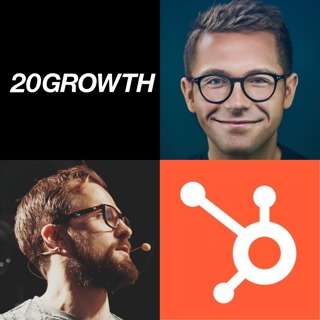
20 Growth: Why You Need a Growth Hire Pre Product-Market-Fit? Why Every Company Will Be a Media Company and How To Do It | Communities; What Really Are They? How To Build Them? What Makes The Best? Why Do Many Not Work? | Kieran Flanagan, SVP Marketing @
Kieran Flanagan is SVP Marketing at HubSpot, where he has helped the business grow internationally, move to a product-led business, quadrupled its marketing demand, and built out its media team, including the acquisition of 'The Hustle.' He is also an advisor and investor in early-stage companies. In Today's Episode with Kieran Flanagan We Discuss: 1.) Entry into Growth and Marketing: How did Kieran make his way into the world of growth and marketing? What has been 1-2 of Kieran's biggest lessons from seeing firsthand the hyper-scaling of Hubspot? On reflection, how would Kieran summarise both Hubspot's community building attempts and also their product messaging? 2.) Why You Need Growth Hires Pre Product Market Fit: What does "growth" mean to Kieran? Where do so many get it wrong? Why does Kieran believe that you should have a growth team/people before product market fit? What specifically do they do and work on during this stage? Pre PMF, what is the core metric that all startups should focus on? How does it change with time? 3.) Building Your Growth Team: What does Kieran believe are the 3 key stages to hiring for growth? How should founders determine whether to have external standalone growth teams or integrate them into existing functions? What are the single biggest mistakes founders make when hiring for growth? 4.) The Future is Content: Why does Kieran believe every great tech brand will have to become a media brand? Why is Elon Musk an example of the perfect brand? What has he done right? Why does Kieran say that data is the best and worst thing that has happened to marketing? 5.) WTF Really is Community: How does Kieran define "community"? What is it? What is it not? What makes the best communities? Why do some work and others not? Should every company have a community approach? Who does it make sense for? Have Hubspot done a good job at community building? On reflection, is there anything that Kieran would have done differently?
10 Aug 202254min

20VC: Investing Lessons from Fred Wilson and Why Small Funds Outperform Large Funds | Why the Secret to Winning in Venture is Splitting Deals |Learnings From the Biggest Hits and Biggest Losses | Why Anyone That Always Does Their Pro-Rata is Wrong with Mo
Mo Koyfman is the Founder and General Partner @ Shine Capital, who announced earlier this year Shine II, a $200M early-stage fund, and Shine Opportunities I, a $100M vehicle. Prior to founding Shine, Mo was the Managing Member @ Moko Brands where he made angel investments in Coinbase, Polychain, Harry's to name a few. Before Moko, Mo spent over 7 years as a General Partner @ Spark Capital where he made investments in Plaid, Warby Parker, Skillshare and Hivemapper, to name a few. Finally prior to Spark, Mo spent over 5 years at IAC where he oversaw group of companies that included Connected Ventures, parent of Vimeo, CollegeHumor & BustedTees. In Today's Episode with Mo Koyfman: 1.) From Entrepreneurial Parents to IAC, Spark Capital and Founding Shine: How did Mo make his way into the world of venture having worked with Dara Khros, Barry Diller and Jeremy Liew? What were some of the biggest takeaways from his time with Barry Diller and IAC? How did Mo's time at Spark impact his investing mindset? What did he learn that he took with him to founding Shine? 2.) Investment Firm vs Investment Partnership: What are the biggest differences between investment firms and investment partnerships? What are the biggest risks founders are taking when they take money from investment firms? Mo has very strong beliefs, how does he manage and inspire debates within his firm without shutting down or intimidating younger, less experienced team members? What does Mo mean when he says, "firms are great but partners matter". 3.) How To Win in Venture: Why does Mo always believe that small funds outperform large funds? What have been some of Mo's biggest lessons from Fred Wilson on fund strategy and sizing? How much of an emphasis does Mo place on the importance of ownership? Why does Mo believe the way to win in venture is to be collaborative? Why does Mo believe in the macro conditions we are entering, the landscape is about to become a lot more collaborative? Why does Mo believe any firm that says they will always do their pro rata is lying? 4.) The Lessons: Success and Failure: What are some of Mo's biggest lessons from his biggest wins, like Plaid at seed? That said, why does Mo believe it is so dangerous to try and learn lessons from the wins? What failures have been most impactful to Mo? What did he take away from them? Why does Mo believe that making great burgers is like building great companies? Items Mentioned in Today's Episode: Mo's Favourite Book: Portnoy's Complaint by Philip Roth
8 Aug 202248min
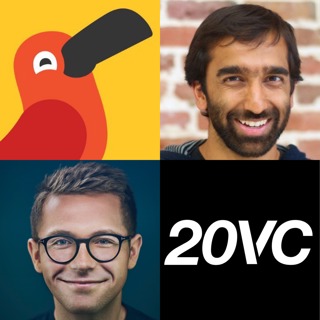
20VC: Raising $60M and Not Touching a Dollar of It; The 3 Decisions That Led to a Cash-Flow Positive Business, Why Not Being Able To Fundraise in the Early Days Can Help Build Your Business & What are the First Things To Break in Scaling Orgs with Sameer
Sameer Shariff is the Co-Founder and CEO @ Cambly, the company that allows you to become fluent faster through one-on-one video chat lessons with native English tutors. To date, Sameer has raised over $60M with Cambly from the best including Jeremy Levine @ Bessemer, Sarah Tavel @ Benchmark, Monashees, YC and more. Prior to founding Cambly, Sameer spent close to 5 years at Google on the Search Quality team and became the Tech Lead of the Search experiments team helping make experimentation a core part of the launch process. In Today's Episode with Sameer Sharif We Discuss: 1.) Entry into Startups and Co-Founding Cambly: How did Sameer make his way into the world of tech with his joining Google straight out of college? What were the 1-2 biggest takeaways from his time at Google? How did it shape his mindset? What was the a-ha moment for Sameer with Cambly? 2.) The Trials and Tribulations of Leadership: What does "high performance" mean to Sameer in business? How has it changed over time? What are the first things to break in a scaling company? How do the best companies retain speed and agility with scale? What are the single biggest hiring mistakes Sameer has made? What did he learn? 3.) The Fundraise that Led to Cash Flow Positive: Why does Sameer think it was so hard to fundraise for Cambly in the early days? When they failed to raise their Series A, what 3-4 core decisions did they make to get Cambly to cash flow positive as fast as possible? How did Sameer communicate their failed fundraising to the team? How did he do this in a way that rallied the troops and did not worry or scare them? What was the tipping point for fundraising to become much much easier for the company? Given they have not touched any of their Series A or Series B funds, how does Sameer think about the balance of growth vs profitability? 4.) Marketplace Dynamics 101: How did Cambly acquire the first 100 customers on the demand side? What is the most challenging dynamic of Cambly; demand or supply side? Where does Sameer see most marketplace founders make the biggest mistakes? What does Sameer know now on the intricacies of marketplace dynamics that he wishes he had known at the beginning? Items Mentioned In Today's Episode with Sameer Shariff: Sameer's Favourite Book: The Most Human Human: What Artificial Intelligence Teaches Us about Being Alive
5 Aug 202235min

20 Product: Shreyas Doshi on The Three Different Types of Product Leaders and How To Hire Them, The 6 Different Product Metrics You Need To Know and What Good is For Each of Them & Table Stakes Features vs Wow Features; What To Prioritise
Shreyas Doshi is an investor, advisor, and all-around product OG. Most recently Shreyas spent over 5 years at Stripe where he was Stripe's first PM Manager and helped define and grow the Product Management function (from ~5 to more than 50 people). Before Stripe, Shreyas was a Director of Product Management @ Twitter and prior to Twitter spent over 6 years as a Group Product Manager @ Google. Today Shreyas has invested and advises some of the best including advising Airtable, Kalshi, Lendflow, to name a few. In Today's Episode with Shreyas Doshi: 1.) Entry into Product: How did Shreyas make his way into the world of product and product management? Why did Shreyas decide not to do business school when it was the conventional route for everyone going into product management? What were some of Shreyas' biggest takeaways from his time at Stripe and Google? How did they impact his product mind today? 2.) Product Management 101: How does Shreyas define product management today? How do many confuse it? How does Shreyas define product success today? What is the single biggest mistake Shreyas sees founders make when determining the success/PMF of their product? Does Shreyas believe that great product management is science or art? Data or intuition? When should you listen to customers? When should you not? 3.) Metrics 101 & How To Use Them: What is the single biggest mistake Shreyas sees founders make when it comes to selecting their North Star metric? How should founders think about input vs output metrics? What is the difference between the two? What are the 6 types of metrics that all founders and product teams need to focus on? How does their importance change over time? How should the responsibility for these metrics be split between different people and teams? 4.) Three Types of Product Leader: What are the three different types of product leaders? The Craftsperson: What is their core strength? What is their core weakness? How do they interact with the rest of the team and company? The Operator: What is their core strength? What is their core weakness? How do they interact with the rest of the team and company? The Visionary: What is their core strength? What is their core weakness? How do they interact with the rest of the team and company?
3 Aug 202246min
20VC: Forerunner's Kirsten Green on The Biggest Challenges Scaling Both Teams and AUM, What Truly is High Performance in Fund Management & Why Parenting and Relationships are an Enabler To Your Best Work
Kirsten Green is the Founder and Managing Partner @ Forerunner Ventures, one of the leading firms of the last decade investing at the intersection of innovation and culture. As a founder, Kirsten has led efforts to raise over $2B+ from leading institutional investors and invest in more than 100 companies. She currently serves as a board member at Glossier, Ritual, Faire, Hims & Hers, and Curated, to name a few. She has also invested in other smash hits including Chime, Jet, Warby Parker, Hotel Tonight and many more. Due to her immense success, Kirsten has been honored in Time's 100 Most Influential People and named a Top 20 Venture Capitalists by The New York Times in 2018 & 2017. Prior to Forerunner, Kirsten was an equity research analyst and investor at Banc of America Securities. In Today's Episode with Kirsten Green We Discuss: 1.) Entry in Venture at 40 and Founding Forerunner: How did Kirsten make her way into VC at 40 with the founding of Forerunner having never had a role in VC before? What did everyone tell Kirsten when she was looking to break into venture? What did she tell herself when she heard this? What does Kirsten believe she is running from? What does she believe she is running toward? 2.) Fund Management and Leadership: How does Kirsten define high-performance today? What are the nuances of high performance in fund management? How would Kirsten describe her leadership style today? How has it changed over time? What have been some of Kirsten's biggest lessons in terms of what it takes to retain quality with scaling AUM and teams? What have been Kirsten's biggest lessons when it comes to giving hard feedback with kindness? 3.) The Venture Landscape Today and Forerunner's Position: Why does Kirsten believe the venture landscape is more dynamic today than ever? Does Kirsten agree with the statement that venture is less collaborative than ever? Why did Kirsten and Forerunner seem to amend strategy and move into B2B? Why does Kirsten disagree with the delineation between B2C and B2B? 4.) Parenting, Relationships and Life: What have been Kirsten's biggest lessons since becoming a parent? How has it impacted her mindset? Does Kirsten agree that relationships attract from sheer input on work? How does Kirsten separate relationships into two kinds of relationships? What does success in marriage mean for Kirsten? How has she seen that in her own marriage?
1 Aug 202241min
20VC: Yahoo CEO Jim Lanzone on The Yahoo Turnaround Plan; What Needs To Happen | Leadership 101: The 4 Things To Look For When Hiring | Surviving a Crash; Biggest Advice on Cuts, Layoffs, Investor Communications
Jim Lanzone is the CEO @ Yahoo, a company that today reaches nearly 900 million people around the world and is the third largest property on the Internet. Prior to Yahoo, Tim was the CEO of Tinder, the world's most popular app for meeting new people, downloaded by more than 400 million people. Before Tinder, Jim spent a decade as President and CEO of CBS Interactive, a top 10 global Internet company with brands ranging from CBS All Access to CNET. He joined CBS Interactive in 2011 when CBS Corporation purchased Clicker Media, where he was founder and CEO. Before founding Clicker, Jim served as CEO of Ask.com (formerly Ask Jeeves). In Today's Episode with Jim Lanzone 1.) Jim's Entry into the World of Startups: How did Jim go from law school to founding his first tech startup in the dot com boom? How did seeing the crash and the first company going bust, shape Jim's perspectives on great leadership? What does Jim know now that he wishes he had known when he started way back in 1999? 2.) Leadership 101: How does Jim define "high performance" in business today? What are the 4 things Jim always looks for when hiring new people? Why does Jim believe the standard interview process and questions are broken? How does he do it differently? What are his biggest lessons on how to hire effectively? How does Jim know when to let someone go? How long do you give under-performers? 3.) Crashes and Turnarounds: Jim has seen three crashes as a CEO, what are Jim's biggest lessons from 3 prior crashes? How does Jim advise founders to be acting today? What should they focus on? How can leaders maintain morale and optimism in the face of tough macro times? How does Jim advise founders to communicate both with their investors and board when it comes to reduced performance in harder times? 4.) The Yahoo Turnaround: What does Jim believe the 1-2 core things Yahoo needs to fix is? Why are they priorities? How does Jim approach turning round the Yahoo brand? How does he plan to make it attractive? What is the biggest misnomer that people have about Yahoo today? How does Jim think about running a portfolio approach with Yahoo moving forward? How has Jim changed the org structure and management of Yahoo most significantly? Items Mentioned in Today's Episode: Jim's Favourite Book: Team of Rivals: The Political Genius of Abraham Lincoln
29 Juli 202246min





















