
Coastal Flooding, Elephants and Cancer, Yosemite Bears. August 17, 2018, Part 1
Science Friday17 Aug 2018

Coastal Flooding, Elephants and Cancer, Yosemite Bears. August 17, 2018, Part 1

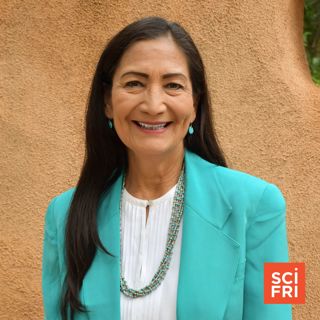
More than five years after the devastating 14-foot high waters of Superstorm Sandy flooded New York and New Jersey, the Army Corps of Engineers is studying methods for reducing the damage of future high waters in the New York Bay and Hudson River estuary—whether with levees, seawalls, beach nourishment, or even a gate that would span from Sandy Hook to the Rockaways. But would such barriers be sufficient as sea levels rise? Is building big structures—like those protecting the Netherlands—the best use of resources?

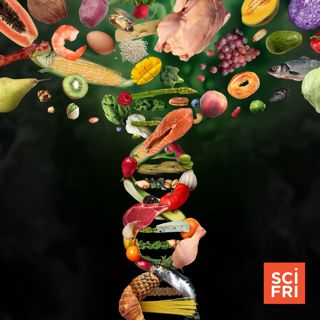
Cancer happens when a cell picks up a mutation that causes it grow and divide out of control. Statistically, you would think then that larger-bodied organisms would have more cells and therefore more opportunities for mutation—increasing the risk of cancer. But for some bigger animals, this idea doesn’t hold true. This conundrum was first observed by epidemiologist Richard Peto and has become known as Peto’s Paradox. The elephant is one animal that falls under this paradox and has a lower cancer risk despite its large size. Scientists investigated the elephant genome to try to understand why this might happen—and identified a “zombie” gene, which is dormant in most mammals, but in elephants identifies and kills cells with damaged DNA.

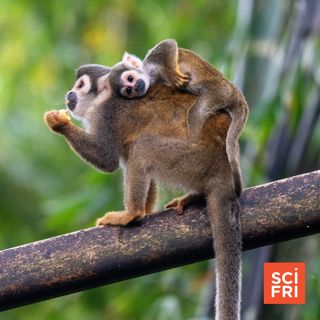
People love seeing black bears when they visit Yosemite National Park in California. But encounters don’t always go well. The park has come up with a new way to keep humans and bears safe. But tracking data from the past few years points to a new trend: Bears are being hit by cars, and speeding is now their biggest threat. Leahy says 28 were hit in 2016, and many of them died. In 2017, 23 bears were hit and four died. “You’re talking about 10 percent of our bears potentially being hit by vehicles each year,” said Yosemite National Park wildlife biologist Ryan Leahy in 2017. “Just slowing down a little bit will give you that stopping distance required to prevent a collision.” The key, he says, is education. His team has created an interactive map-based website where the public can track the lives of selected bears and see general areas where they’re hit the most.

Subscribe to this podcast. Follow our show on Instagram, TikTok, Facebook, and Bluesky @scifri and sign up for our newsletters. Got a science question that’s keeping you up at night? Call us: 877-472-4374


Hosted by Simplecast, an AdsWizz company. See pcm.adswizz.com for information about our collection and use of personal data for advertising.

Det här avsnittet är hämtat från ett öppet RSS-flöde och publiceras inte av Podme. Det kan innehålla reklam.

Avsnitt(1338)

Why do sports announcers talk like that?

Why do sports announcers talk like that?

If you watch sports, whether the recent NBA finals or the ongoing World Cup matches, you may have noticed that the athletes aren’t the only ones putting on a show. The announcers seem to be playing a ...

19 Juni 13min

Swords, cannibalism, poison: inside the world of killer microbes

Swords, cannibalism, poison: inside the world of killer microbes

There is a murderous crime spree happening right under—and perhaps inside—our noses. Killer microbes armed with weapons are eviscerating, assassinating, and detonating their fellow microbes. And the n...

18 Juni 21min

When music transports you to a different place

When music transports you to a different place

Do you ever hear a song that transports you to a specific place and time? This auditory wormhole has a name: musical daydreams. Music cognition expert Elizabeth Margulis studies why they happen, and w...

17 Juni 18min

A vast whale graveyard + Zombie sea cucumbers

A vast whale graveyard + Zombie sea cucumbers

Researchers just published details of a massive undersea graveyard of whales deep in the Indian Ocean. Spanning about 1,200 kilometers (745 miles), it contains whale remains dating back more than 5 mi...

16 Juni 18min

Should we bring mountain lions back to the Northeast?

Should we bring mountain lions back to the Northeast?

Big cats used to roam the entire United States. You might know them as mountain lions, pumas, cougars, or catamounts. Though they go by many names, they're actually all the same species.  Their curren...

15 Juni 12min

Blue Origin explosion hits NASA timeline + Artemis III crew

Blue Origin explosion hits NASA timeline + Artemis III crew

When Blue Origin’s New Glenn spacecraft exploded in an enormous fireball during a ground test a couple weeks ago, it sent shockwaves not only through the air, but through NASA’s timeline for the upcom...

12 Juni 12min

Why can I handle tequila but not rum?

Why can I handle tequila but not rum?

‘Tis the season for porch beers and happy hours, and we’re taking on listener questions about how alcohol affects us. Like, is a glass of wine at dinner really good for you? And why do sugary drinks g...

11 Juni 21min

AI + turfgrass science in the most high-tech World Cup yet

AI + turfgrass science in the most high-tech World Cup yet

The 2026 World Cup will be the largest one yet, and FIFA is trying to make it the most high-tech, too. The federation has partnered with tech giant Lenovo to launch Football AI Pro, which is designed ...

10 Juni 19min

Populärt inom Vetenskap

p3-dystopia
dumma-manniskor
doden-hjarnan-kemisten
allt-du-velat-veta
kapitalet-en-podd-om-ekonomi
rss-kriminologerna
medicinvetarna
rss-vetenskapsradion-2
rss-ufobortom-rimligt-tvivel
svd-nyhetsartiklar
sexet
rss-vetenskapsradion
dumforklarat
rss-spraket
rss-ronden
ufo-sverige
bildningspodden
vetenskapsradion
rss-lara-fran-larda-en-fackbok-och-en-forfattare
rss-odla