Earth’s Core, Govt Data In The Cloud, Book Club. Feb 8, 2019, Part 1
Science Friday8 Feb 2019

Earth’s Core, Govt Data In The Cloud, Book Club. Feb 8, 2019, Part 1

At the very center of the Earth is a solid lump of iron and nickel that might be as hot as the surface of the Sun. This solid core is thought to be why our magnetic field is as strong as it is. As the core grows, energy is transferred to the outer core to power the “geodynamo,” the magnetic field that protects our atmosphere and deflects most solar wind. But geophysicists think that the core was originally completely liquid, and at one point between 2 billion and 500 million years ago, transitioned from molten metal to a solid. At that time, our magnetic field was much weaker than it is today, according to new research in Nature Geoscience. The scientists looked at new samples of crystals that first cooled from lava 565 million years ago and found evidence in their magnetic signatures that the core must have solidified at the younger end of the previously predicted range—much more recently than expected.

Whether we’re aware of it or not, “the cloud” has changed our lives forever. It’s where we watch movies, share documents, and store passwords. It’s quick, efficient, and we wouldn’t be able to live our fast-paced, internet-connected lives without it. Now, federal agencies are storing much of their data in the cloud. For example, NASA is trying to make 20 petabytes of data available to the public for free. But to do that, they need some help from a commercial cloud provider—a company like Amazon or Microsoft or Google. But will the government’s policy of open data clash with the business model of Silicon Valley? Mariel Borowitz, Assistant Professor at Georgia Tech and Katya Abazajian, Open Cities Director with the Sunlight Foundation join guest host John Dankosky to discuss the trade offs to faster, smarter government data in the cloud.

The Science Friday Book Club has had three weeks of lively discussion of N.K. Jemisin’s geology-flavored apocalypse, The Fifth Season. Producers Christie Taylor and Johanna Mayer share some of the best listener comments about the story’s science, sociology, and real-world connections—and invite you to add your voice for one final week of literary nerding out.

One morning after the next, semi-trailer trucks get off Interstate 70 near Colby in west-central Kansas. They haul parts of giant wind turbines in 150-foot-long sections, the pieces to the Solomon Forks wind farm and the next monumental phase of the Kansas bet on wind energy. The farm will plant 105 turbines in the prairie, each towering 250 feet high. The project is one of a wave of wind farms under construction in Kansas that will add 20 percent more electrical generation to the state’s output. Earlier building surges sprung from tax breaks and from pressure by regulators on utilities to wean themselves off fossil fuels. This time, Fortune 500 companies that are new to the electricity business risk their own money on the straight-up profit potential of prairie breezes. The Solomon Forks project developed by ENGIE North America will crank enough electricity to power more than 50,000 homes. Target and T-Mobile already cut deals to buy hundreds of megawatts from the wind farm. The retailer and cell company will become electricity wholesalers, playing a direct role in generating less-polluting energy and banking that the marketplace can make them money even without the subsidies that drove the industry for decades.

Subscribe to this podcast. Follow our show on Instagram, TikTok, Facebook, and Bluesky @scifri and sign up for our newsletters. Got a science question that’s keeping you up at night? Call us: 877-472-4374


Hosted by Simplecast, an AdsWizz company. See pcm.adswizz.com for information about our collection and use of personal data for advertising.

Det här avsnittet är hämtat från ett öppet RSS-flöde och publiceras inte av Podme. Det kan innehålla reklam.

Avsnitt(1379)

How do you find a ‘lost’ species?

How do you find a ‘lost’ species?

The earth is facing a biodiversity crisis, and there’s a lot of attention on species that are threatened, or at risk of dying out completely. But, there’s another critter category that’s a little more...

14 Aug 18min
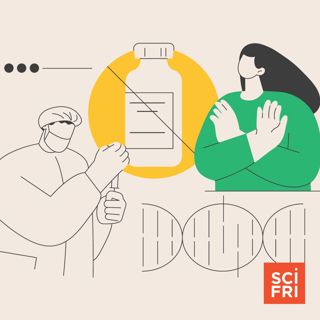
What we get wrong about vaccine hesitancy

What we get wrong about vaccine hesitancy

President Trump has signed an executive order calling for a change to the childhood vaccination schedule. Specifically, he wants to separate the MMR vaccine, which protects against measles, mumps, and...

13 Aug 12min

Why this lab studies the speed of bug pee and other curiosities

Why this lab studies the speed of bug pee and other curiosities

In a lab in the Rocky Mountains, a group of scientists is hard at work trying to find answers across biology, physics, and engineering: They’re looking into things like the hydrodynamics of insect pee...

12 Aug 18min

Some primates undergo even more extreme childbirth than humans

Some primates undergo even more extreme childbirth than humans

Human childbirth is often difficult and incredibly painful—just ask anyone who’s been through it. And for a long time, childbirth seemed to be uniquely difficult for humans. But a new study suggests t...

11 Aug 11min
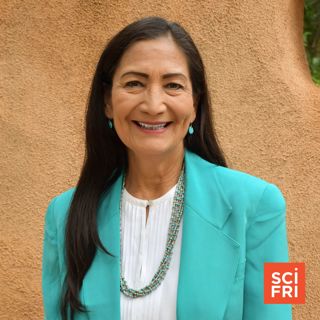
Deb Haaland is a politician, and proud of it

Deb Haaland is a politician, and proud of it

Former Interior Secretary Deb Haaland, a member of the Laguna Pueblo tribe, was the first Native person to hold a cabinet position. Now she’s running to be governor of New Mexico.  Haaland joins Host ...

10 Aug 17min
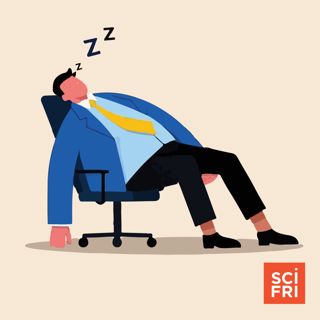
Sitting all day is terrible for us. Moving a little can help

Sitting all day is terrible for us. Moving a little can help

Keeping your butt in a seat for hours a day increases the risk of heart attacks, diabetes, psychiatric conditions, and more. But in our tech-filled world, many of us lead sedentary lives, whether beca...

7 Aug 18min

A Nagasaki survivor and physician recounts his life's work

A Nagasaki survivor and physician recounts his life's work

Dr. Masao Tomonaga was only 2 years old when the United States bombed his home city of Nagasaki. He survived, and grew up to become a physician for other survivors, known as hibakusha. He also studied...

6 Aug 18min
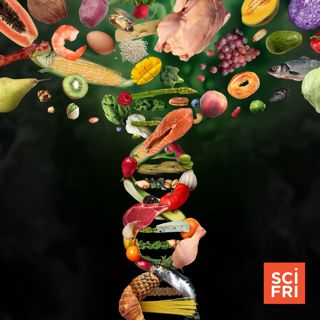
What do people eat? Plant and animal DNA in sewage provide clues

What do people eat? Plant and animal DNA in sewage provide clues

Imagine you wanted to get a general idea of what people are eating in a given community. You could look at grocery store sales, or do surveys, but neither can capture a complete picture.  Microbiome r...

5 Aug 12min
Populärt inom Vetenskap

p3-dystopia
dumma-manniskor
allt-du-velat-veta
hacka-livet
bildningspodden
ufo-sverige
rss-vetenskapsradion
rss-ufobortom-rimligt-tvivel
sexet
medicinvetarna
halsorevolutionen
rss-vetenskapsradion-2
det-morka-psyket
svd-nyhetsartiklar
paranormalt-med-caroline-giertz
ufo-sverige-2
rss-kriminologerna
vetenskapsradion
rss-spraket
rss-tidslinjen-podcast