
Synthetic Genomes, Climate Panel, Local Recycling. March 1, 2019, Part 1
Science Friday1 Mars 2019

Synthetic Genomes, Climate Panel, Local Recycling. March 1, 2019, Part 1

DNA is the universal programming language for life, and the specific code to that program are the combination of the base pairs adenine, guanine, cytosine and thymine. But are those the only base pairs that could be used to create DNA? Scientists looking into this question were able to create 4 different base pairs that don’t exist in nature. Chemist Floyd Romesberg, biologist Jef Boeke, and bioethicist Debra Mathews tell Ira how altered genomes could be used for creating novel medicines and fuels—and whether this is considered a new form of life.

Plus: The climate is changing. Globally, of course. But also in Washington, where growing numbers of Republicans are jumping behind policies that would result in meaningful action on climate change. And yet, even as Congress appears ready to at least discuss the issue, and the government’s own scientists and military leaders sound louder alarms about the impending dangers of global climate change, the White House is assembling a group of climate change adversaries to counter those mainstream views. David Titley, a retired rear admiral who founded the Navy's task force on climate change, explains.

Last year, China tightened standards for recycled materials it would accept, and now local recyclers nationwide find themselves struggling to find new homes for plastics, cardboard, and other materials that fell below par. Dana Bate, health and science reporter for WHYY, tells Ira how Philadelphia and its suburbs are handling the issue in the State of Science.

And Sophie Bushwick, technology editor for Scientific American, explains how extreme climate change might cause stratocumulus clouds to disappear for good, and other top science news headlines, in this week's News Roundup.

Subscribe to this podcast. Follow our show on Instagram, TikTok, Facebook, and Bluesky @scifri and sign up for our newsletters. Got a science question that’s keeping you up at night? Call us: 877-472-4374


Hosted by Simplecast, an AdsWizz company. See pcm.adswizz.com for information about our collection and use of personal data for advertising.

Det här avsnittet är hämtat från ett öppet RSS-flöde och publiceras inte av Podme. Det kan innehålla reklam.

Avsnitt(1379)

How do you find a ‘lost’ species?

How do you find a ‘lost’ species?

The earth is facing a biodiversity crisis, and there’s a lot of attention on species that are threatened, or at risk of dying out completely. But, there’s another critter category that’s a little more...

14 Aug 18min
What we get wrong about vaccine hesitancy

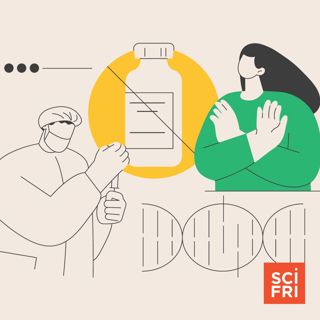
What we get wrong about vaccine hesitancy

President Trump has signed an executive order calling for a change to the childhood vaccination schedule. Specifically, he wants to separate the MMR vaccine, which protects against measles, mumps, and...

13 Aug 12min

Why this lab studies the speed of bug pee and other curiosities

Why this lab studies the speed of bug pee and other curiosities

In a lab in the Rocky Mountains, a group of scientists is hard at work trying to find answers across biology, physics, and engineering: They’re looking into things like the hydrodynamics of insect pee...

12 Aug 18min

Some primates undergo even more extreme childbirth than humans

Some primates undergo even more extreme childbirth than humans

Human childbirth is often difficult and incredibly painful—just ask anyone who’s been through it. And for a long time, childbirth seemed to be uniquely difficult for humans. But a new study suggests t...

11 Aug 11min
Deb Haaland is a politician, and proud of it

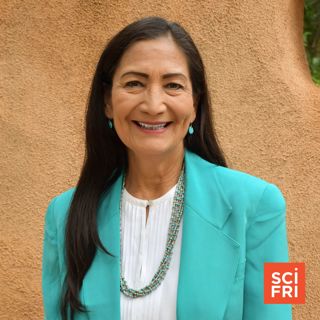
Deb Haaland is a politician, and proud of it

Former Interior Secretary Deb Haaland, a member of the Laguna Pueblo tribe, was the first Native person to hold a cabinet position. Now she’s running to be governor of New Mexico.  Haaland joins Host ...

10 Aug 17min

Sitting all day is terrible for us. Moving a little can help

Sitting all day is terrible for us. Moving a little can help

Keeping your butt in a seat for hours a day increases the risk of heart attacks, diabetes, psychiatric conditions, and more. But in our tech-filled world, many of us lead sedentary lives, whether beca...

7 Aug 18min

A Nagasaki survivor and physician recounts his life's work

A Nagasaki survivor and physician recounts his life's work

Dr. Masao Tomonaga was only 2 years old when the United States bombed his home city of Nagasaki. He survived, and grew up to become a physician for other survivors, known as hibakusha. He also studied...

6 Aug 18min
What do people eat? Plant and animal DNA in sewage provide clues

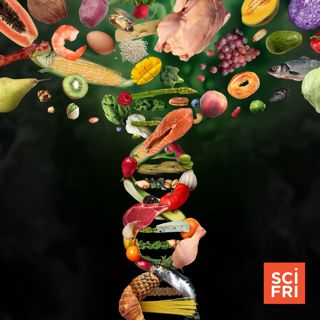
What do people eat? Plant and animal DNA in sewage provide clues

Imagine you wanted to get a general idea of what people are eating in a given community. You could look at grocery store sales, or do surveys, but neither can capture a complete picture.  Microbiome r...

5 Aug 12min

Populärt inom Vetenskap

p3-dystopia
dumma-manniskor
allt-du-velat-veta
hacka-livet
bildningspodden
ufo-sverige
rss-vetenskapsradion
rss-ufobortom-rimligt-tvivel
sexet
medicinvetarna
halsorevolutionen
rss-vetenskapsradion-2
det-morka-psyket
svd-nyhetsartiklar
paranormalt-med-caroline-giertz
ufo-sverige-2
rss-kriminologerna
vetenskapsradion
rss-spraket
rss-tidslinjen-podcast