Superconductivity Search, Ride-Share Congestion, Lions Vs. Porcupines. May 10, 2019, Part 1
Science Friday10 Maj 2019

Superconductivity Search, Ride-Share Congestion, Lions Vs. Porcupines. May 10, 2019, Part 1

Six decades ago, a group of physicists came up with a theory that described electrons at a low temperature that could attract a second electron. If the electrons were in the right configuration, they could conduct electricity with zero resistance. The Bardeen-Cooper-Schrieffer theory, named after the three physicists, is the basis for how superconductivity works at a quantum level. Superconductivity would allow electricity to flow with no loss of heat from its system.

Since that time, scientists have been trying to find a real-world material that fits that theory. One way to achieve this is by turning hydrogen into a metal. This is accomplished by squeezing hydrogen gas between two diamonds at such a high pressure that it solidifies. That metal then becomes a superconductor at room temperature. Previously, achieving zero resistance had only been possible by cooling the superconductor to near absolute zero.

Ira and Gizmodo science writer Ryan Mandelbaum talk with physicist Maddury Somayazulu and theoretical chemist Eva Zurek about the progress towards creating a room-temperature superconductor and how this type of material could be used in quantum computing and other technology.

During times of drought or disease, lions have to turn to other sources of food like the East African porcupine. But while the lion may get a quick meal when it attacks a porcupine, the porcupine may win in the long run. Writing in the Journal of East African Natural History, Julian Kerbis Peterhans and colleagues found that an untreated porcupine quill wound is often enough to severely injure a lion. If the wound becomes infected or hinders eating, it can lead to death. And, when a lion is injured and has difficulty hunting its usual prey, it can sometimes turn to easier sources of food—like humans. Kerbis joins Ira to talk about the study, and what this seemingly mismatched battle can teach us about survival in the animal kingdom.

Plus, a new study found that the presence of services like Uber and Lyft increased road congestion in San Francisco. And a roundup of the week's science news, including a rattling remark about climate change from U.S. Secretary of State Mike Pompeo at an Arctic Council meeting.

Subscribe to this podcast. Follow our show on Instagram, TikTok, Facebook, and Bluesky @scifri and sign up for our newsletters. Got a science question that’s keeping you up at night? Call us: 877-472-4374


Hosted by Simplecast, an AdsWizz company. See pcm.adswizz.com for information about our collection and use of personal data for advertising.

Det här avsnittet är hämtat från ett öppet RSS-flöde och publiceras inte av Podme. Det kan innehålla reklam.

Avsnitt(1379)

How do you find a ‘lost’ species?

How do you find a ‘lost’ species?

The earth is facing a biodiversity crisis, and there’s a lot of attention on species that are threatened, or at risk of dying out completely. But, there’s another critter category that’s a little more...

14 Aug 18min
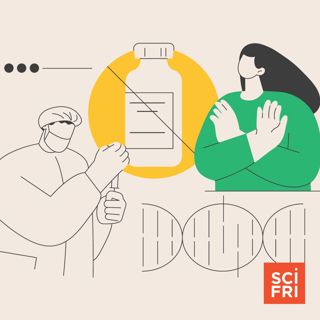
What we get wrong about vaccine hesitancy

What we get wrong about vaccine hesitancy

President Trump has signed an executive order calling for a change to the childhood vaccination schedule. Specifically, he wants to separate the MMR vaccine, which protects against measles, mumps, and...

13 Aug 12min

Why this lab studies the speed of bug pee and other curiosities

Why this lab studies the speed of bug pee and other curiosities

In a lab in the Rocky Mountains, a group of scientists is hard at work trying to find answers across biology, physics, and engineering: They’re looking into things like the hydrodynamics of insect pee...

12 Aug 18min

Some primates undergo even more extreme childbirth than humans

Some primates undergo even more extreme childbirth than humans

Human childbirth is often difficult and incredibly painful—just ask anyone who’s been through it. And for a long time, childbirth seemed to be uniquely difficult for humans. But a new study suggests t...

11 Aug 11min
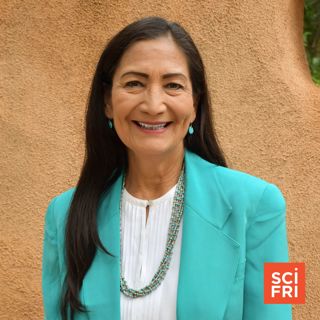
Deb Haaland is a politician, and proud of it

Deb Haaland is a politician, and proud of it

Former Interior Secretary Deb Haaland, a member of the Laguna Pueblo tribe, was the first Native person to hold a cabinet position. Now she’s running to be governor of New Mexico.  Haaland joins Host ...

10 Aug 17min

Sitting all day is terrible for us. Moving a little can help

Sitting all day is terrible for us. Moving a little can help

Keeping your butt in a seat for hours a day increases the risk of heart attacks, diabetes, psychiatric conditions, and more. But in our tech-filled world, many of us lead sedentary lives, whether beca...

7 Aug 18min

A Nagasaki survivor and physician recounts his life's work

A Nagasaki survivor and physician recounts his life's work

Dr. Masao Tomonaga was only 2 years old when the United States bombed his home city of Nagasaki. He survived, and grew up to become a physician for other survivors, known as hibakusha. He also studied...

6 Aug 18min
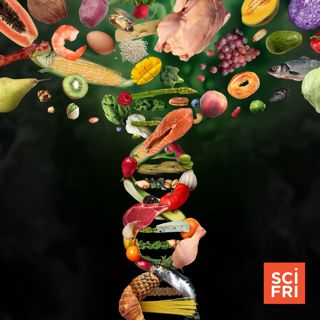
What do people eat? Plant and animal DNA in sewage provide clues

What do people eat? Plant and animal DNA in sewage provide clues

Imagine you wanted to get a general idea of what people are eating in a given community. You could look at grocery store sales, or do surveys, but neither can capture a complete picture.  Microbiome r...

5 Aug 12min

Populärt inom Vetenskap

p3-dystopia
dumma-manniskor
allt-du-velat-veta
hacka-livet
bildningspodden
ufo-sverige
rss-vetenskapsradion
rss-ufobortom-rimligt-tvivel
sexet
medicinvetarna
halsorevolutionen
rss-vetenskapsradion-2
det-morka-psyket
svd-nyhetsartiklar
paranormalt-med-caroline-giertz
ufo-sverige-2
rss-kriminologerna
vetenskapsradion
rss-spraket
rss-tidslinjen-podcast