Smoke Chasers, Colorado Apples, Pikas. June 21, 2019, Part 2
Science Friday21 Juni 2019

Smoke Chasers, Colorado Apples, Pikas. June 21, 2019, Part 2

When wildfires rage in the West, Colorado State University atmospheric scientist Emily Fischer hops into a plane, and flies straight into the smoke. The plane is a flying chemistry lab, studded with instruments, and Fischer’s goal is to uncover the chemical reactions happening in smoke plumes, to determine how wildfire smoke may affect ecosystems and human health.

Pikas—those cute little animals that look like rodents but are actually more closely related to rabbits—used to roam high mountain habitats across the West. But global warming is pushing temperatures up in their high mountain habitats, and pikas are now confined to a few areas. And thanks to those warmer temperatures, which are threatening the pikas’ way of life, they may be in danger of disappearing—potentially as early as the end of the century. In this segment, recorded as part of Science Friday’s live show at the Chautauqua Auditorium in Boulder, Colorado, Ira speaks with Chris Ray, a population biologist at the University of Colorado in Boulder. Ray is tagging and tracking the pikas to investigate how closely their fate is tied to climate change—and whether there’s a way to save them before it’s too late.

In the late 1800, Colorado was one of the top apple growing states, but the industry was wiped out by drought and the creation of the red delicious apple in Washington state. But even today, apple trees can still be found throughout the area. Plant ecologist Katharine Suding created the Boulder Apple Tree Project to map out the historic orchards. She talks about Boulder’s historic orchards, some of the heirloom varieties like the Surprise and Arkansas Black, and a surprising connection to a hit Hollywood franchise. Plus, cider maker Daniel Haykin talks about how he uses the information from the Boulder Apple Tree Project combined with sugar, yeast and apples to make the bubbly beverage.

Subscribe to this podcast. Follow our show on Instagram, TikTok, Facebook, and Bluesky @scifri and sign up for our newsletters. Got a science question that’s keeping you up at night? Call us: 877-472-4374


Hosted by Simplecast, an AdsWizz company. See pcm.adswizz.com for information about our collection and use of personal data for advertising.

Det här avsnittet är hämtat från ett öppet RSS-flöde och publiceras inte av Podme. Det kan innehålla reklam.

Avsnitt(1379)

How do you find a ‘lost’ species?

How do you find a ‘lost’ species?

The earth is facing a biodiversity crisis, and there’s a lot of attention on species that are threatened, or at risk of dying out completely. But, there’s another critter category that’s a little more...

14 Aug 18min
What we get wrong about vaccine hesitancy

What we get wrong about vaccine hesitancy

President Trump has signed an executive order calling for a change to the childhood vaccination schedule. Specifically, he wants to separate the MMR vaccine, which protects against measles, mumps, and...

13 Aug 12min

Why this lab studies the speed of bug pee and other curiosities

Why this lab studies the speed of bug pee and other curiosities

In a lab in the Rocky Mountains, a group of scientists is hard at work trying to find answers across biology, physics, and engineering: They’re looking into things like the hydrodynamics of insect pee...

12 Aug 18min

Some primates undergo even more extreme childbirth than humans

Some primates undergo even more extreme childbirth than humans

Human childbirth is often difficult and incredibly painful—just ask anyone who’s been through it. And for a long time, childbirth seemed to be uniquely difficult for humans. But a new study suggests t...

11 Aug 11min
Deb Haaland is a politician, and proud of it

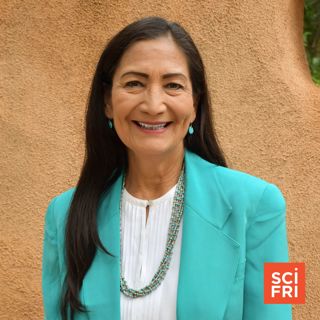
Deb Haaland is a politician, and proud of it

Former Interior Secretary Deb Haaland, a member of the Laguna Pueblo tribe, was the first Native person to hold a cabinet position. Now she’s running to be governor of New Mexico.  Haaland joins Host ...

10 Aug 17min

Sitting all day is terrible for us. Moving a little can help

Sitting all day is terrible for us. Moving a little can help

Keeping your butt in a seat for hours a day increases the risk of heart attacks, diabetes, psychiatric conditions, and more. But in our tech-filled world, many of us lead sedentary lives, whether beca...

7 Aug 18min

A Nagasaki survivor and physician recounts his life's work

A Nagasaki survivor and physician recounts his life's work

Dr. Masao Tomonaga was only 2 years old when the United States bombed his home city of Nagasaki. He survived, and grew up to become a physician for other survivors, known as hibakusha. He also studied...

6 Aug 18min

What do people eat? Plant and animal DNA in sewage provide clues

What do people eat? Plant and animal DNA in sewage provide clues

Imagine you wanted to get a general idea of what people are eating in a given community. You could look at grocery store sales, or do surveys, but neither can capture a complete picture.  Microbiome r...

5 Aug 12min

Populärt inom Vetenskap

p3-dystopia
dumma-manniskor
allt-du-velat-veta
hacka-livet
bildningspodden
rss-vetenskapsradion
medicinvetarna
rss-ufobortom-rimligt-tvivel
sexet
ufo-sverige
rss-vetenskapsradion-2
halsorevolutionen
paranormalt-med-caroline-giertz
svd-nyhetsartiklar
det-morka-psyket
vetenskapsradion
ufo-sverige-2
rss-spraket
dumforklarat
rss-kriminologerna