
Is Chemical Sunscreen Safe, Slime, Amazon Deforestation. August 2, 2019, Part 2
Science Friday2 Aug 2019

Is Chemical Sunscreen Safe, Slime, Amazon Deforestation. August 2, 2019, Part 2

Sunscreen has been on the shelves of drugstores since the mid-1940s. And while new kinds of sunscreens have come out, some of the active ingredients in them have yet to be determined as safe and effective. A recent study conducted by the FDA showed that the active ingredients of four commercially available sunscreens were absorbed into the bloodstream—even days after a person stops using it.

Ira talks to professor of dermatology and editor in chief of the Journal of the American Medical Association Dermatology Kanade Shinkai about what the next steps are for sunscreen testing and what consumers should do in the meantime.

Often called the planet’s lungs, the trees of the Amazon rainforest suck up a quarter of Earth’s carbon and produce a fifth of the world’s oxygen. The National Institute for Space Research in Brazil has been using satellite images of tree cover to monitor the Amazon’s deforestation since the 1970s—and new data shows a potentially dangerous spike in deforestation. In the first seven months of 2019, the rainforest lost 50% more trees than during the same period last year.

That spike in tree loss has coincided with Brazil’s new president, Jair Bolsanaro, taking office in January and slashing environmental protections. Bolsanaro even called the new data a lie. But climate scientists warn deforestation is pushing the Amazon rainforest to a tipping point that would disrupt both its ecosystem and the global climate.

Ira talks to Carlos Nobre, a climate scientist at the University of Sao Paulo’s Institute of Advanced Studies, about the new data and why deforestation in the Amazon is so risky for the planet.

When you think of algae, one of the first images that might come to mind is the green, fluffy stuff that takes over your fish tank when it needs cleaning, or maybe the ropy seaweed that washes up on the beach. But the diversity of the group of photosynthetic organisms is vast—ranging from small cyanobacteria to lichens to multicellular mats of seaweed. Author Ruth Kassinger calls algae “the most powerful organisms on the planet.” She talks about how this ancient group of organisms produces at least 50% of the oxygen on Earth, and how people are trying to harness algae as a food source, alternative fuel, and even a way to make cows burp less methane.

Subscribe to this podcast. Follow our show on Instagram, TikTok, Facebook, and Bluesky @scifri and sign up for our newsletters. Got a science question that’s keeping you up at night? Call us: 877-472-4374


Hosted by Simplecast, an AdsWizz company. See pcm.adswizz.com for information about our collection and use of personal data for advertising.

Det här avsnittet är hämtat från ett öppet RSS-flöde och publiceras inte av Podme. Det kan innehålla reklam.

Avsnitt(1380)

Colorado’s snow drought deals a major blow to recreation

Colorado’s snow drought deals a major blow to recreation

Winter in Colorado looked very different this year. Many parts of the state experienced record-high temperatures and record-low snowpack, which had downstream effects on farming, sports, tourism, and ...

17 Aug 11min
How do you find a ‘lost’ species?

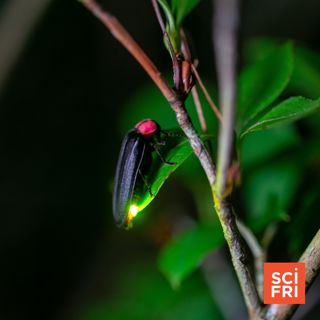
How do you find a ‘lost’ species?

The earth is facing a biodiversity crisis, and there’s a lot of attention on species that are threatened, or at risk of dying out completely. But, there’s another critter category that’s a little more...

14 Aug 18min
What we get wrong about vaccine hesitancy

What we get wrong about vaccine hesitancy

President Trump has signed an executive order calling for a change to the childhood vaccination schedule. Specifically, he wants to separate the MMR vaccine, which protects against measles, mumps, and...

13 Aug 12min

Why this lab studies the speed of bug pee and other curiosities

Why this lab studies the speed of bug pee and other curiosities

In a lab in the Rocky Mountains, a group of scientists is hard at work trying to find answers across biology, physics, and engineering: They’re looking into things like the hydrodynamics of insect pee...

12 Aug 18min

Some primates undergo even more extreme childbirth than humans

Some primates undergo even more extreme childbirth than humans

Human childbirth is often difficult and incredibly painful—just ask anyone who’s been through it. And for a long time, childbirth seemed to be uniquely difficult for humans. But a new study suggests t...

11 Aug 11min
Deb Haaland is a politician, and proud of it

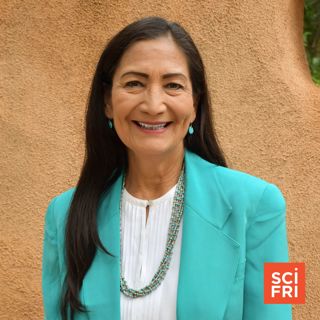
Deb Haaland is a politician, and proud of it

Former Interior Secretary Deb Haaland, a member of the Laguna Pueblo tribe, was the first Native person to hold a cabinet position. Now she’s running to be governor of New Mexico.  Haaland joins Host ...

10 Aug 17min

Sitting all day is terrible for us. Moving a little can help

Sitting all day is terrible for us. Moving a little can help

Keeping your butt in a seat for hours a day increases the risk of heart attacks, diabetes, psychiatric conditions, and more. But in our tech-filled world, many of us lead sedentary lives, whether beca...

7 Aug 18min

A Nagasaki survivor and physician recounts his life's work

A Nagasaki survivor and physician recounts his life's work

Dr. Masao Tomonaga was only 2 years old when the United States bombed his home city of Nagasaki. He survived, and grew up to become a physician for other survivors, known as hibakusha. He also studied...

6 Aug 18min

Populärt inom Vetenskap

p3-dystopia
dumma-manniskor
allt-du-velat-veta
hacka-livet
bildningspodden
rss-vetenskapsradion
medicinvetarna
rss-ufobortom-rimligt-tvivel
sexet
ufo-sverige
rss-vetenskapsradion-2
halsorevolutionen
paranormalt-med-caroline-giertz
svd-nyhetsartiklar
det-morka-psyket
vetenskapsradion
ufo-sverige-2
rss-spraket
dumforklarat
rss-kriminologerna