

Trust In Science, California Power Outages, Regrowing Cartilage. Oct 11, 2019, Part 1
Science Friday11 Okt 2019

Trust In Science, California Power Outages, Regrowing Cartilage. Oct 11, 2019, Part 1

Despite widely reported attacks on science, the vast majority of Americans continue to trust scientists, according to the latest survey from the Pew Research Center. Many listeners of Science Friday might take it as a given that we should trust science, but is that trust well-founded? Naomi Oreskes, history of science professor at Harvard University, argues that we should. In her new book, Why Trust Science?, she explains how science works and what makes it trustworthy. (Hint: it’s not the scientific method.)

Pacific Gas & Electric has generated confusion—not to mention outrage—with its power grid shutdowns. The situation continues for a second day in 34 California counties. On social media and phone calls to KQED’s Forum radio program, people throughout PG&E’s service area have asked how and why the investor-owned utility took this step. KQED reporters have some answers to some of the questions that have come in.

Why Is PG&E Turning the Power Off? Is This PG&E’s Fault?

Bottom line, PG&E doesn’t want to risk having its power lines start another fire, so it is pre-emptively turning the power off during this week’s dry, windy weather. The company made the decision based on information from its wildfire center, where meteorologists keep watch on fire conditions.

PG&E’s power lines have sparked many catastrophic wildfires in California, including last year’s Camp Fire in Butte County that caused 85 deaths, making it the deadliest U.S. wildfire in 100 years. PG&E lines started more than a dozen fires in 2017. Less than a month ago, the company agreed to pay billion in a settlement with victims of the recent fires.

The shutoffs are part of its wildfire mitigation plan, mandated by the state and agreed to by the California Public Utilities Commission, the state’s top power regulator. — Kevin Stark

Who Made This Decision? When Did They Make It?

If past practice tells us anything, PG&E has been making and remaking this decision, with the help of its meteorological team, over several days. The utility says it considers weather, fuel and other conditions and observations, as well as the need for notice by state and local parties, when it decides to implement shutoffs. As we’ve seen over the last few days, the planned outage times can change with shifting conditions.

The fact is, there’s nothing new about turning off power lines when conditions get risky: San Diego Gas and Electric, with the permission of the CPUC, has mitigated fire risk this way since 2012. What is new are the guidelines PG&E filed just a year ago for its public safety power shutoff procedures.

For the last couple of years, the CPUC has required investor-owned utilities to describe their processes for arriving at decisions like the one affecting nearly three dozen California counties right now. PG&E shut off power two times last year; the last time PG&E called a public safety power shutoff, for two days in June, it affected about 22,000 customers in the North Bay and the Sierra foothills, including Butte County and Paradise. — Molly Peterson

Read more questions and answers on Science Friday.

Cartilage is the connective tissue that provides padding between your joints. As we age, the wearing down of cartilage can lead to different types of arthritis. It’s been long believed that once humans lose cartilage, it can never grow back. Now, a team of researchers investigated this idea, and found that the cartilage in our ankles might be able to turnover more easily compared to our hips and knees. Their results were published in the journal Science Advances. Rheumatologist Virginia Byers Kraus, who was an author on the study, discusses how human cartilage might be able to regenerate and what this means for future treatments.

Subscribe to this podcast. Follow our show on Instagram, TikTok, Facebook, and Bluesky @scifri and sign up for our newsletters. Got a science question that’s keeping you up at night? Call us: 877-472-4374


Hosted by Simplecast, an AdsWizz company. See pcm.adswizz.com for information about our collection and use of personal data for advertising.

Det här avsnittet är hämtat från ett öppet RSS-flöde och publiceras inte av Podme. Det kan innehålla reklam.

Avsnitt(1379)

How do you find a ‘lost’ species?

How do you find a ‘lost’ species?

The earth is facing a biodiversity crisis, and there’s a lot of attention on species that are threatened, or at risk of dying out completely. But, there’s another critter category that’s a little more...

14 Aug 18min
What we get wrong about vaccine hesitancy

What we get wrong about vaccine hesitancy

President Trump has signed an executive order calling for a change to the childhood vaccination schedule. Specifically, he wants to separate the MMR vaccine, which protects against measles, mumps, and...

13 Aug 12min

Why this lab studies the speed of bug pee and other curiosities

Why this lab studies the speed of bug pee and other curiosities

In a lab in the Rocky Mountains, a group of scientists is hard at work trying to find answers across biology, physics, and engineering: They’re looking into things like the hydrodynamics of insect pee...

12 Aug 18min

Some primates undergo even more extreme childbirth than humans

Some primates undergo even more extreme childbirth than humans

Human childbirth is often difficult and incredibly painful—just ask anyone who’s been through it. And for a long time, childbirth seemed to be uniquely difficult for humans. But a new study suggests t...

11 Aug 11min
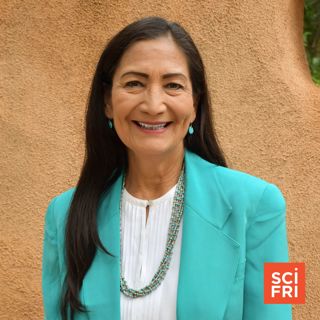
Deb Haaland is a politician, and proud of it

Deb Haaland is a politician, and proud of it

Former Interior Secretary Deb Haaland, a member of the Laguna Pueblo tribe, was the first Native person to hold a cabinet position. Now she’s running to be governor of New Mexico.  Haaland joins Host ...

10 Aug 17min

Sitting all day is terrible for us. Moving a little can help

Sitting all day is terrible for us. Moving a little can help

Keeping your butt in a seat for hours a day increases the risk of heart attacks, diabetes, psychiatric conditions, and more. But in our tech-filled world, many of us lead sedentary lives, whether beca...

7 Aug 18min

A Nagasaki survivor and physician recounts his life's work

A Nagasaki survivor and physician recounts his life's work

Dr. Masao Tomonaga was only 2 years old when the United States bombed his home city of Nagasaki. He survived, and grew up to become a physician for other survivors, known as hibakusha. He also studied...

6 Aug 18min

What do people eat? Plant and animal DNA in sewage provide clues

What do people eat? Plant and animal DNA in sewage provide clues

Imagine you wanted to get a general idea of what people are eating in a given community. You could look at grocery store sales, or do surveys, but neither can capture a complete picture.  Microbiome r...

5 Aug 12min

Populärt inom Vetenskap

p3-dystopia
dumma-manniskor
allt-du-velat-veta
hacka-livet
bildningspodden
rss-vetenskapsradion
medicinvetarna
rss-ufobortom-rimligt-tvivel
sexet
ufo-sverige
rss-vetenskapsradion-2
halsorevolutionen
paranormalt-med-caroline-giertz
svd-nyhetsartiklar
det-morka-psyket
vetenskapsradion
ufo-sverige-2
rss-spraket
dumforklarat
rss-kriminologerna