
Volume Control, Dermatology In Skin Of Color, Kelp Decline. Nov 15, 2019, Part 2
Science Friday15 Nov 2019

Volume Control, Dermatology In Skin Of Color, Kelp Decline. Nov 15, 2019, Part 2

Dermatologists presented with a new patient have a number of symptoms to look at in order to diagnose. Does the patient have a rash, bumps, or scaling skin? Is there redness, inflammation, or ulceration? For rare conditions a doctor may have never seen in person before, it’s likely that they were trained on photos of the conditions—or can turn to colleagues who may themselves have photos.

But in people with darker, melanin-rich skin, the same skin conditions can look drastically different, or be harder to spot at all—and historically, there have been fewer photos of these conditions on darker-skinned patients. And for these patients, detection and diagnosis can be life-saving: people of color get less melanoma, for example, but are also less likely to survive it.

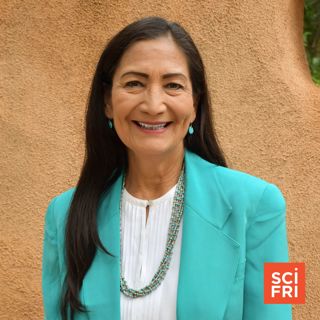
Dr. Jenna Lester, who started one of the few clinics in the country to focus on such patients, explains the need for more dermatologists trained to diagnose and treat people with darker skin tones—and why the difference can be both life-saving and life-altering.

Have you ever met a friend for dinner at a restaurant, only to have trouble hearing each other talk over the din of other diners? And as we get older, this phenomenon only gets worse and can be compounded by age-related hearing loss and conditions like tinnitus.

Unfortunately there is no silver bullet for tinnitus or other forms of hearing loss, and researchers don’t even understand all the ways in which the auditory system can go awry. But we now have more sophisticated technology to help us cope with it.

Nowadays, there are over-the-counter hearing aids and assistive listening devices that connect with your smartphone. Certain tech allows you to amplify softer sounds and cancel out the noise of a crowded room—it can even focus on the sound waves created by the person you’re speaking with.

Ira chats with David Owen, New Yorker staff writer and author of the new book Volume Control: Hearing in a Deafening World about the industry that’s helping millions of Americans cope with hearing loss.

Envision California’s lush forests from San Francisco to the Oregon border. Now imagine that 90 percent of those forests disappear within two years. Laura Rogers-Bennett, senior environmental scientist with the California Department of Fish and Wildlife, says that’s exactly what happened to underwater kelp forests off Northern California’s coastline from 2014-16.

An analysis published this week in Scientific Reports documents the rapid decline of California’s bull kelp. The study links the reduction in the seaweed’s population to a confluence of environmental and ecological stressors, including a marine heat wave, a sea star die-off and the emergence of an “urchin barrens,” large swaths of subtidal zones overtaken by kelp-hungry purple sea urchins.

Rogers-Bennett, who monitors kelp forests in partnership with the UC Davis Bodega Marine Laboratory, says taken together, these strains on the kelp population threaten the greater coastal ecosystem. “We are finding out,” she says, “that if we cross some of these thresholds, that the system will collapse.” Observers are now noting kelp deforestation off the Oregon coast and in California south of San Francisco to Monterey Bay.

Subscribe to this podcast. Follow our show on Instagram, TikTok, Facebook, and Bluesky @scifri and sign up for our newsletters. Got a science question that’s keeping you up at night? Call us: 877-472-4374


Hosted by Simplecast, an AdsWizz company. See pcm.adswizz.com for information about our collection and use of personal data for advertising.

Det här avsnittet är hämtat från ett öppet RSS-flöde och publiceras inte av Podme. Det kan innehålla reklam.

Avsnitt(1338)

Why do sports announcers talk like that?

Why do sports announcers talk like that?

If you watch sports, whether the recent NBA finals or the ongoing World Cup matches, you may have noticed that the athletes aren’t the only ones putting on a show. The announcers seem to be playing a ...

19 Juni 13min

Swords, cannibalism, poison: inside the world of killer microbes

Swords, cannibalism, poison: inside the world of killer microbes

There is a murderous crime spree happening right under—and perhaps inside—our noses. Killer microbes armed with weapons are eviscerating, assassinating, and detonating their fellow microbes. And the n...

18 Juni 21min

When music transports you to a different place

When music transports you to a different place

Do you ever hear a song that transports you to a specific place and time? This auditory wormhole has a name: musical daydreams. Music cognition expert Elizabeth Margulis studies why they happen, and w...

17 Juni 18min

A vast whale graveyard + Zombie sea cucumbers

A vast whale graveyard + Zombie sea cucumbers

Researchers just published details of a massive undersea graveyard of whales deep in the Indian Ocean. Spanning about 1,200 kilometers (745 miles), it contains whale remains dating back more than 5 mi...

16 Juni 18min

Should we bring mountain lions back to the Northeast?

Should we bring mountain lions back to the Northeast?

Big cats used to roam the entire United States. You might know them as mountain lions, pumas, cougars, or catamounts. Though they go by many names, they're actually all the same species.  Their curren...

15 Juni 12min

Blue Origin explosion hits NASA timeline + Artemis III crew

Blue Origin explosion hits NASA timeline + Artemis III crew

When Blue Origin’s New Glenn spacecraft exploded in an enormous fireball during a ground test a couple weeks ago, it sent shockwaves not only through the air, but through NASA’s timeline for the upcom...

12 Juni 12min

Why can I handle tequila but not rum?

Why can I handle tequila but not rum?

‘Tis the season for porch beers and happy hours, and we’re taking on listener questions about how alcohol affects us. Like, is a glass of wine at dinner really good for you? And why do sugary drinks g...

11 Juni 21min

AI + turfgrass science in the most high-tech World Cup yet

AI + turfgrass science in the most high-tech World Cup yet

The 2026 World Cup will be the largest one yet, and FIFA is trying to make it the most high-tech, too. The federation has partnered with tech giant Lenovo to launch Football AI Pro, which is designed ...

10 Juni 19min

Populärt inom Vetenskap

p3-dystopia
dumma-manniskor
doden-hjarnan-kemisten
allt-du-velat-veta
kapitalet-en-podd-om-ekonomi
medicinvetarna
rss-kriminologerna
rss-ufobortom-rimligt-tvivel
rss-vetenskapsradion-2
sexet
svd-nyhetsartiklar
dumforklarat
rss-vetenskapsradion
bildningspodden
ufo-sverige
rss-spraket
vetenskapsradion
rss-ronden
hacka-livet
ideer-som-forandrar-varlden