

Coronavirus Preparedness, Facebook’s History. Feb 28, 2020, Part 2
Science Friday28 Feb 2020

Coronavirus Preparedness, Facebook’s History. Feb 28, 2020, Part 2

This week, the world’s attention has turned to the spread of the novel coronavirus, SARS-CoV-2, that was first detected in Wuhan, China, late in 2019. More countries are finding cases, and in the United States, a California patient has become the first known case of possible “community spread”—where the patient had not traveled to affected areas or had known exposure to someone who had been infected. On Tuesday, the Centers for Disease Control said Americans should prepare for “significant disruption” and “inevitable” spread of the virus in the U.S. And on Wednesday, President Trump announced that Vice President Mike Pence would head the country’s coronavirus response.

But what does preparation actually look like for healthcare systems that will be on the frontlines of detecting and responding to any new cases? Ira talks to infection prevention epidemiologist Saskia Popescu and public health expert Jennifer Nuzzo about the practical steps of preparing for a new pathogen, including expanding testing and making sure healthcare workers have necessary protective equipment. Plus, they address why childcare, telecommuting, and community planning may be more important than face masks for individuals who are worried about what they can do.

Facebook is a household name globally with nearly 2 billion users. Mark Zuckerberg’s goal was to connect the entire world online when he founded the company in 2006. But 14 years later, Facebook has evolved into more than a social media platform. The company has been involved in debates and scandals around user privacy, outside interference in elections, and the spread of fake news. Last summer, the Federal Trade Commission fined Facebook $5 billion for “repeatedly used deceptive disclosures and settings to undermine users’ privacy preferences in violation of its 2012 FTC order.”

Journalist Steven Levy has been following Zuckerberg and the company since the beginning. In his new book Facebook: The Inside Story he chronicles Zuckerberg’s growth and data-driven approach and how that influenced the tactics the company applied to the problems that resulted from the platform.

Subscribe to this podcast. Follow our show on Instagram, TikTok, Facebook, and Bluesky @scifri and sign up for our newsletters. Got a science question that’s keeping you up at night? Call us: 877-472-4374


Hosted by Simplecast, an AdsWizz company. See pcm.adswizz.com for information about our collection and use of personal data for advertising.

Det här avsnittet är hämtat från ett öppet RSS-flöde och publiceras inte av Podme. Det kan innehålla reklam.

Avsnitt(1380)

Colorado’s snow drought deals a major blow to recreation

Colorado’s snow drought deals a major blow to recreation

Winter in Colorado looked very different this year. Many parts of the state experienced record-high temperatures and record-low snowpack, which had downstream effects on farming, sports, tourism, and ...

17 Aug 11min

How do you find a ‘lost’ species?

How do you find a ‘lost’ species?

The earth is facing a biodiversity crisis, and there’s a lot of attention on species that are threatened, or at risk of dying out completely. But, there’s another critter category that’s a little more...

14 Aug 18min
What we get wrong about vaccine hesitancy

What we get wrong about vaccine hesitancy

President Trump has signed an executive order calling for a change to the childhood vaccination schedule. Specifically, he wants to separate the MMR vaccine, which protects against measles, mumps, and...

13 Aug 12min

Why this lab studies the speed of bug pee and other curiosities

Why this lab studies the speed of bug pee and other curiosities

In a lab in the Rocky Mountains, a group of scientists is hard at work trying to find answers across biology, physics, and engineering: They’re looking into things like the hydrodynamics of insect pee...

12 Aug 18min

Some primates undergo even more extreme childbirth than humans

Some primates undergo even more extreme childbirth than humans

Human childbirth is often difficult and incredibly painful—just ask anyone who’s been through it. And for a long time, childbirth seemed to be uniquely difficult for humans. But a new study suggests t...

11 Aug 11min
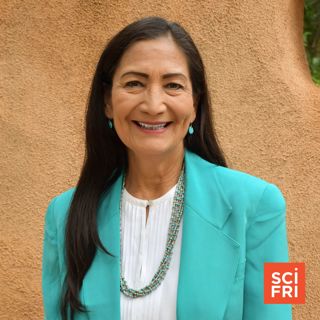
Deb Haaland is a politician, and proud of it

Deb Haaland is a politician, and proud of it

Former Interior Secretary Deb Haaland, a member of the Laguna Pueblo tribe, was the first Native person to hold a cabinet position. Now she’s running to be governor of New Mexico.  Haaland joins Host ...

10 Aug 17min

Sitting all day is terrible for us. Moving a little can help

Sitting all day is terrible for us. Moving a little can help

Keeping your butt in a seat for hours a day increases the risk of heart attacks, diabetes, psychiatric conditions, and more. But in our tech-filled world, many of us lead sedentary lives, whether beca...

7 Aug 18min

A Nagasaki survivor and physician recounts his life's work

A Nagasaki survivor and physician recounts his life's work

Dr. Masao Tomonaga was only 2 years old when the United States bombed his home city of Nagasaki. He survived, and grew up to become a physician for other survivors, known as hibakusha. He also studied...

6 Aug 18min

Populärt inom Vetenskap

p3-dystopia
dumma-manniskor
allt-du-velat-veta
hacka-livet
bildningspodden
rss-vetenskapsradion
medicinvetarna
rss-ufobortom-rimligt-tvivel
sexet
ufo-sverige
rss-vetenskapsradion-2
halsorevolutionen
paranormalt-med-caroline-giertz
svd-nyhetsartiklar
det-morka-psyket
vetenskapsradion
ufo-sverige-2
rss-spraket
dumforklarat
rss-kriminologerna