

COVID Near You Citizen Science, Fact-Check Your Feed. March 27, 2020, Part 1
Science Friday27 Mars 2020

COVID Near You Citizen Science, Fact-Check Your Feed. March 27, 2020, Part 1

These days, our newsfeeds are overloaded with stories of the coronavirus. This week, Science Friday continues to dig into the facts behind the speculation—the peer-reviewed studies and reports published by scientists investigating the virus.

But what we know—and don’t know—about the new virus is changing daily, making it hard to keep up. Everyone, for example, wants to know more about possible therapies for treating COVID-19 patients. After President Trump publicly speculated about the tried and true antimalarial drug, hydroxychloroquine, his endorsement sent governors, doctors, and the worried public scrambling to get their hands on the drug. But is there any science to back-up this claim? And what about remdesivir, the antiviral drug that has been used to treat a handful of patients, and is now the subject of several new drug trials?

Angela Rasmussen, associate research scientist and virologist at the Columbia Mailman School of Public Health joins Science Friday once again to break down the science behind the stories.

As suspected and confirmed cases of COVID-19 skyrocket in the United States, testing availability remains limited, leaving people wondering if their cough is something to worry about. But testing isn’t just a balm for anxiety—public health officials need data about how far the new virus has spread to make decisions about how to best protect people, and where to send critical resources, like masks and gowns. Accurate information is the frontline of defense, but scientists still have pressing questions about the novel disease. For instance, how many people who are infected actually have symptoms? If you do have symptoms, how likely are you to get severely sick?

Until we are able to test both healthy and symptomatic people at scale, citizen science can help fill the gaps in tracking who has COVID-19. And the public health team that launched Flu Near You to track seasonal flu symptoms is now doing just that: soliciting your symptoms in the Covid Near You project.

Covid Near You co-founder John Brownstein of Boston Children’s Hospital explains what questions the project may help answer, and what trends Covid Near You will track—including why this data is so valuable to public health efforts. Sign up at www.covidnearyou.org to report how you’re feeling—whether you’re healthy or have symptoms.

Subscribe to this podcast. Follow our show on Instagram, TikTok, Facebook, and Bluesky @scifri and sign up for our newsletters. Got a science question that’s keeping you up at night? Call us: 877-472-4374


Hosted by Simplecast, an AdsWizz company. See pcm.adswizz.com for information about our collection and use of personal data for advertising.

Det här avsnittet är hämtat från ett öppet RSS-flöde och publiceras inte av Podme. Det kan innehålla reklam.

Avsnitt(1380)

Colorado’s snow drought deals a major blow to recreation

Colorado’s snow drought deals a major blow to recreation

Winter in Colorado looked very different this year. Many parts of the state experienced record-high temperatures and record-low snowpack, which had downstream effects on farming, sports, tourism, and ...

17 Aug 11min
How do you find a ‘lost’ species?

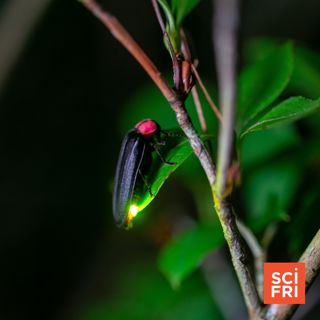
How do you find a ‘lost’ species?

The earth is facing a biodiversity crisis, and there’s a lot of attention on species that are threatened, or at risk of dying out completely. But, there’s another critter category that’s a little more...

14 Aug 18min
What we get wrong about vaccine hesitancy

What we get wrong about vaccine hesitancy

President Trump has signed an executive order calling for a change to the childhood vaccination schedule. Specifically, he wants to separate the MMR vaccine, which protects against measles, mumps, and...

13 Aug 12min

Why this lab studies the speed of bug pee and other curiosities

Why this lab studies the speed of bug pee and other curiosities

In a lab in the Rocky Mountains, a group of scientists is hard at work trying to find answers across biology, physics, and engineering: They’re looking into things like the hydrodynamics of insect pee...

12 Aug 18min

Some primates undergo even more extreme childbirth than humans

Some primates undergo even more extreme childbirth than humans

Human childbirth is often difficult and incredibly painful—just ask anyone who’s been through it. And for a long time, childbirth seemed to be uniquely difficult for humans. But a new study suggests t...

11 Aug 11min
Deb Haaland is a politician, and proud of it

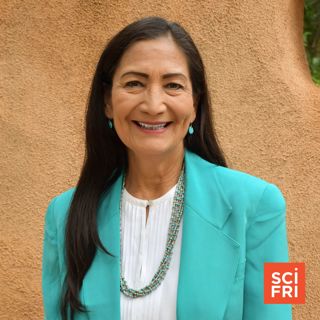
Deb Haaland is a politician, and proud of it

Former Interior Secretary Deb Haaland, a member of the Laguna Pueblo tribe, was the first Native person to hold a cabinet position. Now she’s running to be governor of New Mexico.  Haaland joins Host ...

10 Aug 17min

Sitting all day is terrible for us. Moving a little can help

Sitting all day is terrible for us. Moving a little can help

Keeping your butt in a seat for hours a day increases the risk of heart attacks, diabetes, psychiatric conditions, and more. But in our tech-filled world, many of us lead sedentary lives, whether beca...

7 Aug 18min

A Nagasaki survivor and physician recounts his life's work

A Nagasaki survivor and physician recounts his life's work

Dr. Masao Tomonaga was only 2 years old when the United States bombed his home city of Nagasaki. He survived, and grew up to become a physician for other survivors, known as hibakusha. He also studied...

6 Aug 18min

Populärt inom Vetenskap

p3-dystopia
dumma-manniskor
allt-du-velat-veta
hacka-livet
bildningspodden
rss-vetenskapsradion
medicinvetarna
rss-ufobortom-rimligt-tvivel
sexet
ufo-sverige
rss-vetenskapsradion-2
halsorevolutionen
paranormalt-med-caroline-giertz
svd-nyhetsartiklar
det-morka-psyket
vetenskapsradion
ufo-sverige-2
rss-spraket
dumforklarat
rss-kriminologerna