Squid Lighting, Tongue Microbiome, Invasive Herbivores. March 27, 2020, Part 2
Science Friday27 Mars 2020

Squid Lighting, Tongue Microbiome, Invasive Herbivores. March 27, 2020, Part 2

How Humboldt Squid Talk To Each Other In The Dark

Cephalopods are masters of changing their bodies in response to their environments—from camouflaging to sending warning signals to predators. The art of their visual deception lies deep within their skin. They can change their skin to different colors, textures, and patterns to communicate with other animals and each other. But how does this play out in the darkness of the deep ocean? That’s the question a team of scientists studied in the deep diving Humboldt squid that lives over 2,000 feet beneath the ocean’s surface. Their results were published this week in the journal Proceedings of the National Academy of Sciences. Biologist Benjamin Burford, who is an author on that study, explains how Humboldt squid use a combination of skin color patterns and bioluminescence to send each other signals and what this might teach us about communication in the deep ocean. See a video and more photos of Humboldt squid communicating with each other from Monterey Bay Aquarium Research Institute.

Mapping The Microbiome Of Your Tongue

Your mouth is home to billions of bacteria—some prefer to live on the inside of the cheeks, while others prefer the teeth, some the gums, or the surface of the tongue. Writing this week in the journal Cell Reports, researchers describe their efforts to map out the various communities of bacteria that inhabit the tongue.

In the average mouth, around two dozen different types of bacteria form tiny “microbial skyscrapers” on your tongue’s surface, clustered around a central core made up of individual human skin cells. The researchers are mapping out the locations of the tiny bacterial colonies within those skyscrapers, to try to get a better understanding of the relationships and interdependencies between each colony.

Jessica Mark Welch, one of the authors of the report and an associate scientist at the Marine Biological Laboratory in Woods Hole, Massachusetts, talks about what we know about the microbiome of the human mouth, and what researchers would still like to learn.

Rethinking Invasive Species With Pablo Escobar’s Hippos

Colombia is home to an estimated 80 to 100 hippos where they’re an invasive species—hippos are native to Africa. But notorious drug lord Pablo Escobar brought four to the country as part of his private zoo. After his death in 1993, the hippos escaped to the wild where they thrived.

Some locals consider them pests, the government has mulled over getting rid of them, and recent studies have shown that their large amounts of waste is changing the aquatic ecology of Colombia.

But new research has taken a different view, showing that even though hippos are invasive, they might be filling an ecological hole left by large herbivores killed off by humans thousands of years ago. Erick Lundgren, the study’s lead author and a Ph.D. student at the University of Technology in Sydney, Australia, talks about why we should stop thinking of the phrase “invasive species” as inherently bad, and what may be in store for the future of these hippos.

Subscribe to this podcast. Follow our show on Instagram, TikTok, Facebook, and Bluesky @scifri and sign up for our newsletters. Got a science question that’s keeping you up at night? Call us: 877-472-4374


Hosted by Simplecast, an AdsWizz company. See pcm.adswizz.com for information about our collection and use of personal data for advertising.

Det här avsnittet är hämtat från ett öppet RSS-flöde och publiceras inte av Podme. Det kan innehålla reklam.

Avsnitt(1380)

Colorado’s snow drought deals a major blow to recreation

Colorado’s snow drought deals a major blow to recreation

Winter in Colorado looked very different this year. Many parts of the state experienced record-high temperatures and record-low snowpack, which had downstream effects on farming, sports, tourism, and ...

17 Aug 11min
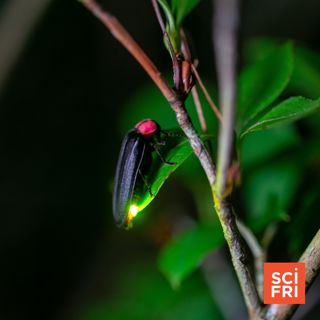
How do you find a ‘lost’ species?

How do you find a ‘lost’ species?

The earth is facing a biodiversity crisis, and there’s a lot of attention on species that are threatened, or at risk of dying out completely. But, there’s another critter category that’s a little more...

14 Aug 18min
What we get wrong about vaccine hesitancy

What we get wrong about vaccine hesitancy

President Trump has signed an executive order calling for a change to the childhood vaccination schedule. Specifically, he wants to separate the MMR vaccine, which protects against measles, mumps, and...

13 Aug 12min

Why this lab studies the speed of bug pee and other curiosities

Why this lab studies the speed of bug pee and other curiosities

In a lab in the Rocky Mountains, a group of scientists is hard at work trying to find answers across biology, physics, and engineering: They’re looking into things like the hydrodynamics of insect pee...

12 Aug 18min
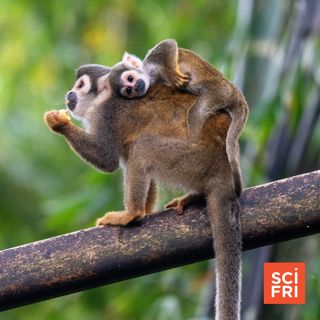
Some primates undergo even more extreme childbirth than humans

Some primates undergo even more extreme childbirth than humans

Human childbirth is often difficult and incredibly painful—just ask anyone who’s been through it. And for a long time, childbirth seemed to be uniquely difficult for humans. But a new study suggests t...

11 Aug 11min
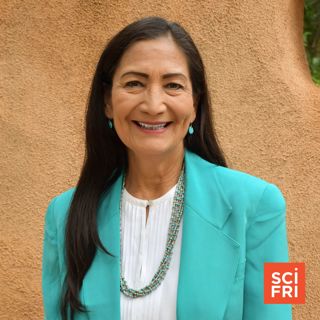
Deb Haaland is a politician, and proud of it

Deb Haaland is a politician, and proud of it

Former Interior Secretary Deb Haaland, a member of the Laguna Pueblo tribe, was the first Native person to hold a cabinet position. Now she’s running to be governor of New Mexico.  Haaland joins Host ...

10 Aug 17min

Sitting all day is terrible for us. Moving a little can help

Sitting all day is terrible for us. Moving a little can help

Keeping your butt in a seat for hours a day increases the risk of heart attacks, diabetes, psychiatric conditions, and more. But in our tech-filled world, many of us lead sedentary lives, whether beca...

7 Aug 18min

A Nagasaki survivor and physician recounts his life's work

A Nagasaki survivor and physician recounts his life's work

Dr. Masao Tomonaga was only 2 years old when the United States bombed his home city of Nagasaki. He survived, and grew up to become a physician for other survivors, known as hibakusha. He also studied...

6 Aug 18min
Populärt inom Vetenskap

p3-dystopia
dumma-manniskor
allt-du-velat-veta
hacka-livet
bildningspodden
rss-vetenskapsradion
medicinvetarna
rss-ufobortom-rimligt-tvivel
sexet
ufo-sverige
rss-vetenskapsradion-2
halsorevolutionen
paranormalt-med-caroline-giertz
svd-nyhetsartiklar
det-morka-psyket
vetenskapsradion
ufo-sverige-2
rss-spraket
dumforklarat
rss-kriminologerna