Facial Recognition, Hummingbird Vision, Moon Lander. June 19, 2020, Part 2
Science Friday19 Juni 2020

Facial Recognition, Hummingbird Vision, Moon Lander. June 19, 2020, Part 2

Protests Shine Light On Facial Recognition Tech Problems

Earlier this month, three major tech companies publicly distanced themselves from the facial recognition tools used by police. IBM CEO Arvind Krishna explained their company's move was because of facial recognition’s use in racial profiling and mass surveillance. Facial recognition algorithms built by companies like Amazon have been found to misidentify people of color, especially women of color, at higher rates—meaning when police use facial recognition to identify suspects who are not white, they are more likely to arrest the wrong person.

Nevertheless, companies have been pitching this technology to the government. CEOs are calling for national laws to govern this technology, or programming solutions to remove the racial biases and other inequities from their code. But there are others who want to ban it entirely—and completely re-envisioning how AI is developed and used in communities.

SciFri producer Christie Taylor talks to Ruha Benjamin, a sociologist, and AI researcher Deborah Raji about the relationship between AI and racial injustice, and their visions for slower, more community-oriented processes for tech and data science.

Hummingbirds See Beyond The Rainbow

Conventional wisdom suggests hummingbirds really like the color red—it’s the reason many commercial hummingbird feeders are made to look like a kind of red blossom. But it turns out that two items that both look “red” to humans may look very different to a hummingbird. That’s because these birds can see colors that humans cannot.

Humans see colors through photoreceptors called cones, and we have three of them for red, green, and blue colors. But most birds, reptiles, and even some fish also have fourth cone that’s sensitive to UV light. That means they can see further into the spectrum than we can, and that they can see “non-spectral colors”—combinations of colors that aren’t directly adjacent on the rainbow, such as red+UV and green+UV.

Mary Caswell Stoddard, an assistant professor of ecology and evolutionary biology at Princeton, set out to study whether hummingbirds actually make use of that ability in their everyday lives. Her team's research was published this week in the academic journal Proceedings of the National Academy of Sciences.

A NASA Rover Is Catching A Private Ride To The Moon

Last week, NASA announced that it had signed a $199.5 million contract with the private company Astrobotic to deliver NASA’s VIPER rover to the moon in 2023. The company will be responsible for the rover for getting the rover from Earth into space, up until the moment the rover rolls onto the lunar surface near the moon’s south pole. The rover is designed to explore for water and other resources—especially the large stores of water ice that scientists suspect may be frozen in lunar polar regions. Astrobotic CEO John Thornton joins Ira to talk about the challenges of building a new lunar lander, and the increasing involvement of commercial industry in the U.S. space program.

Subscribe to this podcast. Follow our show on Instagram, TikTok, Facebook, and Bluesky @scifri and sign up for our newsletters. Got a science question that’s keeping you up at night? Call us: 877-472-4374


Hosted by Simplecast, an AdsWizz company. See pcm.adswizz.com for information about our collection and use of personal data for advertising.

Det här avsnittet är hämtat från ett öppet RSS-flöde och publiceras inte av Podme. Det kan innehålla reklam.

Avsnitt(1380)

Colorado’s snow drought deals a major blow to recreation

Colorado’s snow drought deals a major blow to recreation

Winter in Colorado looked very different this year. Many parts of the state experienced record-high temperatures and record-low snowpack, which had downstream effects on farming, sports, tourism, and ...

17 Aug 11min

How do you find a ‘lost’ species?

How do you find a ‘lost’ species?

The earth is facing a biodiversity crisis, and there’s a lot of attention on species that are threatened, or at risk of dying out completely. But, there’s another critter category that’s a little more...

14 Aug 18min

What we get wrong about vaccine hesitancy

What we get wrong about vaccine hesitancy

President Trump has signed an executive order calling for a change to the childhood vaccination schedule. Specifically, he wants to separate the MMR vaccine, which protects against measles, mumps, and...

13 Aug 12min

Why this lab studies the speed of bug pee and other curiosities

Why this lab studies the speed of bug pee and other curiosities

In a lab in the Rocky Mountains, a group of scientists is hard at work trying to find answers across biology, physics, and engineering: They’re looking into things like the hydrodynamics of insect pee...

12 Aug 18min
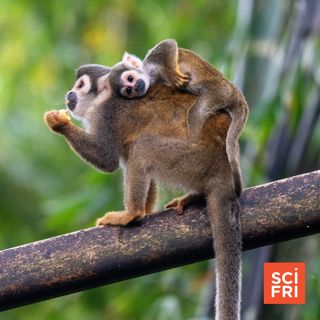
Some primates undergo even more extreme childbirth than humans

Some primates undergo even more extreme childbirth than humans

Human childbirth is often difficult and incredibly painful—just ask anyone who’s been through it. And for a long time, childbirth seemed to be uniquely difficult for humans. But a new study suggests t...

11 Aug 11min
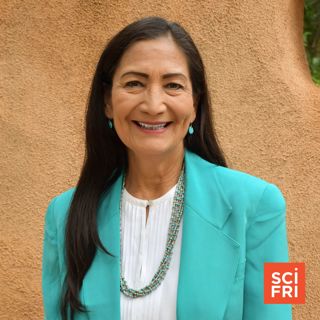
Deb Haaland is a politician, and proud of it

Deb Haaland is a politician, and proud of it

Former Interior Secretary Deb Haaland, a member of the Laguna Pueblo tribe, was the first Native person to hold a cabinet position. Now she’s running to be governor of New Mexico.  Haaland joins Host ...

10 Aug 17min
Sitting all day is terrible for us. Moving a little can help

Sitting all day is terrible for us. Moving a little can help

Keeping your butt in a seat for hours a day increases the risk of heart attacks, diabetes, psychiatric conditions, and more. But in our tech-filled world, many of us lead sedentary lives, whether beca...

7 Aug 18min

A Nagasaki survivor and physician recounts his life's work

A Nagasaki survivor and physician recounts his life's work

Dr. Masao Tomonaga was only 2 years old when the United States bombed his home city of Nagasaki. He survived, and grew up to become a physician for other survivors, known as hibakusha. He also studied...

6 Aug 18min

Populärt inom Vetenskap

dumma-manniskor
p3-dystopia
allt-du-velat-veta
hacka-livet
bildningspodden
rss-vetenskapsradion
rss-ufobortom-rimligt-tvivel
medicinvetarna
halsorevolutionen
rss-vetenskapsradion-2
svd-nyhetsartiklar
sexet
ufo-sverige
paranormalt-med-caroline-giertz
vetenskapsradion
det-morka-psyket
psykologisk-forskning
rss-kriminologerna
barnpsykologerna
pojkmottagningen