Great Indoors, Science Museums, Who Owns The Sky. July 10, 2020, Part 2
Science Friday10 Juli 2020

Great Indoors, Science Museums, Who Owns The Sky. July 10, 2020, Part 2

A whole lot of folks’ summer plans have been cut short this season. Maybe you were planning a family road trip to visit a national park. Or your local science museum. Now, you can watch from home, as Emily Graslie, executive producer, host, and writer for the PBS series “Prehistoric Road Trip,” takes us along for the ride to some of the big geologic sites across the country. She talks about the future of museums and science communication. “Prehistoric Road Trip” is currently streaming on pbs.org.

There’s a whole thriving, diverse microbiome that lives in your home. One 2010 study of North Carolina homes found an average of 2,000 types of microbes per house. And there’s likely a menagerie of arthropods living with you, too. Another study found that homes contain an average population of about a hundred invertebrate species, including spiders, mites, earwigs, cockroaches, and moths.

There’s no need to panic: These thriving ecosystems are doing us more good than we give them credit for. Children who grow up exposed to an abundance of microbes are less sensitive to allergens, and appear to have better developed immune systems throughout their lives. Science journalist Emily Anthes talks about the indoor microbiome in her new book, The Great Indoors: The Surprising Science of How Buildings Shape Our Behavior, Health, and Happiness. She joins Ira to discuss what she learned about the unique microbiome of her own home while writing the book, and the vast biodiversity of the indoors.

In the last year, Elon Musk’s SpaceX company has launched more than 500 small satellites, the beginning of a project that Musk says will create a worldwide network of internet access for those who currently lack it. But there’s a problem: The reflective objects in their low-earth orbit shine brighter than actual stars in the 90 minutes after sunset. In astronomical images taken during these times, the ‘constellations’ of closely grouped satellites show up as bright streaks of light that distort images of far-away galaxies.

With SpaceX planning to launch up to 12,000 satellites, and other companies contemplating thousands more, the entire night sky might change—and not just at twilight. Astronomers have voiced concerns that these satellites will disrupt sensitive data collection needed to study exoplanets, near-earth asteroids, dark matter, and more. And there’s another question on the minds of scientists, photographers, Indigenous communities, and everyone else who places high value on the darkness of the night sky: Who gets to decide to put all these objects in space in the first place?

Astronomers Aparna Venkatesan and James Lowenthal discuss the risks of too many satellites, both to science and culture, and why it may be time to update the laws that govern space to include more voices. Plus, astronomer Annette Lee of the Lakota tribe sends a message about her cultural relationship with the night sky.

Plus, NASA is asking amateur astronomers and photography enthusiasts to take as many pictures as they can of the Starlink “streaks.” You can help NASA document the night sky—and the changes happening there—by uploading your sky photos to the Satellite Streak Watcher research project. All you need to get started is a digital camera or smartphone, a tripod, and a long exposure on a clear evening. Click here to participate!

Subscribe to this podcast. Follow our show on Instagram, TikTok, Facebook, and Bluesky @scifri and sign up for our newsletters. Got a science question that’s keeping you up at night? Call us: 877-472-4374


Hosted by Simplecast, an AdsWizz company. See pcm.adswizz.com for information about our collection and use of personal data for advertising.

Det här avsnittet är hämtat från ett öppet RSS-flöde och publiceras inte av Podme. Det kan innehålla reklam.

Avsnitt(1380)

Colorado’s snow drought deals a major blow to recreation

Colorado’s snow drought deals a major blow to recreation

Winter in Colorado looked very different this year. Many parts of the state experienced record-high temperatures and record-low snowpack, which had downstream effects on farming, sports, tourism, and ...

17 Aug 11min

How do you find a ‘lost’ species?

How do you find a ‘lost’ species?

The earth is facing a biodiversity crisis, and there’s a lot of attention on species that are threatened, or at risk of dying out completely. But, there’s another critter category that’s a little more...

14 Aug 18min

What we get wrong about vaccine hesitancy

What we get wrong about vaccine hesitancy

President Trump has signed an executive order calling for a change to the childhood vaccination schedule. Specifically, he wants to separate the MMR vaccine, which protects against measles, mumps, and...

13 Aug 12min

Why this lab studies the speed of bug pee and other curiosities

Why this lab studies the speed of bug pee and other curiosities

In a lab in the Rocky Mountains, a group of scientists is hard at work trying to find answers across biology, physics, and engineering: They’re looking into things like the hydrodynamics of insect pee...

12 Aug 18min
Some primates undergo even more extreme childbirth than humans

Some primates undergo even more extreme childbirth than humans

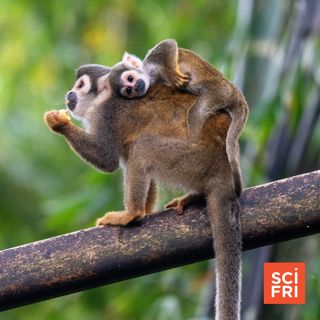
Human childbirth is often difficult and incredibly painful—just ask anyone who’s been through it. And for a long time, childbirth seemed to be uniquely difficult for humans. But a new study suggests t...

11 Aug 11min
Deb Haaland is a politician, and proud of it

Deb Haaland is a politician, and proud of it

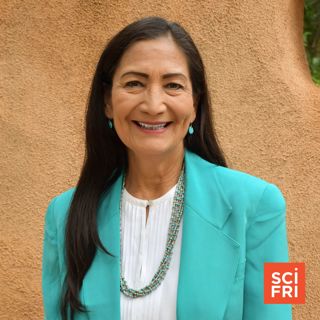
Former Interior Secretary Deb Haaland, a member of the Laguna Pueblo tribe, was the first Native person to hold a cabinet position. Now she’s running to be governor of New Mexico.  Haaland joins Host ...

10 Aug 17min
Sitting all day is terrible for us. Moving a little can help

Sitting all day is terrible for us. Moving a little can help

Keeping your butt in a seat for hours a day increases the risk of heart attacks, diabetes, psychiatric conditions, and more. But in our tech-filled world, many of us lead sedentary lives, whether beca...

7 Aug 18min

A Nagasaki survivor and physician recounts his life's work

A Nagasaki survivor and physician recounts his life's work

Dr. Masao Tomonaga was only 2 years old when the United States bombed his home city of Nagasaki. He survived, and grew up to become a physician for other survivors, known as hibakusha. He also studied...

6 Aug 18min

Populärt inom Vetenskap

dumma-manniskor
p3-dystopia
allt-du-velat-veta
hacka-livet
bildningspodden
rss-vetenskapsradion
rss-ufobortom-rimligt-tvivel
medicinvetarna
halsorevolutionen
rss-vetenskapsradion-2
svd-nyhetsartiklar
sexet
ufo-sverige
paranormalt-med-caroline-giertz
vetenskapsradion
det-morka-psyket
psykologisk-forskning
rss-kriminologerna
barnpsykologerna
pojkmottagningen