Trump Tests Positive For Coronavirus, COVID-19 Fact Check, SciFri Book Club. Oct. 2, 2020, Part 1
Science Friday2 Okt 2020

Trump Tests Positive For Coronavirus, COVID-19 Fact Check, SciFri Book Club. Oct. 2, 2020, Part 1

The news hit us overnight: President Trump, the First Lady, and at least one member of the president’s staff tested positive for COVID-19.

Just before 1 a.m. ET, the president tweeted that “Tonight, @FLOTUS and I tested positive for COVID-19. We will begin our quarantine and recovery process immediately. We will get through this TOGETHER!”

Sean Conley, the White House physician, confirmed the positive COVID test and said that, “The President and First Lady are both well at this time, and they plan to remain at home within the White House during their convalescence.” The president reportedly has mild symptoms of the virus.

Joining Ira to talk about the medical ramifications and possibilities presented by the president’s infection with COVID-19 is Angela Rasmussen, an associate research scientist in the Columbia University Mailman School of Public Health in New York, New York.

Plus, this week, the U.S. had its first televised presidential debate of the election season. It was interesting, to say the least. During the debate, the President’s COVID-19 response came under question, prompting President Trump to allege the U.S. is just weeks away from a COVID-19 vaccine.

This isn’t the first time Trump has claimed something along these lines. In fact, he’s repeatedly said he wants a vaccine before election day. But is rushing out a vaccine possible—or safe?

Joining Ira for another round of Fact Check Your Feed—election edition, this time—is Angela Rasmussen, associate professor in the Columbia Mailman School of Public Health in New York, New York. She also explains why New York City has not yet reached herd immunity, and fact checks Trump’s claims that the Obama administration botched its H1N1 response.

And, the Science Friday Book Club is back! Imagine: A planet inhabited by parasitic life forms that turn human settlers into demonic figures. An aging woman who just wants to live in peace in a “dumb house” with no technological upgrades. A woman who starts to experience the presence of otherworldly visitors. A taxi driver who takes tourists from other planets on rides far above the New York City skyline.

And, in the case of Darcie Little Badger’s short story “Kelsey and the Burdened Breath,” a young woman helps the last breaths of the dying, literally their souls or “shimmers,” depart for the next adventure. That is, until she is asked to track down one that has committed the unthinkable: murder and cannibalism of other souls.

All these are stories in the Nisi Shawl-edited collection, New Suns: Original Speculative Fiction By People Of Color, this fall’s Science Friday Book Club pick. Over the next five weeks, we’ll talk about stories from the book, starting with Little Badger’s story about burdens—literal, metaphorical, and metaphysical.

SciFri Book Club captain Christie Taylor kicks off the first in of a series of conversations about short stories from New Suns with Aisha Matthews, managing editor of The Journal of Science Fiction, and Darcie Little Badger, a Lipan Apache writer and author of the New Suns story “Kelsey and the Burdened Breath.”

Subscribe to this podcast. Follow our show on Instagram, TikTok, Facebook, and Bluesky @scifri and sign up for our newsletters. Got a science question that’s keeping you up at night? Call us: 877-472-4374


Hosted by Simplecast, an AdsWizz company. See pcm.adswizz.com for information about our collection and use of personal data for advertising.

Det här avsnittet är hämtat från ett öppet RSS-flöde och publiceras inte av Podme. Det kan innehålla reklam.

Avsnitt(1381)

What can moments of lucidity teach us about Alzheimer’s?

What can moments of lucidity teach us about Alzheimer’s?

Watching a loved one with Alzheimer's or dementia slowly lose their cognitive abilities can be heartbreaking. While the person you once knew seems to be slipping away, sometimes people with Alzheimer'...

18 Aug 17min

Colorado’s snow drought deals a major blow to recreation

Colorado’s snow drought deals a major blow to recreation

Winter in Colorado looked very different this year. Many parts of the state experienced record-high temperatures and record-low snowpack, which had downstream effects on farming, sports, tourism, and ...

17 Aug 11min
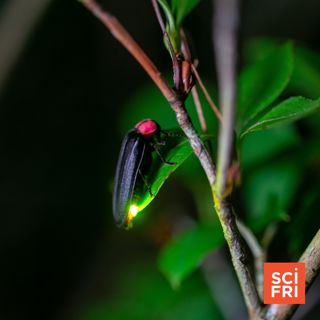
How do you find a ‘lost’ species?

How do you find a ‘lost’ species?

The earth is facing a biodiversity crisis, and there’s a lot of attention on species that are threatened, or at risk of dying out completely. But, there’s another critter category that’s a little more...

14 Aug 18min
What we get wrong about vaccine hesitancy

What we get wrong about vaccine hesitancy

President Trump has signed an executive order calling for a change to the childhood vaccination schedule. Specifically, he wants to separate the MMR vaccine, which protects against measles, mumps, and...

13 Aug 12min

Why this lab studies the speed of bug pee and other curiosities

Why this lab studies the speed of bug pee and other curiosities

In a lab in the Rocky Mountains, a group of scientists is hard at work trying to find answers across biology, physics, and engineering: They’re looking into things like the hydrodynamics of insect pee...

12 Aug 18min

Some primates undergo even more extreme childbirth than humans

Some primates undergo even more extreme childbirth than humans

Human childbirth is often difficult and incredibly painful—just ask anyone who’s been through it. And for a long time, childbirth seemed to be uniquely difficult for humans. But a new study suggests t...

11 Aug 11min
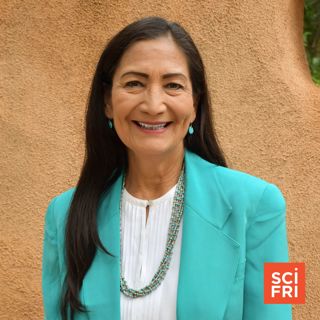
Deb Haaland is a politician, and proud of it

Deb Haaland is a politician, and proud of it

Former Interior Secretary Deb Haaland, a member of the Laguna Pueblo tribe, was the first Native person to hold a cabinet position. Now she’s running to be governor of New Mexico.  Haaland joins Host ...

10 Aug 17min
Sitting all day is terrible for us. Moving a little can help

Sitting all day is terrible for us. Moving a little can help

Keeping your butt in a seat for hours a day increases the risk of heart attacks, diabetes, psychiatric conditions, and more. But in our tech-filled world, many of us lead sedentary lives, whether beca...

7 Aug 18min

Populärt inom Vetenskap

dumma-manniskor
p3-dystopia
allt-du-velat-veta
hacka-livet
bildningspodden
rss-vetenskapsradion
rss-ufobortom-rimligt-tvivel
medicinvetarna
halsorevolutionen
rss-vetenskapsradion-2
svd-nyhetsartiklar
sexet
ufo-sverige
paranormalt-med-caroline-giertz
vetenskapsradion
det-morka-psyket
psykologisk-forskning
rss-kriminologerna
barnpsykologerna
pojkmottagningen