Teaching in a Pandemic, Inheriting Stress, Book Club. Oct 23, 2020, Part 2
Science Friday23 Okt 2020

Teaching in a Pandemic, Inheriting Stress, Book Club. Oct 23, 2020, Part 2

Even In A Pandemic, Science Class Is In Session

This academic year, school campuses across the United States look very different. Instead of crowded hallways and bustling classrooms, students are spaced six feet apart, sometimes behind plastic barriers, while others are at home on camera in a video call. Since some states do not weigh in on school operations, communities witnessed a myriad of learning approaches, such as fully virtual, fully in-person, or a mixture of both. All are subject to change as COVID-19 rates fluctuate throughout regions. For instance, on October 1, all New York City public schools reopened and shifted 500,000 students to in-person class. Meanwhile, on Wednesday, October 21, Boston Public Schools announced that it suspended all in-person learning as numbers of COVID-19 cases rose in the region.

Teachers, students, parents, caregivers, and staff have all felt the stress and uncertainty during the COVID-19 pandemic. The situation is academically, mentally, and emotionally overwhelming. While the pandemic has presented many challenges in learning, STEAM educators are adapting. They are coming up with creative solutions to continue to meet the needs of all students, like holding outdoor biology classes, dissecting flowers at home, and even delivering materials and devices to students who need them.

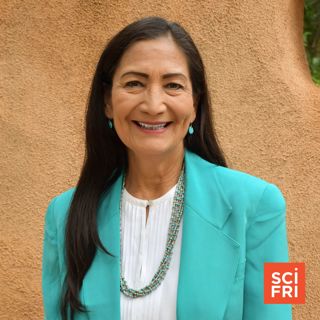
STEAM educators Rabiah Harris, Josa Rivas, and Rick Erickson join Ira for a roundtable discussion on how the pandemic has impacted school this academic year.

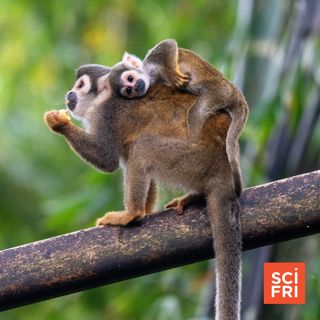
Can Trauma Today Affect Future Children?

We typically think of a traumatic event as a sudden thing—something that has a beginning and an end. Stress and trauma can of course have lasting psychological effects—and, in some cases, physical effects such as elevated blood pressure or premature aging. But now researchers are considering whether stress to an organism can be somehow transmitted to that animal’s future offspring, via epigenetic changes that modify how genetic code is expressed in the young.

Bianca Jones Marlin is a neuroscientist studying such changes. In one study, she found that if researchers trained mice to associate the smell of almonds with an electric shock, the offspring of the mice tended to be afraid of an almond smell—even if they were raised separately, by foster parents that had no experience with the odor.

Jones Marlin joins Ira to talk about her research, and her experience as a young researcher starting her own lab in the neurosciences.

Making Peace With The End Of Your Species

Welcome to week four of the Science Friday Book Club’s reading of ‘New Suns’! Our last short story assignment is ‘The Shadow We Cast Through Time’ by Indian writer Indrapramit Das. On a far-off planet, a human colony has been cut off from the rest of space: but they’ve also encountered other life, a fungus-like organism that infects and distorts human bodies into horned “demon”-like creatures. And as one human woman, Surya, approaches her death at their hands willingly, she makes a discovery that speaks of a new future for both species.

Author Indrapramit Das joins SciFri producer Christie Taylor and Journal of Science Fiction managing editor Aisha Matthews to talk about creating new worlds, and the “modern mythology” of writing science fiction and fantasy.

Subscribe to this podcast. Follow our show on Instagram, TikTok, Facebook, and Bluesky @scifri and sign up for our newsletters. Got a science question that’s keeping you up at night? Call us: 877-472-4374


Hosted by Simplecast, an AdsWizz company. See pcm.adswizz.com for information about our collection and use of personal data for advertising.

Det här avsnittet är hämtat från ett öppet RSS-flöde och publiceras inte av Podme. Det kan innehålla reklam.

Avsnitt(1338)

Why do sports announcers talk like that?

Why do sports announcers talk like that?

If you watch sports, whether the recent NBA finals or the ongoing World Cup matches, you may have noticed that the athletes aren’t the only ones putting on a show. The announcers seem to be playing a ...

19 Juni 13min

Swords, cannibalism, poison: inside the world of killer microbes

Swords, cannibalism, poison: inside the world of killer microbes

There is a murderous crime spree happening right under—and perhaps inside—our noses. Killer microbes armed with weapons are eviscerating, assassinating, and detonating their fellow microbes. And the n...

18 Juni 21min

When music transports you to a different place

When music transports you to a different place

Do you ever hear a song that transports you to a specific place and time? This auditory wormhole has a name: musical daydreams. Music cognition expert Elizabeth Margulis studies why they happen, and w...

17 Juni 18min

A vast whale graveyard + Zombie sea cucumbers

A vast whale graveyard + Zombie sea cucumbers

Researchers just published details of a massive undersea graveyard of whales deep in the Indian Ocean. Spanning about 1,200 kilometers (745 miles), it contains whale remains dating back more than 5 mi...

16 Juni 18min

Should we bring mountain lions back to the Northeast?

Should we bring mountain lions back to the Northeast?

Big cats used to roam the entire United States. You might know them as mountain lions, pumas, cougars, or catamounts. Though they go by many names, they're actually all the same species.  Their curren...

15 Juni 12min

Blue Origin explosion hits NASA timeline + Artemis III crew

Blue Origin explosion hits NASA timeline + Artemis III crew

When Blue Origin’s New Glenn spacecraft exploded in an enormous fireball during a ground test a couple weeks ago, it sent shockwaves not only through the air, but through NASA’s timeline for the upcom...

12 Juni 12min

Why can I handle tequila but not rum?

Why can I handle tequila but not rum?

‘Tis the season for porch beers and happy hours, and we’re taking on listener questions about how alcohol affects us. Like, is a glass of wine at dinner really good for you? And why do sugary drinks g...

11 Juni 21min

AI + turfgrass science in the most high-tech World Cup yet

AI + turfgrass science in the most high-tech World Cup yet

The 2026 World Cup will be the largest one yet, and FIFA is trying to make it the most high-tech, too. The federation has partnered with tech giant Lenovo to launch Football AI Pro, which is designed ...

10 Juni 19min

Populärt inom Vetenskap

p3-dystopia
dumma-manniskor
doden-hjarnan-kemisten
allt-du-velat-veta
kapitalet-en-podd-om-ekonomi
medicinvetarna
rss-kriminologerna
rss-ufobortom-rimligt-tvivel
sexet
svd-nyhetsartiklar
rss-vetenskapsradion-2
dumforklarat
ufo-sverige
bildningspodden
rss-vetenskapsradion
rss-spraket
4health-med-anna-sparre
hacka-livet
vetenskapsradion
rss-ronden