
Book Club Finale, Floating Nuclear Plants. Oct 30, 2020, Part 2
Science Friday30 Okt 2020

Book Club Finale, Floating Nuclear Plants. Oct 30, 2020, Part 2

Pushing Boundaries In Fantastical Fiction

The Science Friday Book Club has spent all of October immersed in short stories by Indigenous, Black, Chicanx and South Asian authors. But at the end of the day, where do these stories fit in the bigger picture of fiction writing in 2020?

In the final conversation of this fall’s speculative fiction focus, SciFri’s Book Club joins writer and ‘New Suns’ editor Nisi Shawl in a conversation about the expanding footprint of writers of color in science fiction and fantasy, and the ways both science and science fiction can be re-imagined and redefined when you look outside of the perspectives of white, Western authors who have dominated these genres in the past.

Shawl suggests broadening what stories we call science fiction. What happens when we think of writing, or even religion, as forms of technology?

SciFri producer Christie Taylor and Journal of Science Fiction editor Aisha Matthews join Nisi Shawl in front of a live Zoom audience for this conversation about the diverse and dynamic future of science fiction.

Shipping Nuclear Power Out To Sea

When the Green New Deal was proposed last year, it called for the United States to become fully energy independent, moving to 100% renewable energy sources within the next decade. It specifically mentions solar and wind power as two alternatives the country should invest in. And it conspicuously leaves out nuclear power.

But the nuclear industry is fighting to be part of the renewable conversation. While it’s been innovating at a slower pace, there is one old idea that engineers say still holds water: floating nuclear power plants.

Ira talks to Nick Touran, a nuclear engineer and reactor physicist from Seattle, Washington about the advantages of shipping nuclear out to sea, as well as some newer technology keeping nuclear power in the renewable energy conversation.

Subscribe to this podcast. Follow our show on Instagram, TikTok, Facebook, and Bluesky @scifri and sign up for our newsletters. Got a science question that’s keeping you up at night? Call us: 877-472-4374


Hosted by Simplecast, an AdsWizz company. See pcm.adswizz.com for information about our collection and use of personal data for advertising.

Det här avsnittet är hämtat från ett öppet RSS-flöde och publiceras inte av Podme. Det kan innehålla reklam.

Avsnitt(1381)

What can moments of lucidity teach us about Alzheimer’s?

What can moments of lucidity teach us about Alzheimer’s?

Watching a loved one with Alzheimer's or dementia slowly lose their cognitive abilities can be heartbreaking. While the person you once knew seems to be slipping away, sometimes people with Alzheimer'...

18 Aug 17min
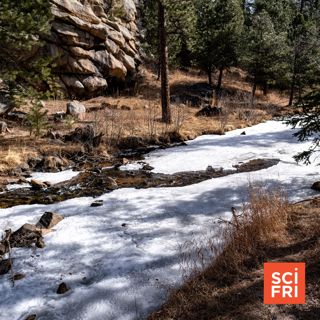
Colorado’s snow drought deals a major blow to recreation

Colorado’s snow drought deals a major blow to recreation

Winter in Colorado looked very different this year. Many parts of the state experienced record-high temperatures and record-low snowpack, which had downstream effects on farming, sports, tourism, and ...

17 Aug 11min
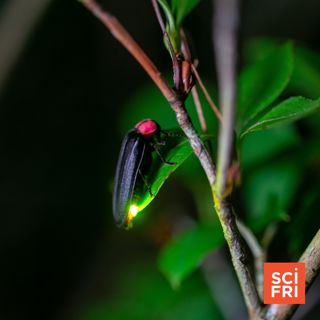
How do you find a ‘lost’ species?

How do you find a ‘lost’ species?

The earth is facing a biodiversity crisis, and there’s a lot of attention on species that are threatened, or at risk of dying out completely. But, there’s another critter category that’s a little more...

14 Aug 18min
What we get wrong about vaccine hesitancy

What we get wrong about vaccine hesitancy

President Trump has signed an executive order calling for a change to the childhood vaccination schedule. Specifically, he wants to separate the MMR vaccine, which protects against measles, mumps, and...

13 Aug 12min

Why this lab studies the speed of bug pee and other curiosities

Why this lab studies the speed of bug pee and other curiosities

In a lab in the Rocky Mountains, a group of scientists is hard at work trying to find answers across biology, physics, and engineering: They’re looking into things like the hydrodynamics of insect pee...

12 Aug 18min

Some primates undergo even more extreme childbirth than humans

Some primates undergo even more extreme childbirth than humans

Human childbirth is often difficult and incredibly painful—just ask anyone who’s been through it. And for a long time, childbirth seemed to be uniquely difficult for humans. But a new study suggests t...

11 Aug 11min
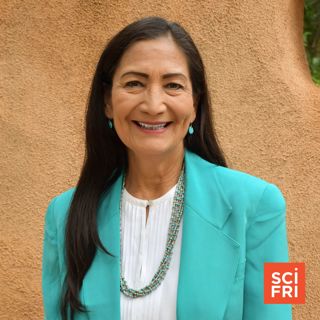
Deb Haaland is a politician, and proud of it

Deb Haaland is a politician, and proud of it

Former Interior Secretary Deb Haaland, a member of the Laguna Pueblo tribe, was the first Native person to hold a cabinet position. Now she’s running to be governor of New Mexico.  Haaland joins Host ...

10 Aug 17min

Sitting all day is terrible for us. Moving a little can help

Sitting all day is terrible for us. Moving a little can help

Keeping your butt in a seat for hours a day increases the risk of heart attacks, diabetes, psychiatric conditions, and more. But in our tech-filled world, many of us lead sedentary lives, whether beca...

7 Aug 18min

Populärt inom Vetenskap

dumma-manniskor
p3-dystopia
allt-du-velat-veta
hacka-livet
bildningspodden
rss-vetenskapsradion
rss-ufobortom-rimligt-tvivel
medicinvetarna
halsorevolutionen
rss-vetenskapsradion-2
svd-nyhetsartiklar
sexet
ufo-sverige
paranormalt-med-caroline-giertz
vetenskapsradion
det-morka-psyket
psykologisk-forskning
rss-kriminologerna
barnpsykologerna
pojkmottagningen