Ancient Algae, COVID Holidays, Accessible Pregnancy Test. Nov 6, 2020, Part 2
Science Friday6 Nov 2020

Ancient Algae, COVID Holidays, Accessible Pregnancy Test. Nov 6, 2020, Part 2

How Algae Survived A Mass Extinction

Sixty-six million years ago when an asteroid slammed into what is now the Yucatan peninsula, it set off a period of near global darkness for almost two years. Scientists think a majority of land species went extinct during that time, but what was going on in the planet’s oceans? And how were these ecosystems able to bounce back?

In a new paper published in Science Advances, researchers say what saved Earth’s oceans may have been a type of algae that could hunt for food. Ira is joined by one of the paper’s authors, Andrew Ridgwell, a professor of earth system science at the University of California, Riverside, to discuss the little algae that could.

Gathering Together (Carefully) For A Pandemic Holiday

The winter holidays hinge on gatherings of multiple generations of family and friends, indoors, for long periods of time. These are all factors that increase the risk of spreading COVID-19, or unintentionally infecting your loved ones. The CDC now defines a “close contact” as spending 15 minutes within less than 6 feet of an infected person, over the course of 24 hours—encompassing pretty much any holiday gathering.

With Thanksgiving looming, new cases are setting records all over the country, and mayors like New York’s Bill de Blasio are urging people not to travel. Many are rightfully now weighing whether they can in good conscience get together.

Some epidemiologists, including Anthony Fauci, aren’t outright telling people to cancel their holiday plans, even as they worry about a further surge in the pandemic tied to winter gathering. But if you do choose to travel, there are things you can do to reduce the risk you’re taking, like isolating before you go, getting your flu shot, and taking well-timed COVID-19 tests.

Science journalist Kate Baggaley and epidemiologist Julia Marcus discuss how to identify the risks you might encounter, and minimizing those risks you can control—like the choice between driving and flying, how much faith to put in coronavirus testing, and indoor versus outdoor spaces.

This Accessible Pregnancy Test Has Results You Can Touch

Whatever answer you’re hoping for from a pregnancy test, taking one is rarely a low-stress occurrence. And for many who are blind or vision-impaired, taking a pregnancy test can be even more tricky: the tests use visual displays, and often the only solution for knowing the result is to call a friend, family member, or even stranger into a very private moment.

The app Be My Eyes is now partnering with pregnancy test maker ClearBlue to offer volunteer services in reading pregnancy tests—but that still brings a stranger into the process. The UK’s Royal National Institute for the Blind, however, now has a new design for a tactile, accessible test that could be taken privately. It’s colorful, high-contrast, and big enough to use without full sight. And the results appear as bumps that anyone can feel.

SciFri producer Christie Taylor talks to Gizmodo reporter Victoria Song, Blind Motherhood blogger Holly Bonner, and Procter & Gamble accessibility leader Sumaira Latif about the value of accessibility in pregnancy testing, and how a good idea might become an actual product.

Subscribe to this podcast. Follow our show on Instagram, TikTok, Facebook, and Bluesky @scifri and sign up for our newsletters. Got a science question that’s keeping you up at night? Call us: 877-472-4374


Hosted by Simplecast, an AdsWizz company. See pcm.adswizz.com for information about our collection and use of personal data for advertising.

Det här avsnittet är hämtat från ett öppet RSS-flöde och publiceras inte av Podme. Det kan innehålla reklam.

Avsnitt(1381)

What can moments of lucidity teach us about Alzheimer’s?

What can moments of lucidity teach us about Alzheimer’s?

Watching a loved one with Alzheimer's or dementia slowly lose their cognitive abilities can be heartbreaking. While the person you once knew seems to be slipping away, sometimes people with Alzheimer'...

18 Aug 17min

Colorado’s snow drought deals a major blow to recreation

Colorado’s snow drought deals a major blow to recreation

Winter in Colorado looked very different this year. Many parts of the state experienced record-high temperatures and record-low snowpack, which had downstream effects on farming, sports, tourism, and ...

17 Aug 11min
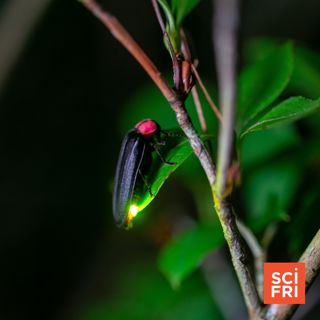
How do you find a ‘lost’ species?

How do you find a ‘lost’ species?

The earth is facing a biodiversity crisis, and there’s a lot of attention on species that are threatened, or at risk of dying out completely. But, there’s another critter category that’s a little more...

14 Aug 18min
What we get wrong about vaccine hesitancy

What we get wrong about vaccine hesitancy

President Trump has signed an executive order calling for a change to the childhood vaccination schedule. Specifically, he wants to separate the MMR vaccine, which protects against measles, mumps, and...

13 Aug 12min

Why this lab studies the speed of bug pee and other curiosities

Why this lab studies the speed of bug pee and other curiosities

In a lab in the Rocky Mountains, a group of scientists is hard at work trying to find answers across biology, physics, and engineering: They’re looking into things like the hydrodynamics of insect pee...

12 Aug 18min
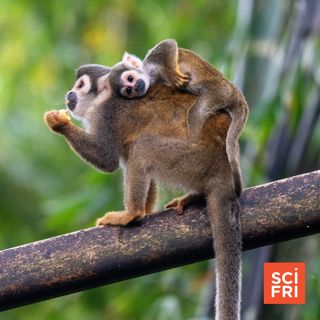
Some primates undergo even more extreme childbirth than humans

Some primates undergo even more extreme childbirth than humans

Human childbirth is often difficult and incredibly painful—just ask anyone who’s been through it. And for a long time, childbirth seemed to be uniquely difficult for humans. But a new study suggests t...

11 Aug 11min
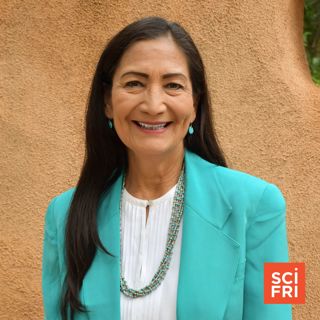
Deb Haaland is a politician, and proud of it

Deb Haaland is a politician, and proud of it

Former Interior Secretary Deb Haaland, a member of the Laguna Pueblo tribe, was the first Native person to hold a cabinet position. Now she’s running to be governor of New Mexico.  Haaland joins Host ...

10 Aug 17min
Sitting all day is terrible for us. Moving a little can help

Sitting all day is terrible for us. Moving a little can help

Keeping your butt in a seat for hours a day increases the risk of heart attacks, diabetes, psychiatric conditions, and more. But in our tech-filled world, many of us lead sedentary lives, whether beca...

7 Aug 18min

Populärt inom Vetenskap

dumma-manniskor
p3-dystopia
allt-du-velat-veta
hacka-livet
bildningspodden
rss-vetenskapsradion
rss-ufobortom-rimligt-tvivel
medicinvetarna
halsorevolutionen
rss-vetenskapsradion-2
svd-nyhetsartiklar
sexet
ufo-sverige
paranormalt-med-caroline-giertz
vetenskapsradion
det-morka-psyket
psykologisk-forskning
rss-kriminologerna
barnpsykologerna
pojkmottagningen