
Greenland Plants, Privacy and Big Data, Rainbows. March 19, 2021, Part 2
Science Friday19 Mars 2021

Greenland Plants, Privacy and Big Data, Rainbows. March 19, 2021, Part 2

Under A Mile Of Ice, A Climate Clue

Scientists studying sediment taken from a core sample of the Greenland ice sheet just 800 miles from the North Pole have found remnants of ancient plants, freeze-dried under more than a mile of ice. Using several different dating techniques, they say the soil, twigs, and leaves date to sometime within the last million years—probably on the order of several hundred thousand years ago—a time when Greenland’s massive ice cap did not exist.

The finding that the ice sheet may have been missing so recently in geologic time provides clues to the stability of the ice, and just how sensitive it might be to modern global warming.

The samples themselves have an unusual history. In the 1960s, the US Army set out to build a base under the surface of the ice in Greenland. Ostensibly, the outpost, named Camp Century, was to be used for research into polar conditions, and how best to work in them. In reality, the US also hoped to secretly bury nuclear missiles under the ice cap within close reach of the Soviet Union. As part of that effort, codenamed Project Iceworm, core samples were taken of the ice and sediment. Year later, those samples would become the basis for this climate study, reported in the journal Proceedings of the National Academy of Sciences.

Drew Christ, one of the authors of that report and a geologist at the University of Vermont, joins Ira to talk about the study, and explain what ancient dirt can teach us about the future climate.

Decrypting Big Tech’s Data Hoard

The era of Big Data promised large-scale analytics of complex sets of information, harnessing the predictive power of finding patterns in the real world behaviors of millions of people.

But as new documentaries like The Social Dilemma, Coded Bias, and other recent critiques point out, the technologies we’ve built to collect data have created their own new problems. Even as powerhouses like Google says it’s done tracking and targeting individual users in the name of better advertising, educational institutions, housing providers, and countless others haven’t stopped.

Ira talks to two researchers, mathematician Cathy O’Neil and law scholar Rashida Richardson, about the places our data is collected without our knowing, the algorithms that may be changing our lives, and how bias can creep into every digital corner.

The Rainbow Connection—To Physics

You may have seen a double rainbow, but did you know there are moonbows at night, and even white rainbows? And did you know, if we stood next together to watch a rainbow, the colors we see are coming from two different sets of droplets in a rain shower. That means each of us have our own unique rainbow. This all has to do with the optics, physics, and atmospheric science, which Steven Businger studies at the University of Hawaii Mānoa.

Rainbows have captured many people’s attention (including Ira’s! Check out the cover of his book featuring rainbow science below). There is equally fascinating physics responsible for those multicolor beams, which Businger describes in a recent study published in Bulletin of the American Meteorological Society. Businger talks about the science behind rainbows, and discusses why Hawaii might be the rainbow capital of the world.

Subscribe to this podcast. Follow our show on Instagram, TikTok, Facebook, and Bluesky @scifri and sign up for our newsletters. Got a science question that’s keeping you up at night? Call us: 877-472-4374


Hosted by Simplecast, an AdsWizz company. See pcm.adswizz.com for information about our collection and use of personal data for advertising.

Det här avsnittet är hämtat från ett öppet RSS-flöde och publiceras inte av Podme. Det kan innehålla reklam.

Avsnitt(1381)

What can moments of lucidity teach us about Alzheimer’s?

What can moments of lucidity teach us about Alzheimer’s?

Watching a loved one with Alzheimer's or dementia slowly lose their cognitive abilities can be heartbreaking. While the person you once knew seems to be slipping away, sometimes people with Alzheimer'...

18 Aug 17min
Colorado’s snow drought deals a major blow to recreation

Colorado’s snow drought deals a major blow to recreation

Winter in Colorado looked very different this year. Many parts of the state experienced record-high temperatures and record-low snowpack, which had downstream effects on farming, sports, tourism, and ...

17 Aug 11min
How do you find a ‘lost’ species?

How do you find a ‘lost’ species?

The earth is facing a biodiversity crisis, and there’s a lot of attention on species that are threatened, or at risk of dying out completely. But, there’s another critter category that’s a little more...

14 Aug 18min
What we get wrong about vaccine hesitancy

What we get wrong about vaccine hesitancy

President Trump has signed an executive order calling for a change to the childhood vaccination schedule. Specifically, he wants to separate the MMR vaccine, which protects against measles, mumps, and...

13 Aug 12min

Why this lab studies the speed of bug pee and other curiosities

Why this lab studies the speed of bug pee and other curiosities

In a lab in the Rocky Mountains, a group of scientists is hard at work trying to find answers across biology, physics, and engineering: They’re looking into things like the hydrodynamics of insect pee...

12 Aug 18min
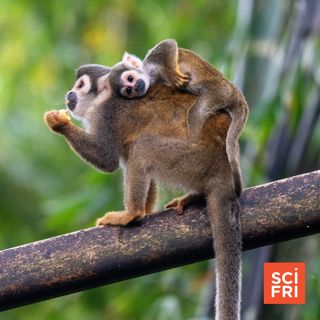
Some primates undergo even more extreme childbirth than humans

Some primates undergo even more extreme childbirth than humans

Human childbirth is often difficult and incredibly painful—just ask anyone who’s been through it. And for a long time, childbirth seemed to be uniquely difficult for humans. But a new study suggests t...

11 Aug 11min
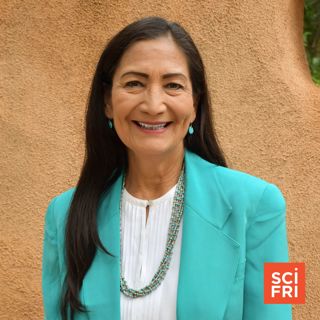
Deb Haaland is a politician, and proud of it

Deb Haaland is a politician, and proud of it

Former Interior Secretary Deb Haaland, a member of the Laguna Pueblo tribe, was the first Native person to hold a cabinet position. Now she’s running to be governor of New Mexico.  Haaland joins Host ...

10 Aug 17min

Sitting all day is terrible for us. Moving a little can help

Sitting all day is terrible for us. Moving a little can help

Keeping your butt in a seat for hours a day increases the risk of heart attacks, diabetes, psychiatric conditions, and more. But in our tech-filled world, many of us lead sedentary lives, whether beca...

7 Aug 18min

Populärt inom Vetenskap

dumma-manniskor
p3-dystopia
allt-du-velat-veta
hacka-livet
bildningspodden
rss-vetenskapsradion
medicinvetarna
halsorevolutionen
svd-nyhetsartiklar
ufo-sverige
rss-vetenskapsradion-2
rss-ufobortom-rimligt-tvivel
sexet
paranormalt-med-caroline-giertz
vetenskapsradion
det-morka-psyket
rss-spraket
rss-kriminologerna
barnpsykologerna
psykologisk-forskning