
Beetles, Wildfires, Woodchip Bioreactor. May 7, 2021, Part 2
Science Friday7 Maj 2021

Beetles, Wildfires, Woodchip Bioreactor. May 7, 2021, Part 2

A Beetle’s Chemical (And Plastic) Romance

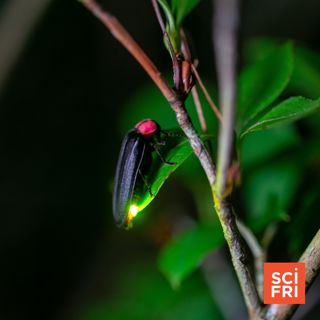
For many species of beetle, the key to finding a mate is scent: Both females and males give off pheromones that signal their species, their sex, and even their maturity level. How do researchers know? In experiments with dead beetles that have been sprayed with female pheromones, live males reliably attempt to mate with the dead insects.

But when one team of researchers based at the Chinese Academy of Sciences in Beijing and Syracuse University in New York tried to investigate whether this was true for the flea beetle Altica flagariae, they got a strange result. Males seemed confused when presented with scented dead beetles, leaving the team wondering if the dead beetles were still exuding their original chemicals. What is a research team to do? They attempted the same experiment, but with 3D-printed replicas. This time, the male beetles seemed clearly attracted to the female scent, the researchers wrote in the journal Chemoecology last month.

Producer Christie Taylor talks to Syracuse University biologist Kari Segraves about the intricacies of studying beetle intimacy, and the implications for evolutionary biology.

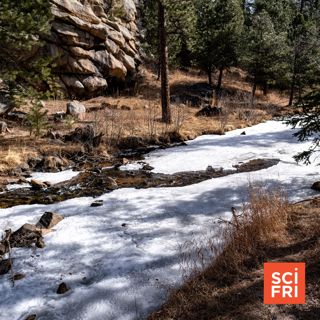
Nature’s Early Warning Signs For A Bad Wildfire Season

Last year, California saw a record breaking wildfire season. Nearly 10,000 fires burned over four million acres in the state.

Now, wildfire researcher Craig Clements is investigating natural indicators, like the chamise plant, for clues to predict what this wildfire season might look like. Normally, the wildfire season peaks during the late summer. This year, he’s observed a lower moisture content in these plants, possibly indicating the fire season may begin earlier.

Clements joins SciFri to explain how landscape, temperatures, drought, and atmospheric conditions all play a role in wildfire risk.

Arctic Wildfires Are Burning An Important Carbon Sink

California wildfires have made national headlines for the last several years, but important—and large—wildfires have also been burning in the forests above the U.S. Canadian border and near the Arctic circle.

A group of researchers wanted to know how these fires affected the northern forests and how this impacted their ability to store carbon. Their results were recently published in the journal Nature Climate Change. Jonathan Wang, an author on that study, discusses what this might mean for future climate change predictions.

Can Woodchips Help The Gulf Of Mexico’s Dead Zone?

In the Gulf of Mexico is an ecological dead zone, caused by algal blooms at the mouth of the Mississippi River. Warmer ocean temperatures provide the perfect conditions for algae to grow out of control, suffocating seagrass beds and killing fish, dolphins, and manatees. Fueling this toxic algae’s growth is nitrogen. The Mississippi river empties into the gulf, and drainage water from farms along it carries fertilizer ingredients—straight into the marine ecosystem.

While farmers have tried using practices to reduce fertilizer runoff, like cover crops, no-till farming and conservation buffers, for decades, the problem has only gotten worse. According to a new paper published in the journal Transactions of the American Society of Agricultural and Biological Engineers, a creative new approach involves denitrifying bioreactors—a system that allows bacteria to help convert nitrate in the water to harmless dinitrogen gas.

“It’s a complicated name, but it’s really a very simple idea,” says Laura Christianson, assistant professor of crop sciences at the University of Illinois at Urbana Champaign, and lead author on the study. She talks with SciFri producer Katie Feather about how a simple system involving woodchips in a trench can help keep nitrogen out of drainage water from farms across the midwest. Katie also speaks to Shirley Johnson, a farm-owner from Peoria, Illinois, about why she adopted the bioreactor technology, and what farmers can do to help their downstream neighbors.

Subscribe to this podcast. Follow our show on Instagram, TikTok, Facebook, and Bluesky @scifri and sign up for our newsletters. Got a science question that’s keeping you up at night? Call us: 877-472-4374


Hosted by Simplecast, an AdsWizz company. See pcm.adswizz.com for information about our collection and use of personal data for advertising.

Det här avsnittet är hämtat från ett öppet RSS-flöde och publiceras inte av Podme. Det kan innehålla reklam.

Avsnitt(1339)

FDA approves a well-known sunscreen ingredient—finally

FDA approves a well-known sunscreen ingredient—finally

The FDA recently approved a sunscreen ingredient called bemotrizinol, or BEMT, that’s been used in Europe and Asia for years. This is the first new sunscreen ingredient approved in the United States i...

22 Juni 12min

Why do sports announcers talk like that?

Why do sports announcers talk like that?

If you watch sports, whether the recent NBA finals or the ongoing World Cup matches, you may have noticed that the athletes aren’t the only ones putting on a show. The announcers seem to be playing a ...

19 Juni 13min

Swords, cannibalism, poison: inside the world of killer microbes

Swords, cannibalism, poison: inside the world of killer microbes

There is a murderous crime spree happening right under—and perhaps inside—our noses. Killer microbes armed with weapons are eviscerating, assassinating, and detonating their fellow microbes. And the n...

18 Juni 21min

When music transports you to a different place

When music transports you to a different place

Do you ever hear a song that transports you to a specific place and time? This auditory wormhole has a name: musical daydreams. Music cognition expert Elizabeth Margulis studies why they happen, and w...

17 Juni 18min

A vast whale graveyard + Zombie sea cucumbers

A vast whale graveyard + Zombie sea cucumbers

Researchers just published details of a massive undersea graveyard of whales deep in the Indian Ocean. Spanning about 1,200 kilometers (745 miles), it contains whale remains dating back more than 5 mi...

16 Juni 18min

Should we bring mountain lions back to the Northeast?

Should we bring mountain lions back to the Northeast?

Big cats used to roam the entire United States. You might know them as mountain lions, pumas, cougars, or catamounts. Though they go by many names, they're actually all the same species.  Their curren...

15 Juni 12min

Blue Origin explosion hits NASA timeline + Artemis III crew

Blue Origin explosion hits NASA timeline + Artemis III crew

When Blue Origin’s New Glenn spacecraft exploded in an enormous fireball during a ground test a couple weeks ago, it sent shockwaves not only through the air, but through NASA’s timeline for the upcom...

12 Juni 12min

Why can I handle tequila but not rum?

Why can I handle tequila but not rum?

‘Tis the season for porch beers and happy hours, and we’re taking on listener questions about how alcohol affects us. Like, is a glass of wine at dinner really good for you? And why do sugary drinks g...

11 Juni 21min

Populärt inom Vetenskap

p3-dystopia
dumma-manniskor
doden-hjarnan-kemisten
allt-du-velat-veta
kapitalet-en-podd-om-ekonomi
medicinvetarna
rss-kriminologerna
rss-ufobortom-rimligt-tvivel
sexet
svd-nyhetsartiklar
rss-vetenskapsradion-2
dumforklarat
ufo-sverige
bildningspodden
rss-vetenskapsradion
rss-spraket
4health-med-anna-sparre
hacka-livet
vetenskapsradion
rss-ronden