
Vaccine Hesitancy, Colorado River Drought, Alternative Syrups. May 28, 2021, Part 1
Science Friday28 Maj 2021

Vaccine Hesitancy, Colorado River Drought, Alternative Syrups. May 28, 2021, Part 1

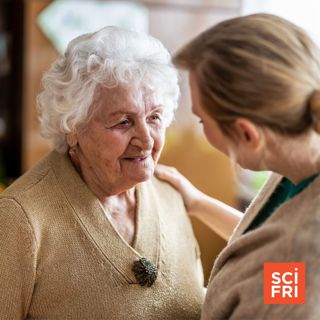
How Do We Overcome Vaccine Hesitancy?

This Memorial Day weekend, many people will be traveling to the beach, hitting the road or socializing with friends—maskless—for the first time in over a year. As of this week, 50% of people over 18 are now fully vaccinated. Another 15 to 20% of people are taking a “wait and see” approach. Of those still on the fence, some are concerned about the vaccine’s side effects; others have a long standing mistrust of the institutions responsible for the vaccine rollout.

In order to fully end the pandemic, public health officials will have to find a way to get the vaccine-hesitant on board. Dr. Gary Bennett, professor of psychology and global health at Duke University sheds light on the hurdles that must be overcome.

And a new segment of the population can now receive the Pfizer vaccine: children 12 years and older, after the Centers for Disease Control and Prevention gave approval in mid-May.

But many American parents don’t want their children vaccinated at all—including for measles or the flu. One recent report from this past April showed that over 30% of parents would wait to get their child vaccinated—nearly double the percentage of adults who were hesitant. Matthew Simonson, a doctoral candidate at Northwestern University and lead author on the report, joins us to break down the numbers.

What Happens When The Colorado River Runs Dry?

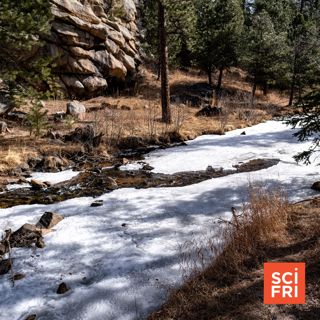
Dry conditions are the worst they’ve been in almost 20 years across the Colorado River watershed, which acts as the drinking and irrigation water supply for 40 million people in the American Southwest.

As the latest round of federal forecasts for the river’s flow shows, it’s plausible, maybe even likely, that the situation could get much worse this year.

Understanding and explaining the depth of the dryness is up to climate scientists throughout the basin.

Read the full article at sciencefriday.com.

Making Syrup From More Than Maple Trees

Researchers at the University of New Hampshire are studying new ways to make syrup out of the northern forest—not from maple trees, but from beeches, birches, sycamores and more. They want to create new markets for an industry that, right now, depends on just one kind of tree—making it vulnerable to disease and climate change.

At the tail end of maple sugaring season, other kinds of sap were still flowing freely in the woods of Lee. UNH researcher David Moore had sensors plugged into a stand of beech trees to measure that sap and the conditions helping produce it.

“You can see I have three trees with sensors here that are all tied back to one data logger,” Moore said, pointing to the tubes and wires running from the beech trunks. Nearby, a bucket collected the resulting sap, while other equipment gathered weather data.

Researchers say monocultures, like the all-maple syrup industry, are more at risk from climate change, pests and other unpredictable threats. So Moore sees untapped potential in other common species, like the American beech. It’s found throughout New Hampshire’s forests, farms and sugar bushes—almost like a tree weed. “If you can think of some economical use—if you can make syrup from them, that would be a nice way to actually generate a little profit from them,” Moore said.

Read the full article at sciencefriday.com.

Big Oil Reckons With Climate Change

Depending on your perspective, Wednesday was a bad day to be an oil company, or a good day to be a climate activist. Three major oil companies had climate change pushed higher on their agendas: Shell was ordered by a Dutch court to cut its greenhouse gas emissions 45% by 2030; Chevron was told by its shareholders to reduce not just its emissions from oil production, but also those of its customers; and at Exxon’s annual shareholder meeting, a small advocacy firm managed to score two, and possibly three, spots on its board of directors.

So where did these climate coups come from, and what could come next? Vox staff writer Umair Irfan talks to John Dankosky about this week’s wins for the planet, as well as the limits of such reforms.

Plus other stories from the week, including Moderna’s promising COVID-19 vaccine results in adolescents aged 12-17, and President Biden’s call for more investigation into COVID-19’s origins.

Subscribe to this podcast. Follow our show on Instagram, TikTok, Facebook, and Bluesky @scifri and sign up for our newsletters. Got a science question that’s keeping you up at night? Call us: 877-472-4374


Hosted by Simplecast, an AdsWizz company. See pcm.adswizz.com for information about our collection and use of personal data for advertising.

Det här avsnittet är hämtat från ett öppet RSS-flöde och publiceras inte av Podme. Det kan innehålla reklam.

Avsnitt(1339)

FDA approves a well-known sunscreen ingredient—finally

FDA approves a well-known sunscreen ingredient—finally

The FDA recently approved a sunscreen ingredient called bemotrizinol, or BEMT, that’s been used in Europe and Asia for years. This is the first new sunscreen ingredient approved in the United States i...

22 Juni 12min

Why do sports announcers talk like that?

Why do sports announcers talk like that?

If you watch sports, whether the recent NBA finals or the ongoing World Cup matches, you may have noticed that the athletes aren’t the only ones putting on a show. The announcers seem to be playing a ...

19 Juni 13min

Swords, cannibalism, poison: inside the world of killer microbes

Swords, cannibalism, poison: inside the world of killer microbes

There is a murderous crime spree happening right under—and perhaps inside—our noses. Killer microbes armed with weapons are eviscerating, assassinating, and detonating their fellow microbes. And the n...

18 Juni 21min

When music transports you to a different place

When music transports you to a different place

Do you ever hear a song that transports you to a specific place and time? This auditory wormhole has a name: musical daydreams. Music cognition expert Elizabeth Margulis studies why they happen, and w...

17 Juni 18min

A vast whale graveyard + Zombie sea cucumbers

A vast whale graveyard + Zombie sea cucumbers

Researchers just published details of a massive undersea graveyard of whales deep in the Indian Ocean. Spanning about 1,200 kilometers (745 miles), it contains whale remains dating back more than 5 mi...

16 Juni 18min

Should we bring mountain lions back to the Northeast?

Should we bring mountain lions back to the Northeast?

Big cats used to roam the entire United States. You might know them as mountain lions, pumas, cougars, or catamounts. Though they go by many names, they're actually all the same species.  Their curren...

15 Juni 12min

Blue Origin explosion hits NASA timeline + Artemis III crew

Blue Origin explosion hits NASA timeline + Artemis III crew

When Blue Origin’s New Glenn spacecraft exploded in an enormous fireball during a ground test a couple weeks ago, it sent shockwaves not only through the air, but through NASA’s timeline for the upcom...

12 Juni 12min

Why can I handle tequila but not rum?

Why can I handle tequila but not rum?

‘Tis the season for porch beers and happy hours, and we’re taking on listener questions about how alcohol affects us. Like, is a glass of wine at dinner really good for you? And why do sugary drinks g...

11 Juni 21min

Populärt inom Vetenskap

p3-dystopia
dumma-manniskor
doden-hjarnan-kemisten
allt-du-velat-veta
kapitalet-en-podd-om-ekonomi
medicinvetarna
rss-kriminologerna
rss-ufobortom-rimligt-tvivel
sexet
svd-nyhetsartiklar
rss-vetenskapsradion-2
dumforklarat
ufo-sverige
bildningspodden
rss-vetenskapsradion
rss-spraket
4health-med-anna-sparre
hacka-livet
vetenskapsradion
rss-ronden