
Third Thumb, Nostalgia, Orcas. Aug 20, 2021, Part 2
Science Friday20 Aug 2021

Third Thumb, Nostalgia, Orcas. Aug 20, 2021, Part 2

You, Too, Can Be All Thumbs. Or At Least Three.

Take a look at your hand and fingers—and imagine that instead of five digits, you had an additional thumb, approximately opposite your natural thumb. Researchers at University College London built what they call the “Third Thumb”—a flexible, 3D-printed prosthetic device, controlled by pressure on sensors under the wearer’s big toes.The researchers studied how people wearing the thumb adapted their mental models of the world to incorporate their new, augmented body part, which they were able to use to perform tasks that usually take two hands, from picking up multiple wine glasses to plugging a USB cable into an adapter held in the air.

The scientists were interested in learning how the brain adapts to such a change, and whether there’s any mental cost associated with controlling a body part that may not always be there.

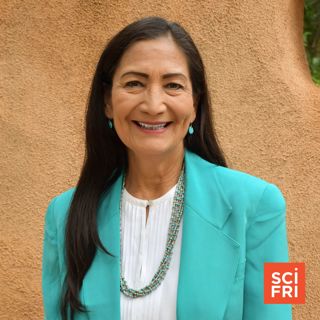
SciFri’s Charles Bergquist talks with Dani Clode, the designer of the thumb, and Paulina Kieliba, an engineer working on the project, about what they’ve learned from their interactions with extra body parts.

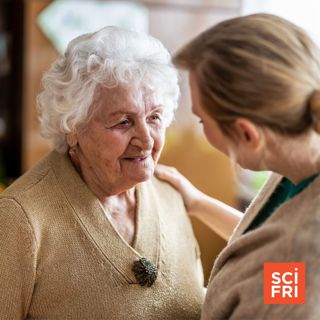
The Healing Power Of Nostalgia

One of the trends we saw over the course of the pandemic was returning to memories from one’s childhood. The 1977 Fleetwood Mac song Dreams reappeared on music charts worldwide, entertainment industry surveys found that over half of TV consumers rewatched their old favorite shows, and even sales of old Pokémon cards reached record highs.

Believe it or not, there’s a scientific basis to us getting nostalgic during lockdown. Nostalgia may be an emotionally protective force for people in times of crisis. In hindsight, this finding is no stretch of the imagination—just hearing the way people talk about nostalgic memories indicates a deep emotional effect.

Though nostalgia hits us in the gut, evolutionarily, what do humans stand to benefit from indulging in our forever-lost pasts? And perhaps the biggest question of all—is such reminiscing good for us? Should we be actively trying to reflect, or thinking ahead? (Or just living in the moment?)

Joining us to talk about the science of nostalgia, and the important role it has to play in our daily lives, are Clay Routledge, a professor in the Department of Management and Marketing at North Dakota State University in Fargo, North Dakota and Andrew Abeyta, an assistant professor in the Department of Psychology at Rutgers University-Camden, in Camden, New Jersey.

The Future Of Orcas Threatened In Changing Waters

When Seattle Times reporter Lynda Mapes heard of a mother killer whale in the Salish Sea whose baby died shortly after it was born, she was captivated.

The grieving mother carried her baby for 1,000 miles, and Mapes chronicled her story for millions of readers who followed along. She said the story resonated because it “wasn’t an animal story, but a story about a mother who happened to be a whale.”

Now, she’s chronicled the plight of the Southern Resident orcas in a new book, Orca: Shared Waters, Shared Home.

Orcas are known as fast and ferocious predators, sometimes called the “Tyrannosaurus Rex of the sea.” They’ve been swimming the oceans for millions of years. But it’s not these facts that drew Mapes to chronicle their story. It’s that these animals live in ancient societies, with long lineages and strong cultural ties. Their communities are well-known to the native people of the Pacific Northwest, where these orcas swim in the inland waters known as the Salish Sea.

But in recent years, human pressures have forced orcas away from their long-time fishing habitat. They face multiple threats, including climate change, boat traffic, development, noise, and the dwindling numbers of Chinook salmon they rely on for food. Guest host John Dankosky talks with Mapes about her new book, and ongoing efforts to help save these majestic mammals.

Subscribe to this podcast. Follow our show on Instagram, TikTok, Facebook, and Bluesky @scifri and sign up for our newsletters. Got a science question that’s keeping you up at night? Call us: 877-472-4374


Hosted by Simplecast, an AdsWizz company. See pcm.adswizz.com for information about our collection and use of personal data for advertising.

Det här avsnittet är hämtat från ett öppet RSS-flöde och publiceras inte av Podme. Det kan innehålla reklam.

Avsnitt(1339)

FDA approves a well-known sunscreen ingredient—finally

FDA approves a well-known sunscreen ingredient—finally

The FDA recently approved a sunscreen ingredient called bemotrizinol, or BEMT, that’s been used in Europe and Asia for years. This is the first new sunscreen ingredient approved in the United States i...

22 Juni 12min

Why do sports announcers talk like that?

Why do sports announcers talk like that?

If you watch sports, whether the recent NBA finals or the ongoing World Cup matches, you may have noticed that the athletes aren’t the only ones putting on a show. The announcers seem to be playing a ...

19 Juni 13min

Swords, cannibalism, poison: inside the world of killer microbes

Swords, cannibalism, poison: inside the world of killer microbes

There is a murderous crime spree happening right under—and perhaps inside—our noses. Killer microbes armed with weapons are eviscerating, assassinating, and detonating their fellow microbes. And the n...

18 Juni 21min

When music transports you to a different place

When music transports you to a different place

Do you ever hear a song that transports you to a specific place and time? This auditory wormhole has a name: musical daydreams. Music cognition expert Elizabeth Margulis studies why they happen, and w...

17 Juni 18min

A vast whale graveyard + Zombie sea cucumbers

A vast whale graveyard + Zombie sea cucumbers

Researchers just published details of a massive undersea graveyard of whales deep in the Indian Ocean. Spanning about 1,200 kilometers (745 miles), it contains whale remains dating back more than 5 mi...

16 Juni 18min

Should we bring mountain lions back to the Northeast?

Should we bring mountain lions back to the Northeast?

Big cats used to roam the entire United States. You might know them as mountain lions, pumas, cougars, or catamounts. Though they go by many names, they're actually all the same species.  Their curren...

15 Juni 12min

Blue Origin explosion hits NASA timeline + Artemis III crew

Blue Origin explosion hits NASA timeline + Artemis III crew

When Blue Origin’s New Glenn spacecraft exploded in an enormous fireball during a ground test a couple weeks ago, it sent shockwaves not only through the air, but through NASA’s timeline for the upcom...

12 Juni 12min

Why can I handle tequila but not rum?

Why can I handle tequila but not rum?

‘Tis the season for porch beers and happy hours, and we’re taking on listener questions about how alcohol affects us. Like, is a glass of wine at dinner really good for you? And why do sugary drinks g...

11 Juni 21min

Populärt inom Vetenskap

p3-dystopia
dumma-manniskor
doden-hjarnan-kemisten
allt-du-velat-veta
kapitalet-en-podd-om-ekonomi
medicinvetarna
rss-kriminologerna
rss-ufobortom-rimligt-tvivel
sexet
svd-nyhetsartiklar
rss-vetenskapsradion-2
dumforklarat
ufo-sverige
bildningspodden
rss-vetenskapsradion
rss-spraket
4health-med-anna-sparre
hacka-livet
vetenskapsradion
rss-ronden