
Covid And Disabilities, Alzheimer’s And Inflammation, Ultrasonic Sound. Sept 10, 2021, Part 1
Science Friday10 Sep 2021

Covid And Disabilities, Alzheimer’s And Inflammation, Ultrasonic Sound. Sept 10, 2021, Part 1

New Policies Emerge In The Wake Of Climate-Connected Disasters

This week, people across the United States continued to be reminded of the results of a shifting climate—with people in the Gulf states still recovering from Ida, northeastern states dealing with the aftermath of Hurricane Ida-induced flooding, and western states battling wildfires and smoke.

With climate-related disasters as a backdrop, President Biden announced a goal of shifting some 45% of U.S. energy production to solar power by 2050.

Kendra Pierre-Louis, senior reporter for the Gimlet-Spotify podcast How to Save A Planet, joins Ira to talk about those stories and more, including new calculations of the importance of minimizing fossil fuel extraction, to a successful sample collection effort on Martian soil.

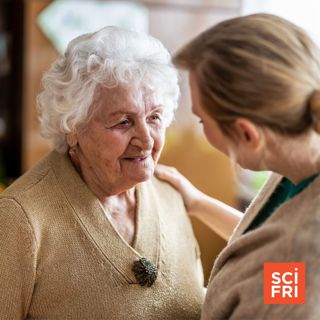
Is Inflammation In The Brain Causing Alzheimer’s Disease?

The brain of a person with Alzheimer’s disease has a few hallmark traits. First, a buildup of plaques made of proteins called amyloid beta. Second, are tangles of another protein, called tau, within individual neurons. A third major indicator is inflammation.

While researchers have long thought brain inflammation was a byproduct of the disease itself, there’s a growing hypothesis that it might actually be a driver of the disease’s progression. That would help explain why researchers have found people whose brains are full of tau tangles and amyloid plaques, but with no outward symptoms of Alzheimer’s.

Research on animals has supported this theory. But finding the same evidence in human brains is harder. Now, a team of scientists, writing in the journal Nature Medicine, thinks they have it: time-lapsed images of patient brains showing tau tangles and inflammation spreading through the brain in the exact same pattern.

Ira talks to Dr. Tharick Pascoal, assistant professor at the University of Pittsburgh and the study’s first author, about this finding, and what it means for future research into Alzheimer’s therapies.

The World According To Sound: Ultrasonics

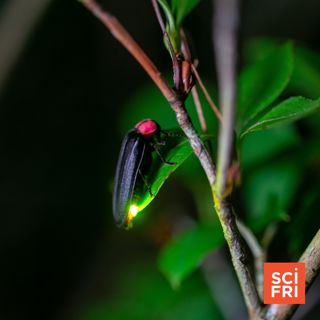
The mating calls of the katydid, a large insect, are ultrasonic, beyond the audible limit of human hearing. What if we could hear them?

That’s the focus behind a collaboration between the abstract audio podcast The World According To Sound and scientist Laurel Symes, the assistant director of the Center for Conservation Bioacoustics at Cornell University. In this recording, you’ll hear the sounds of one of her study animals—a group of katydids in a forest in Panama.

Bill McQuay, sound engineer and an audio producer at the Cornell Lab of Ornithology, slowed down Symes’ recording so you can hear a whole world of ultrasonic activity open up, from ultrasonic mating calls of katydids to the ultrasonic pings of bats echolocating their next meal.

The World According to Sound is a live audio show, online listening series, and miniature podcast that focuses on sound, not story. Producers Chris Hoff and Sam Harnett create intentional, communal listening experiences as a way to “reclaim autonomy in a visually dominated world that is increasingly fracturing our attention.”

This katydid recording and more are a part of their next listening series, an immersive listening party where audiences from all over the globe will be invited to experience a world of sound together, beginning in January 2022.

How COVID-19 Reveals Existing Biases Against The Disability Community

In early July, I visit Ingrid Tischer at the Berkeley apartment she’s shared with her husband, Ken, for the past 10 years. When I arrive, she’s already sitting outside at the top of a gently sloping ramp that leads up to the door. We’re both vaccinated, but we’re still taking precautions: masks, outdoors, and social distancing. That’s because Ingrid has a severe disability.

“I have muscular dystrophy,” she tells me, “which is a neuromuscular disorder that I’ve had my entire life because it’s genetic.” Muscular dystrophy is a progressive muscle wasting disease. It impacts her mobility, including her ability to walk unassisted. Ingrid says she’s most impacted by having a weak respiratory system and uses an oxygen device called a biPap to help her breathe. Earlier in the pandemic, her doctor told her that if she got COVID, it would likely be a death sentence. “I’d never heard my situation put in such stark, certain terms,” she says.

Ingrid is in her mid 50s, with graying brown hair and bright blue eyes. She leads fundraising for DREDF, a disability rights and legal advocacy organization. She’s also a writer — she’s written a draft of a novel and has a blog called “Tales From the Crip.” In addition to a brilliant title, the blog is full of her personal reflections about navigating a world in which the needs and feelings of people with disabilities go mostly unseen and ignored.

When COVID hit in the spring of 2020, Ingrid was terrified. Because of the risk of infection and smoke from the wildfires that summer, she stopped leaving her house entirely, developed severe anxiety and depression, and began noticing a host of new health issues.

Her feet and legs began swelling and breathing became even more difficult than usual. Her doctor worried she might be developing congestive heart failure, but told her to stay home rather than come in for tests and risk infection. It’s a common story. A recent survey by the disability advocacy group #NoBodyIsDisposable found that many disabled people have delayed medical care for over a year due to concerns about COVID-19.

Read more at sciencefriday.com.

Subscribe to this podcast. Follow our show on Instagram, TikTok, Facebook, and Bluesky @scifri and sign up for our newsletters. Got a science question that’s keeping you up at night? Call us: 877-472-4374


Hosted by Simplecast, an AdsWizz company. See pcm.adswizz.com for information about our collection and use of personal data for advertising.

Det här avsnittet är hämtat från ett öppet RSS-flöde och publiceras inte av Podme. Det kan innehålla reklam.

Avsnitt(1339)

FDA approves a well-known sunscreen ingredient—finally

FDA approves a well-known sunscreen ingredient—finally

The FDA recently approved a sunscreen ingredient called bemotrizinol, or BEMT, that’s been used in Europe and Asia for years. This is the first new sunscreen ingredient approved in the United States i...

22 Juni 12min

Why do sports announcers talk like that?

Why do sports announcers talk like that?

If you watch sports, whether the recent NBA finals or the ongoing World Cup matches, you may have noticed that the athletes aren’t the only ones putting on a show. The announcers seem to be playing a ...

19 Juni 13min

Swords, cannibalism, poison: inside the world of killer microbes

Swords, cannibalism, poison: inside the world of killer microbes

There is a murderous crime spree happening right under—and perhaps inside—our noses. Killer microbes armed with weapons are eviscerating, assassinating, and detonating their fellow microbes. And the n...

18 Juni 21min

When music transports you to a different place

When music transports you to a different place

Do you ever hear a song that transports you to a specific place and time? This auditory wormhole has a name: musical daydreams. Music cognition expert Elizabeth Margulis studies why they happen, and w...

17 Juni 18min

A vast whale graveyard + Zombie sea cucumbers

A vast whale graveyard + Zombie sea cucumbers

Researchers just published details of a massive undersea graveyard of whales deep in the Indian Ocean. Spanning about 1,200 kilometers (745 miles), it contains whale remains dating back more than 5 mi...

16 Juni 18min

Should we bring mountain lions back to the Northeast?

Should we bring mountain lions back to the Northeast?

Big cats used to roam the entire United States. You might know them as mountain lions, pumas, cougars, or catamounts. Though they go by many names, they're actually all the same species.  Their curren...

15 Juni 12min

Blue Origin explosion hits NASA timeline + Artemis III crew

Blue Origin explosion hits NASA timeline + Artemis III crew

When Blue Origin’s New Glenn spacecraft exploded in an enormous fireball during a ground test a couple weeks ago, it sent shockwaves not only through the air, but through NASA’s timeline for the upcom...

12 Juni 12min

Why can I handle tequila but not rum?

Why can I handle tequila but not rum?

‘Tis the season for porch beers and happy hours, and we’re taking on listener questions about how alcohol affects us. Like, is a glass of wine at dinner really good for you? And why do sugary drinks g...

11 Juni 21min

Populärt inom Vetenskap

p3-dystopia
dumma-manniskor
doden-hjarnan-kemisten
allt-du-velat-veta
kapitalet-en-podd-om-ekonomi
medicinvetarna
rss-kriminologerna
rss-ufobortom-rimligt-tvivel
sexet
svd-nyhetsartiklar
rss-vetenskapsradion-2
dumforklarat
ufo-sverige
bildningspodden
rss-vetenskapsradion
rss-spraket
4health-med-anna-sparre
hacka-livet
vetenskapsradion
rss-ronden