
Psychedelics Can Treat Depression, Climate Meeting, Dopesick Show. Nov 12 2021, Part 1
Science Friday12 Nov 2021

Psychedelics Can Treat Depression, Climate Meeting, Dopesick Show. Nov 12 2021, Part 1

Psilocybin Effective In Treating Serious Depression

Depression is often treatable with medication, therapy, or a combination of the two. But some 30% of patients don’t respond well to existing medications—and may try multiple antidepressant drugs with little or no improvement.

This week, researchers reported that a new trial suggests psychedelics may be an effective therapy for treatment-resistant depression. A randomized, controlled, double-blind trial found that people with treatment-resistant depression who were given 25 milligrams of psilocybin, the psychedelic component of magic mushrooms, had a significant decrease in depressive symptoms. The treatment didn’t work for everyone, however, and more research needs to be done before the finding can move to clinical use.

Sabrina Imber, a science fellow at the New York Times, joins Ira to talk about the trial and other stories from the week in science—including a new timeline for the planned Artemis missions to the moon, screaming bees, and a very wayward eagle.

Activists And Vulnerable Nations At COP26 Seek More Than Promises

There’s a big international climate summit wrapping up in Glasgow, Scotland this week. COP26 is the followup to 25 previous United Nations meetings about how the world must respond to the climate crisis—and its shortcomings in doing so. This year leaders had a big conversation to tackle: Countries needed to pledge to reduce emissions even further to prevent a global temperature rise of more than 1.5 degrees Celsius. To do so, they needed to finish hashing out the details of how they will enforce the 2015 Paris Agreement’s provisions.

Meanwhile, island nations and other vulnerable countries, who themselves don’t emit much carbon, have continued to lobby for payment for what’s called loss and damages. That’s the harm they’ve already encountered as seas rise, threatening to obliterate their existence.

The first week kicked off with bold pledges about methane emissions, coal phaseouts, and ending deforestation. This week, former President Obama spoke about the need for urgent action, and called out large greenhouse gas polluters like Russia and China for not attending. And a grim United Nations report was released, forecasting that despite all the bold pledges, the world was on track to warm a dangerous 2.4 degrees Celsius. The team of Threshold, a podcast that tells stories about our changing environment, has been reporting on these updates from Glasgow, talking to attendees and occasionally witnessing negotiations.

In today’s show, Ira talks to journalist Amy Martin, Threshold’s executive producer and host, about her opinion on the outcome of COP26—and if transformative change can still come out of this year’s meeting.

”Dopesick” Takes On The Opioid Crisis

The opioid epidemic has affected millions of people across the country—and more than 800,000 people are estimated to have died from an opioid overdose. At the root of this crisis is the painkiller Oxycontin, manufactured by Purdue Pharma.

The company has made billions of dollars from the drug; but has also spent the better part of the last two decades fighting legal battles over its impacts, falsely arguing the drug is non-addictive and completely safe. Meanwhile, people from all walks of life, particularly in small towns across America, have been crippled by addiction to Oxycontin.

The limited series “Dopesick” traces the story of the opioid epidemic, from the creation of the Oxycontin pill to a landmark legal battle where Purdue Pharma admitted it misbranded the drug as being less addictive than other prescription opioids.

“Dopesick” follows a wide range of characters, from Purdue Pharma executives and federal prosecutors, to an Appalachian doctor and his pain-addled patients. Joining Ira to talk about bringing the show and its people to life is Danny Strong, creator and writer of “Dopesick,” joining from New York, New York.

Subscribe to this podcast. Follow our show on Instagram, TikTok, Facebook, and Bluesky @scifri and sign up for our newsletters. Got a science question that’s keeping you up at night? Call us: 877-472-4374


Hosted by Simplecast, an AdsWizz company. See pcm.adswizz.com for information about our collection and use of personal data for advertising.

Det här avsnittet är hämtat från ett öppet RSS-flöde och publiceras inte av Podme. Det kan innehålla reklam.

Avsnitt(1382)

Creating 'world models' for robots + An AI math shakeup

Creating 'world models' for robots + An AI math shakeup

When you ask an LLM like ChatGPT or Claude a question, the model goes through its massive amount of training data and guesses the answer by mathematically predicting the word most likely to appear nex...

19 Aug 17min

What can moments of lucidity teach us about Alzheimer’s?

What can moments of lucidity teach us about Alzheimer’s?

Watching a loved one with Alzheimer's or dementia slowly lose their cognitive abilities can be heartbreaking. While the person you once knew seems to be slipping away, sometimes people with Alzheimer'...

18 Aug 17min
Colorado’s snow drought deals a major blow to recreation

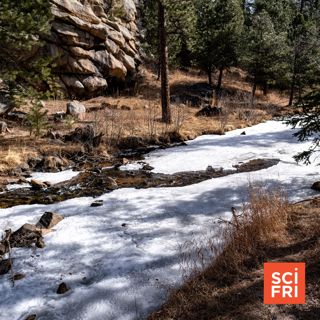
Colorado’s snow drought deals a major blow to recreation

Winter in Colorado looked very different this year. Many parts of the state experienced record-high temperatures and record-low snowpack, which had downstream effects on farming, sports, tourism, and ...

17 Aug 11min

How do you find a ‘lost’ species?

How do you find a ‘lost’ species?

The earth is facing a biodiversity crisis, and there’s a lot of attention on species that are threatened, or at risk of dying out completely. But, there’s another critter category that’s a little more...

14 Aug 18min

What we get wrong about vaccine hesitancy

What we get wrong about vaccine hesitancy

President Trump has signed an executive order calling for a change to the childhood vaccination schedule. Specifically, he wants to separate the MMR vaccine, which protects against measles, mumps, and...

13 Aug 12min

Why this lab studies the speed of bug pee and other curiosities

Why this lab studies the speed of bug pee and other curiosities

In a lab in the Rocky Mountains, a group of scientists is hard at work trying to find answers across biology, physics, and engineering: They’re looking into things like the hydrodynamics of insect pee...

12 Aug 18min

Some primates undergo even more extreme childbirth than humans

Some primates undergo even more extreme childbirth than humans

Human childbirth is often difficult and incredibly painful—just ask anyone who’s been through it. And for a long time, childbirth seemed to be uniquely difficult for humans. But a new study suggests t...

11 Aug 11min
Deb Haaland is a politician, and proud of it

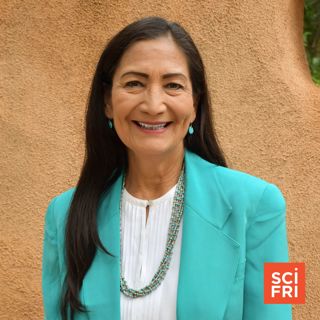
Deb Haaland is a politician, and proud of it

Former Interior Secretary Deb Haaland, a member of the Laguna Pueblo tribe, was the first Native person to hold a cabinet position. Now she’s running to be governor of New Mexico.  Haaland joins Host ...

10 Aug 17min

Populärt inom Vetenskap

dumma-manniskor
p3-dystopia
allt-du-velat-veta
hacka-livet
rss-vetenskapsradion
ufo-sverige
svd-nyhetsartiklar
bildningspodden
rss-vetenskapsradion-2
halsorevolutionen
rss-spraket
medicinvetarna
sexet
barnpsykologerna
vetenskapsradion
det-morka-psyket
paranormalt-med-caroline-giertz
rss-ufobortom-rimligt-tvivel
ufo-sverige-2
rss-kriminologerna